Follow Me On Pinterest!
Easy 30-Minute Vegetable Curry

A Whirlwind of Flavor in Just Half an Hour
—
Introduction
I still remember the first time I tried my hand at making a vegetable curry. It was a rainy Sunday afternoon, the kind where the clouds hang low and the world outside is wrapped in a shroud of gray. The kitchen was brightened by the warm glow of the stove, where a medley of colorful vegetables danced in a skillet. The rich aroma of spices—cumin, coriander, and turmeric—mingled in the air, making my mouth water in anticipation. I could hear the gentle sizzle of the onions as they caramelized, adding a sweet depth that would soon envelop the vibrant green peas, bright orange carrots, and deep red bell peppers.
As I stirred the bubbling pot, I caught a glimpse of the golden yellow hue that formed as the spices took hold of the vegetables, creating an irresistible canvas of color. The textures of the dish—crisp tender vegetables nestled in a creamy, coconut-infused sauce—were nothing short of captivating. Each spoonful was a symphony of flavors and sensations, a delightful reminder of why I fell in love with cooking in the first place.
This easy 30-minute vegetable curry quickly became a staple in my kitchen. It’s not just about the speed; it’s about the joy of creating something so delicious and nourishing in such a short span of time. Every time I make this dish, I’m taken back to that rainy afternoon, and I find comfort in its simplicity and warmth. So grab your apron and let’s dive into a recipe that’s not just easy but also bursting with flavor.
—
Why This Recipe Works
The magic of this 30-minute vegetable curry lies in the careful balance of flavors and textures that come together to create a truly satisfying dish. You’ll notice that key flavor combinations—like the earthiness of cumin and coriander, paired with the brightness of ginger and garlic—work in harmony to build a complex taste profile without overwhelming your palate. These spices are not just for fragrance; they coax out the natural sweetness of the vegetables, making each bite a delightful exploration of taste.
Texture contrasts play a vital role in elevating this curry. The crispness of fresh vegetables is beautifully complemented by the creamy coconut milk, which wraps around each piece in a velvety embrace. This balance between crunchy and creamy keeps the dish lively and satisfying. In just 30 minutes, you can achieve that lovely contrast by sautéing the vegetables lightly before adding them to the simmering sauce, allowing them to retain their natural shape and snap.
Each major ingredient has a purpose. For example, coconut milk not only adds richness but also provides a subtle sweetness that balances spices beautifully. The vegetables serve as the stars of the dish, with their unique flavors and health benefits shining through. Unlike generic versions found in takeout containers, this recipe allows you to control the quality and freshness of your ingredients, making every bite a celebration of flavors that feels both indulgent and wholesome.
—
What Makes It Special
What sets this 30-minute vegetable curry apart from the rest is its simplicity and versatility. Unlike restaurant or store-bought versions, which can often be laden with preservatives and artificial flavors, this homemade dish is crafted with fresh, vibrant ingredients that you can find easily at your local market.
Making this curry at home is not just about freshness; it’s also a canvas for customization. You can swap in your favorite vegetables based on the season or what you have on hand. Want to use sweet potatoes instead of carrots? Go for it! Prefer spinach over peas? That works beautifully too. This adaptability, paired with the ability to control spice levels, ensures that every batch is exactly to your taste.
Additionally, one surprising element that elevates this dish is the splash of lime juice at the end. It brightens the entire curry, adding a touch of acidity that rounds out the flavors and makes them pop. Paired with a generous sprinkle of fresh cilantro, this dish becomes not just a meal but an experience that lingers long after the last bite.
—
Ingredient Breakdown
To create your delicious 30-minute vegetable curry, you’ll need a variety of ingredients, each playing a unique role in the final dish:
1. Vegetables:
– Carrots: Their natural sweetness and crunch add texture and balance to the curry.
– Bell Peppers: They contribute a vibrant color and a slightly sweet flavor.
– Green Peas: Adding a pop of color and freshness, they cook quickly and maintain their lovely texture.
2. Coconut Milk:
– This creamy base not only enriches the curry but also adds a subtle sweetness that complements the spices. Using full-fat coconut milk will give you that luscious texture, but you can opt for light coconut milk if you prefer a lighter version.
3. Onion:
– Sautéed until translucent, onions add a savory depth to the dish, providing a sweet foundation that enhances the overall flavor profile.
4. Garlic and Ginger:
– Together, they bring a fragrant punch that elevates the dish. Using fresh garlic and ginger is key, as dried versions won’t deliver the same aromatic qualities.
5. Spices:
– Cumin and Coriander: These spices are essential for building warmth and depth. They add earthy notes that harmonize with the sweetness of the coconut milk.
– Turmeric: Known for its health benefits, turmeric also imparts a beautiful golden color to the curry.
6. Lime Juice:
– A splash at the end brightens the dish and enhances the flavors, bringing everything together in a zesty finish.
Substitutions:
– For a dairy-free version, ensure that your coconut milk is free from additives.
– For a gluten-free option, all the ingredients are naturally gluten-free; just double-check labels on any packaged items.
– If you’re looking for a vegan dish, this recipe is already vegan-friendly as it contains no animal products.
Specialty Ingredients:
If you’re not familiar with some spices or ingredients, you can easily find them at local grocery stores or health food markets. Online retailers also offer a wide variety of spices, often at competitive prices, so you can stock up on your favorites without breaking the bank.
—
Equipment Needed
To whip up your easy 30-minute vegetable curry, you’ll need a few essential tools:
– Large Skillet or Wok: This is where the magic happens! A wide, flat surface allows for even cooking and helps retain the vegetables’ texture. If you don’t have a wok, a large frying pan will work just as well.
– Wooden Spoon or Spatula: You’ll need something sturdy to stir the vegetables and ensure they don’t stick to the bottom of the pan. A wooden spoon is perfect for this, as it won’t scratch your cookware.
– Sharp Knife: For chopping your vegetables, a sharp knife is crucial. It makes prep work faster and safer.
– Cutting Board: A solid cutting board will keep your workspace tidy and provide a stable surface for chopping.
– Measuring Cups and Spoons: Precise measurements are key to achieving the right balance of flavors, especially when it comes to spices.
– Lime Squeezer (optional): If you have one, this will make squeezing your lime juice a breeze. However, you can always use your hands if you don’t have this tool.
With just these few items, you’ll be well-equipped to create a delicious, vibrant curry that’s sure to impress.
Step-by-Step Instructions
1. Prep Your Ingredients
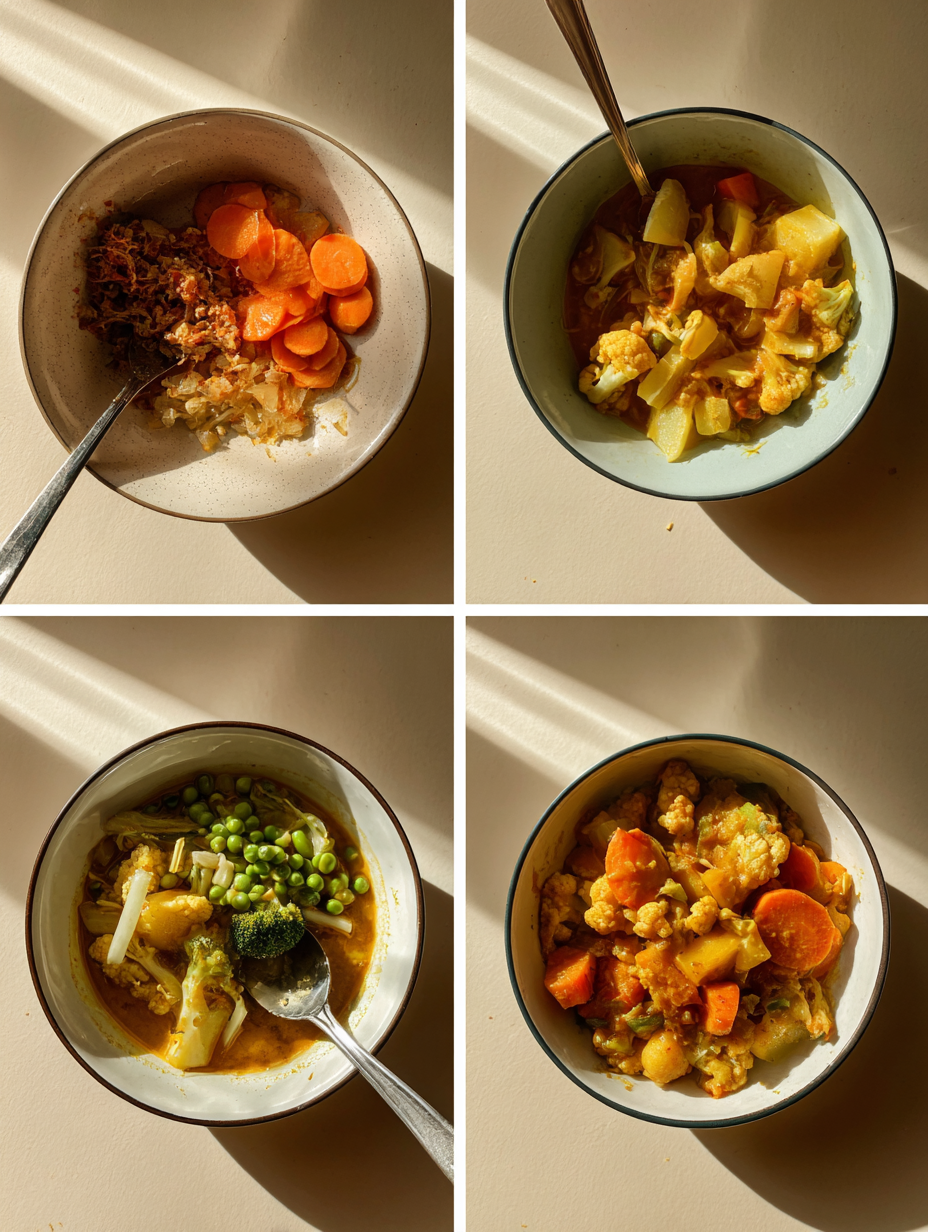
Start by gathering all your ingredients to create an organized workspace. Chop your bell peppers, zucchini, carrots, and onion into bite-sized pieces. It’s essential that the pieces are uniform in size, so they cook evenly. You want to smell the fresh aroma of the onion as you chop; if it starts to sting your eyes, that means you’re making progress! Set everything aside in separate bowls, and have your canned tomatoes and coconut milk within reach for the next steps.
2. Sauté the Aromatics
Heat a large skillet over medium heat and add 2 tablespoons of olive oil. Once the oil shimmers, toss in the chopped onion. Listen for that satisfying sizzle. Stir the onions occasionally for about 3–4 minutes until they become translucent and sweet-smelling. This is your base flavor. Chef’s Note: For an extra kick, add 1 teaspoon of minced ginger or garlic at this stage for a fragrant aroma that fills your kitchen.
3. Add the Vegetables
Once the onions are ready, it’s time to add your diced vegetables. Start with the carrots and bell peppers, sautéing for another 3 minutes until they soften slightly. Then, add the zucchini and 1 tablespoon of curry powder (or more if you like it spicy!). Stir everything together, allowing the spices to coat the vegetables. Look for the vibrant colors to brighten and start to smell the earthy fragrance of the curry spices.
4. Incorporate the Tomatoes and Coconut Milk
Pour in the canned tomatoes (don’t forget to scrape up any bits stuck to the bottom of the pan). Follow with the coconut milk, stirring gently to combine. Bring the mixture to a gentle simmer over medium heat. You should see small bubbles forming around the edges of the pan after about 5 minutes. This is where the magic happens — the liquid will thicken slightly, and the flavors will meld beautifully. Chef’s Note: For a richer flavor, add 1 tablespoon of soy sauce or tamari at this stage.
5. Simmer the Curry
Cover the skillet with a lid and reduce the heat to low. Let your curry simmer for about 10 minutes. This allows the vegetables to absorb all the wonderful flavors. You want the veggies to be tender but still slightly crisp. Stir occasionally, and if the curry thickens too much, feel free to add a splash of water or vegetable broth. You’ll know it’s perfect when the colors look vibrant, and the aroma fills the air, inviting you to dig in!
6. Finish and Serve
Once the vegetables are tender and the flavors have melded, remove from heat immediately. Taste the curry and adjust seasoning if needed — perhaps a touch more salt or a squeeze of lime juice for brightness. To serve, spoon the curry into bowls, and garnish with fresh cilantro or a dollop of yogurt if you like. You should see a creamy, rich texture and vibrant colors that make your dish as appetizing as it is delicious.
Pro Tips for the Best Results
1. Don’t Rush the Sautéing
The key to a flavorful base is properly sautéing your aromatics. If you rush this step, your onions may remain crunchy, and you’ll miss out on that sweet, caramelized flavor. Take the time to let them cook until translucent.
2. Use Fresh Spices
Fresh spices have a much more potent flavor than older ones. Make sure your curry powder isn’t past its expiration date. If you can, toast whole spices like cumin seeds in the pan before adding them to release their essential oils.
3. Texture Matters
For a well-balanced curry, cut your vegetables into uniform sizes. This ensures they cook evenly. Avoid cutting them too small; you want a hearty bite that stands up to the sauce.
4. Taste as You Go
Don’t be afraid to taste your curry throughout the cooking process. This will help you adjust the seasoning to your preference and ensure a well-balanced dish. Each ingredient adds complexity, so make sure everything harmonizes.
5. Control Thickness
If you prefer a thicker curry, let it simmer uncovered for a few extra minutes. Conversely, if it’s too thick, add a splash of vegetable broth or water to achieve your desired consistency.
6. Fresh Herbs Make a Difference
Adding fresh cilantro or basil at the end of cooking not only enhances flavor but also adds a touch of freshness and brightness. Avoid cooking them too long, as they can lose their vibrant flavor.
7. Meal Prep Friendly
This curry keeps well in the fridge for up to three days and can be frozen for up to a month. Double the recipe for easy weeknight dinners. When reheating, add a bit of water to loosen it up if it thickens too much in the fridge.
Common Mistakes to Avoid
1. Skipping the Aromatics
Mistake: Omitting onions or garlic → Why it ruins the dish: You lose depth and complexity in flavor.
Correct Approach: Always start with a solid base of aromatics to build your curry’s flavor profile.
2. Overcooking the Vegetables
Mistake: Cooking until mushy → Why it ruins the dish: Vegetables lose their vibrant color and texture.
Correct Approach: Aim for tender-crisp veggies, which maintain their color and nutritional value.
3. Using Canned Ingredients Without Rinsing
Mistake: Not rinsing canned tomatoes → Why it ruins the dish: The canning liquid can add unwanted metallic flavors.
Correct Approach: Rinse and drain canned tomatoes to improve the overall taste of your curry.
4. Ignoring Seasoning Adjustments
Mistake: Not tasting and adjusting flavors → Why it ruins the dish: The final flavor may be bland.
Correct Approach: Taste your curry before serving. Adjust seasoning with salt, spices, or acidity to enhance the flavors.
5. Using Stale Spices
Mistake: Cooking with old spices → Why it ruins the dish: Your curry will lack the vibrant flavors you desire.
Correct Approach: Check the freshness of your spices regularly and replace them as needed for the best flavor.
6. Cooking at Too High a Heat
Mistake: Cranking the heat too high → Why it ruins the dish: The curry can burn, and vegetables can cook unevenly.
Correct Approach: Maintain a medium heat for a slow, even cook, allowing flavors to develop fully.
7. Not Allowing Enough Simmer Time
Mistake: Rushing through the simmering phase → Why it ruins the dish: Flavors won’t meld properly, leading to a less harmonious taste.
Correct Approach: Give your curry at least 10 minutes on low heat to allow all the ingredients to come together beautifully.
Creative Variations
1. Seasonal Variation
For a seasonal twist, incorporate vegetables like butternut squash in the fall or asparagus in the spring. Simply substitute them in place of your usual vegetables and adjust the cooking time as needed to accommodate the different textures.
2. Dietary-Friendly Version
Make a vegan version by ensuring all ingredients are plant-based. Swap out any dairy or non-vegan items for coconut cream or nut-based yogurt. This keeps the creamy texture while honoring a vegan diet.
3. Gourmet Elevated Version
Upgrade your curry to a gourmet level by adding paneer or seared tofu and finishing with a drizzle of high-quality olive oil or a sprinkle of toasted nuts, like cashews or almonds. This adds a rich texture and elegant flavor.
4. Quick 15-Minute Version
For a quick 15-minute version, use frozen mixed vegetables instead of fresh and canned curry paste instead of spices. Simply sauté the paste with onions for a minute before adding the frozen veggies and coconut milk, then simmer until heated through.
5. Kid-Friendly Version
For a kid-friendly variation, use milder spices and add sweet potatoes or peas to cater to younger palates. You can also serve the curry with rice or naan in fun shapes to make it visually appealing.
6. International Twist
Try an international twist by adding Thai red curry paste in place of traditional curry powder, along with a splash of lime juice and basil. This will give your dish a different flavor profile, reminiscent of a Thai curry dish.
Serving Ideas
Plating your Easy 30-Minute Vegetable Curry can elevate the dish from simple to stunning. Here are some specific ideas to inspire you:
1. Layered Bowl: Start with a base of fluffy jasmine rice or warm naan bread. Spoon the curry generously over the top, allowing the vibrant colors of your vegetables to shine through. Garnish with a sprinkle of fresh cilantro and a few slices of red chili for a pop of color and heat.
2. Rustic Platter: Serve the curry in a large, shallow bowl at the center of a wooden board. Surround it with small bowls of toasted coconut, chopped peanuts, and lime wedges. This not only provides texture but also invites guests to customize their experience.
3. Elegant Glassware: For a more sophisticated touch, consider using clear glass bowls. Layer the curry with a dollop of yogurt and a drizzle of coconut cream on top. A sprinkle of pomegranate seeds adds a burst of color and sweetness that contrasts beautifully with the savory curry.
4. Curry Tacos: Use soft corn tortillas as your base, spoon the vegetable curry onto each one, and top with sliced radishes, shredded cabbage, and a squeeze of fresh lime. This playful twist makes for a fun and interactive meal, perfect for gatherings.
5. Portion Sizes: Aim for about one cup of curry per serving, especially if you’re serving it as a main dish. Pair it with a side of rice or naan for a balanced meal.
What to Serve With
Complementing your Easy 30-Minute Vegetable Curry with the right dishes can enhance your meal experience. Here are some thoughtful pairings:
1. Mango Lassi: This creamy yogurt drink offers a sweet and tangy contrast to the spice of the curry. Its smooth texture balances well with the curry’s richness, making it a refreshing choice.
2. Cucumber Raita: The coolness of this yogurt-based side dish helps to soothe any heat from the curry. The crunch of cucumber adds a lovely textural element, while fresh herbs like mint enhance flavor.
3. Garlic Naan: Soft, pillowy naan bread is perfect for scooping up the curry. Its buttery flavor complements the spices beautifully, while its chewy texture provides satisfying contrast.
4. Quinoa Salad: A light quinoa salad with herbs, lemon, and cherry tomatoes brightens the plate. Its nutty flavor and fluffy texture balance the curry’s warmth, adding a nutritious element to your meal.
5. Spiced Chai: This aromatic beverage pairs wonderfully with the flavors of the curry. The warm spices in chai harmonize with the dish, making for a comforting and cohesive dining experience.
6. Cardamom Rice Pudding: For dessert, a small serving of rice pudding infused with cardamom and topped with toasted nuts brings a sweet finish. The creaminess of the pudding softens the meal, leaving a warm, satisfying conclusion.
Storage Guide
To keep your Easy 30-Minute Vegetable Curry fresh for later enjoyment, proper storage is crucial:
– Containers: Use airtight glass containers to store leftovers. Glass not only preserves flavors but also prevents leaching of chemicals found in some plastics.
– Temperature: Store curry in the fridge at 40°F (4°C) or below. It’s important to cool the curry to room temperature before sealing it in the container to prevent condensation, which can lead to spoilage.
– Shelf Life: Leftovers will keep for about 3 to 4 days. Be sure to label your container with the date, so you know when to enjoy it by.
– Signs of Spoilage: Discard the curry if you notice any off smells, visible mold, or an unusual color change. These are clear indicators that it’s time to let it go.
– Refreshing Before Serving: To revive your curry, add a splash of coconut milk or vegetable broth while reheating. This will help restore moisture and flavor, ensuring it tastes just as delightful as when you first made it.
Freezing Tips
Good news! Your Easy 30-Minute Vegetable Curry freezes beautifully, making it perfect for meal prep:
– Portioning: Divide the curry into individual serving sizes or family-sized portions. This will make it easier to thaw only what you need.
– Wrapping: Use freezer-safe airtight containers or resealable plastic bags. If using bags, remove as much air as possible to prevent freezer burn.
– Labeling: Clearly label each container or bag with the date and contents. This will help you keep track of freshness.
– Shelf Life: Your curry can be frozen for up to 3 months without significant loss of flavor or texture.
– Quality Changes: You may notice slight changes in texture upon thawing, but the flavors will still be intact.
– Thawing: The best method for thawing is to transfer the curry to the fridge overnight. If you’re short on time, you can also thaw it in the microwave using the defrost function.
Reheating Guide
Reheating your Easy 30-Minute Vegetable Curry properly will ensure you enjoy it just as much the second time around:
– Microwave: Place your curry in a microwave-safe dish, cover it loosely to prevent splatters, and heat on medium power for 2 to 3 minutes, stirring halfway through. If it seems dry, add a splash of water or coconut milk before heating.
– Oven: Preheat your oven to 350°F (175°C). Transfer the curry to an oven-safe dish, cover with foil, and heat for about 15-20 minutes. This gentle heat allows the flavors to meld while keeping the curry moist.
– Stovetop: In a saucepan over medium heat, add your curry and a splash of water or broth to loosen it up. Stir occasionally for about 5-10 minutes until heated through.
– Texture Restoration Tips: To bring back that fresh, vibrant taste, consider adding a squeeze of lime or a handful of fresh herbs right before serving. This little touch will brighten the flavors beautifully.
Nutrition Overview
Your Easy 30-Minute Vegetable Curry is not just delicious; it’s nutritious too! Here’s a breakdown of what you can expect per serving:
– Calories: Approximately 250 calories
– Protein: About 8 grams
– Carbohydrates: Around 30 grams
– Fat: Roughly 12 grams
– Fiber: Approximately 5 grams
– Sugar: About 4 grams
Key ingredients like chickpeas and spinach contribute significant health benefits. Chickpeas are a fantastic source of plant-based protein and fiber, promoting satiety and digestive health. Spinach, loaded with vitamins A and C, supports your immune system and contributes to healthy skin. This curry is not only a feast for the senses but also a nourishing choice for your body.
Frequently Asked Questions
Q: Can I substitute fresh vegetables with frozen ones?
A: Absolutely! Frozen vegetables can be a convenient option and are often just as nutritious as fresh ones. Just make sure to adjust cooking time since frozen veggies may take slightly longer to cook through.
Q: Is this curry vegan-friendly?
A: Yes, this vegetable curry is entirely vegan! It’s made with plant-based ingredients and can easily be enjoyed by anyone following a vegan diet.
Q: What can I use instead of coconut milk?
A: If you don’t have coconut milk, you can substitute it with almond milk or soy milk. For a creamy texture, add a tablespoon of nut butter or tahini.
Q: How long does it take to cook the vegetables?
A: Generally, most vegetables will cook in about 10-15 minutes. Keep an eye on them; you want them tender but still vibrant and slightly crunchy.
Q: Can I make this curry ahead of time?
A: Yes, this dish can be prepared a day in advance. Just store it in the fridge and reheat it before serving. The flavors will deepen overnight, making it even more delicious!
Q: What kitchen equipment do I need for this recipe?
A: You’ll need a large skillet or saucepan for cooking the curry, a cutting board for chopping vegetables, and a wooden spoon for stirring. A measuring cup and spoons will also come in handy for precise ingredient amounts.
Q: How can I make this dish spicier?
A: If you love heat, consider adding more cayenne pepper, fresh chilies, or a dash of hot sauce during cooking. You can also serve it with a side of spicy pickles for an extra kick!
Q: What’s the best way to store leftovers?
A: Store any leftovers in airtight glass containers in the fridge. It’s best to cool the curry at room temperature before sealing to maintain its flavor and freshness.
Final Thoughts
Creating your own Easy 30-Minute Vegetable Curry is not just about the meal; it’s an experience filled with vibrant flavors and aromas that will envelop your kitchen. Remember to customize it with your favorite vegetables and spices for a personal touch. I am genuinely excited for you to make this dish and share your results with friends and family. The combination of colorful veggies and warm spices is sure to bring joy to your table.
So gather your ingredients and let the cooking begin!