Follow Me On Pinterest!
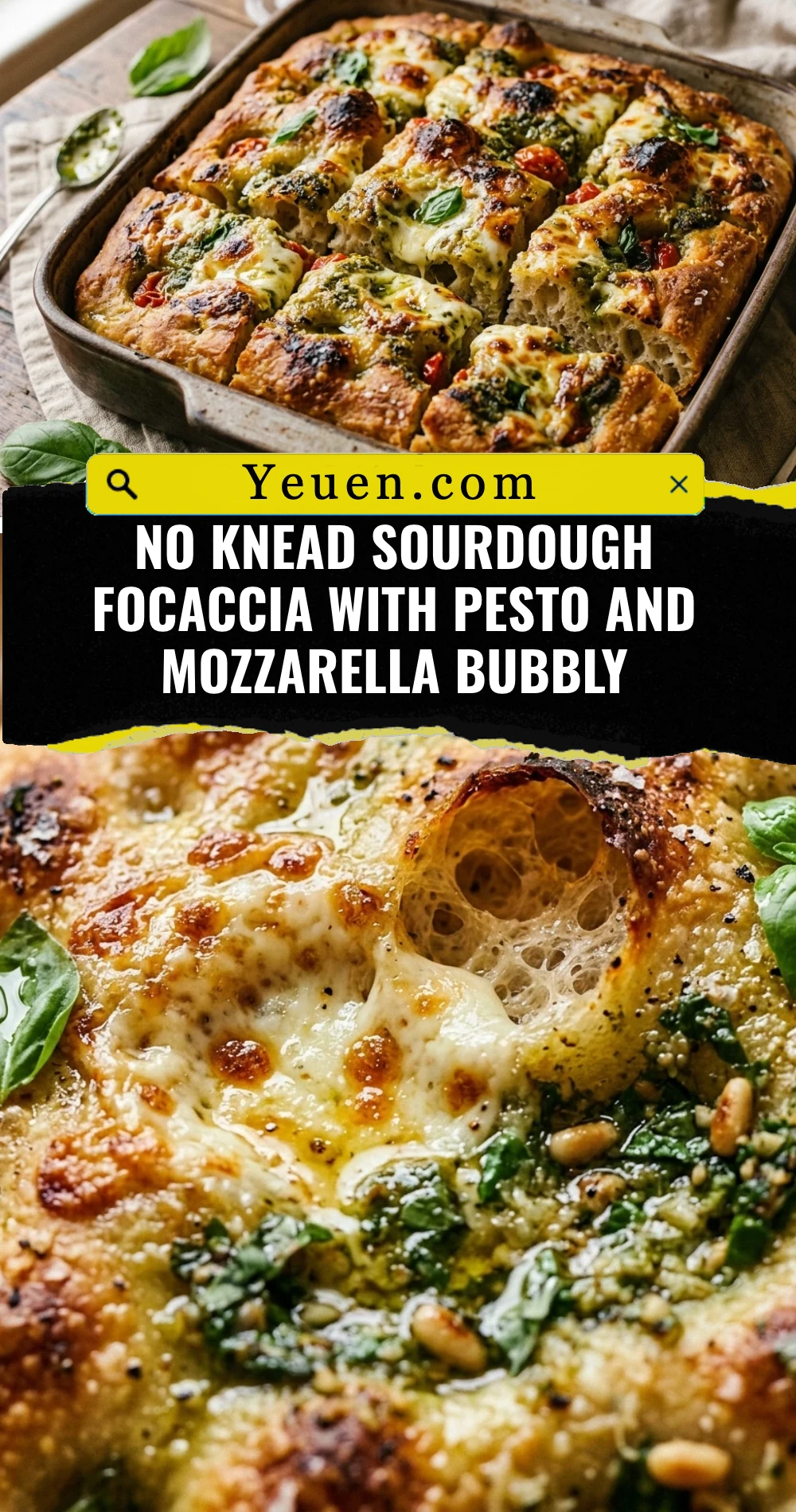
No Knead Sourdough Focaccia With Pesto And Mozzarella Bubbly
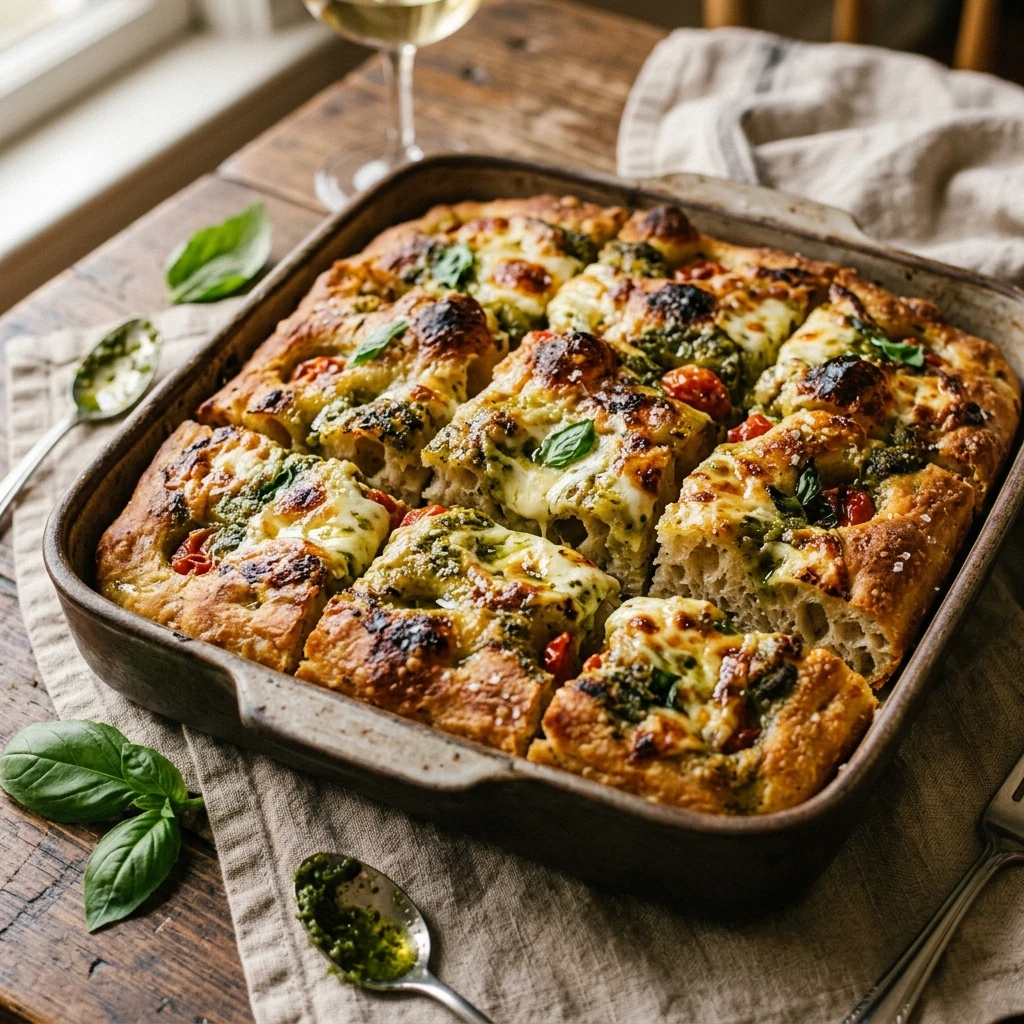
Imagine a golden, olive-oil-drenched crust that shatters under your teeth, leading into a pillowy, airy interior with that signature sourdough tang. Now, top that with swirls of aromatic basil pesto and pools of molten, bubbling mozzarella cheese. This No-Knead Sourdough Focaccia is the ultimate low-effort, high-reward bake. You let time do all the heavy lifting, allowing the wild yeast to develop complex flavors and those iconic bubbles while you go about your day. Whether you are a seasoned bread baker or a sourdough novice, this recipe delivers a bakery-quality centerpiece that will have everyone reaching for just one more square.
Recipe Information
- Prep Time: 20 minutes (plus 12–18 hours fermentation)
- Cook Time: 25 minutes
- Total Time: 18 hours 45 minutes
- Servings: 8 servings
- Difficulty: Medium
Nutrition values
- Calories: 310 kcal
- Protein: 10g
- Carbs: 38g
Why Make This No Knead Sourdough Focaccia With Pesto And Mozzarella Bubbly
This recipe is perfect for busy schedules because it requires zero kneading. The long cold ferment in the refrigerator develops a deep flavor profile that quick-yeast breads simply cannot match. It is incredibly versatile, serving as a side dish, a sandwich base, or a standalone appetizer. Plus, the combination of herbaceous pesto and creamy mozzarella creates a “pizza-adjacent” experience that feels sophisticated yet comforting. It is the best way to use your active sourdough starter without the stress of shaping a traditional loaf.
Ingredients
- 100g active, bubbly sourdough starter
- 375g warm water
- 10g honey or maple syrup
- 500g bread flour (or high-protein all-purpose flour)
- 10g fine sea salt
- 50g extra virgin olive oil (divided)
- 1/3 cup high-quality basil pesto
- 1 cup fresh mozzarella pearls or shredded low-moisture mozzarella
- Flaky sea salt for finishing
- Fresh rosemary or basil leaves (optional)
Directions
Step 1: Mixing the Shaggy Mass
In a large mixing bowl, whisk together your active sourdough starter, warm water, and honey until the starter mostly dissolves. Add the bread flour and sea salt. Use a sturdy spatula or your hands to mix until no dry flour remains and a shaggy dough forms. Cover the bowl with a damp cloth or plastic wrap and let it rest for 30 minutes to allow the flour to hydrate.
Step 2: Bulk Fermentation and Folds
After the rest, perform a series of “stretch and folds.” Reach under one side of the dough, pull it up, and fold it over the center. Rotate the bowl and repeat four times. Let the dough rest for 30 minutes, then repeat the folding process. Do this 3–4 times total. Once finished, cover the bowl tightly and let it sit at room temperature for 2 to 4 hours until it looks jiggly and has increased in size by about 50%. Move the bowl to the refrigerator for 12 to 24 hours.
Step 3: The Second Rise in the Pan
Generously coat a 9×13 inch metal baking pan with about 2 tablespoons of olive oil. Gently transfer the cold dough into the pan. Do not force it to the corners yet. Flip the dough once to coat both sides in oil. Cover and let it rise in a warm spot for 2 to 4 hours. The dough is ready when it has filled the pan and looks very bubbly and fragile.
Step 4: Dimpling and Topping
Preheat your oven to 425°F (220°C). Drizzle the top of the dough with another tablespoon of olive oil. Grease your fingers and press them straight down into the dough to create deep dimples all over the surface. Spoon small dollops of pesto into the dimples and sprinkle the mozzarella cheese evenly across the top. Finish with a generous sprinkle of flaky sea salt.
Step 5: Baking to Perfection
Place the pan on the middle rack of the oven. Bake for 20 to 25 minutes, or until the edges are deep golden brown and the mozzarella is melted and bubbling with charred spots. If you want a crispier bottom, you can bake it on the lowest rack for the last 5 minutes. Remove from the oven and let it cool in the pan for 5 minutes before transferring to a wire rack to prevent the bottom from getting soggy.
Expert Tips for Perfect No Knead Sourdough Focaccia With Pesto And Mozzarella Bubbly
For the best results, use a metal baking pan rather than glass or ceramic; metal conducts heat better for a crispier bottom crust. If your dough feels stubborn and won’t stretch to the corners of the pan during Step 3, let it rest for 15 minutes to relax the gluten, then try again. Always use “wet hands” when dimpling the dough to prevent sticking. Lastly, make sure your sourdough starter is at its peak activity—it should be doubled in size and full of bubbles before you start mixing.
Delicious Variations
While pesto and mozzarella are a classic duo, you can easily customize this focaccia. Try a “Sun-Dried Tomato Version” by swapping the pesto for oil-packed tomatoes and adding feta cheese. For a spicy kick, drizzle the finished bread with hot honey. You can also make a “Garlic Lovers” version by embedding roasted garlic cloves into the dimples along with the cheese. If you prefer a vegan option, swap the mozzarella for a vegan cashew cheese and ensure your pesto is dairy-free.
Frequently Asked Questions
Can I use sourdough discard instead of an active starter?
For this specific no-knead recipe, an active, bubbly starter is highly recommended to ensure the dough rises properly and develops those large air pockets. Discard may result in a denser, flatter bread unless you add a pinch of commercial yeast to help it along.
What is the best way to store leftover focaccia?
Store leftovers in an airtight container at room temperature for up to 2 days. To revive the crunch, toast the slices in a 350°F oven or an air fryer for a few minutes. Avoid microwaving, as it will make the crust chewy and tough.
Why didn’t my dough get big bubbles?
Bubbles are usually a result of proper fermentation and high hydration. Ensure your starter is strong, and don’t rush the room-temperature rise after the cold ferment. The dough should look like a “living thing” before it goes into the oven.
Can I bake this in a cast iron skillet?
Absolutely! A large cast iron skillet works wonderfully for focaccia. It creates a very crispy, fried-bottom texture. Just ensure you use enough olive oil so the dough doesn’t stick to the seasoned surface.
Is it okay to use store-bought pesto?
Yes, store-bought pesto works perfectly fine. However, since the pesto is a primary flavor, choose a high-quality brand found in the refrigerated section, or make a quick homemade batch for the brightest flavor.
Conclusion
This No-Knead Sourdough Focaccia with Pesto and Mozzarella is proof that you don’t need to be a professional baker to create incredible bread at home. The long fermentation process does all the work for you, resulting in a complex flavor and a texture that is both light and satisfying. With the addition of savory pesto and melted mozzarella, this bread is sure to become a staple in your kitchen. Slice it up, share it with friends, and enjoy the beautiful bubbles of your sourdough labor!