Follow Me On Pinterest!
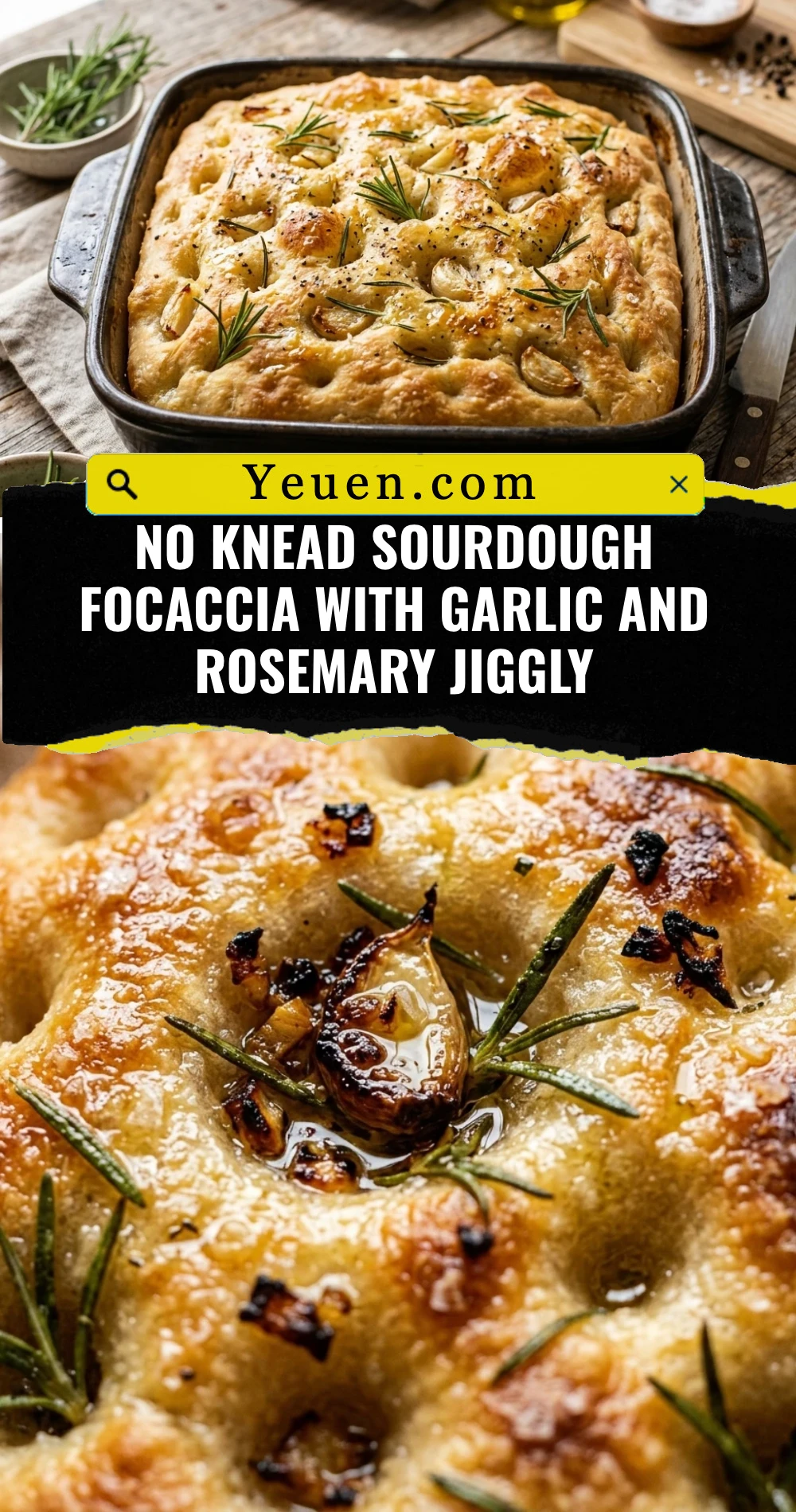
No Knead Sourdough Focaccia With Garlic And Rosemary Jiggly
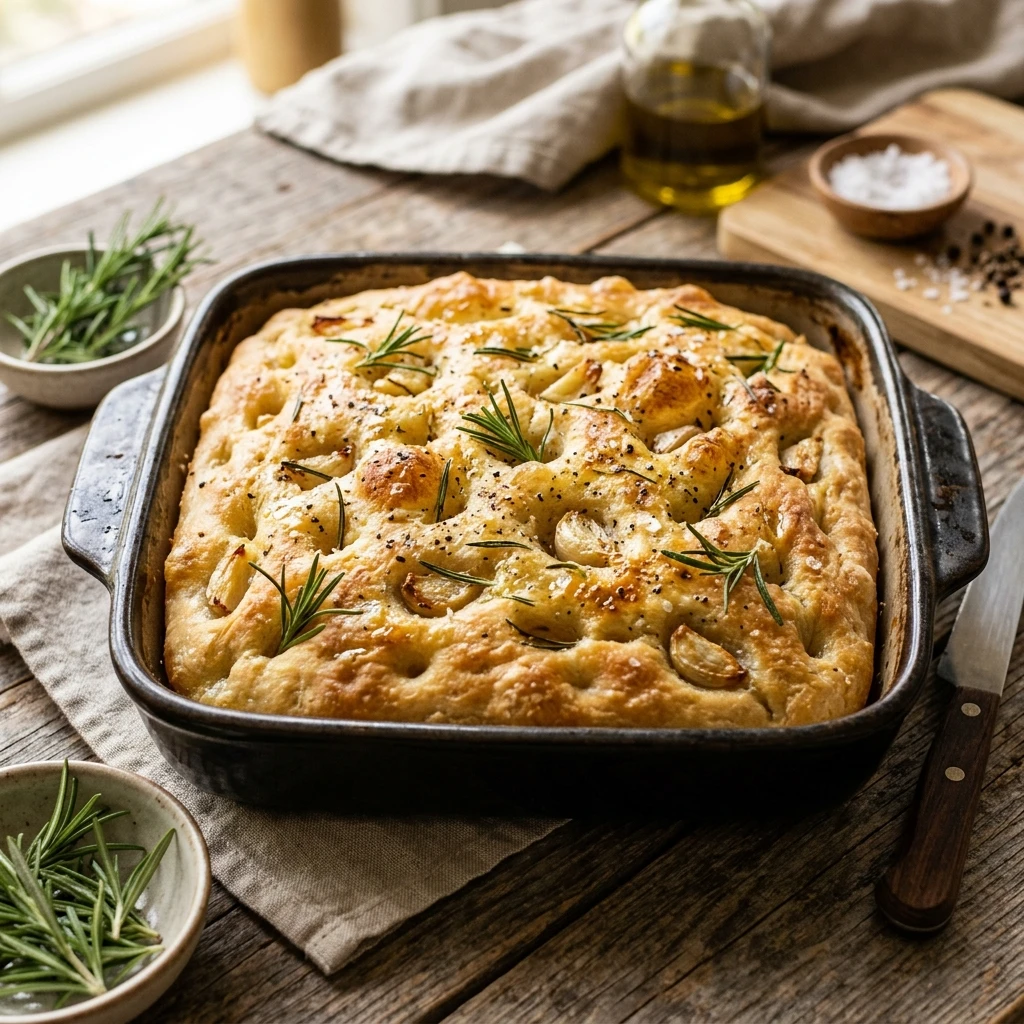
If you have ever dreamt of a bread that is impossibly airy, incredibly bubbly, and requires zero kneading, this No Knead Sourdough Focaccia With Garlic And Rosemary Jiggly is your answer. There is something deeply satisfying about watching a high-hydration dough transform into a golden, olive-oil-soaked masterpiece. The “jiggly” nature of this dough comes from a long cold ferment, which allows the sourdough wild yeast to create massive air pockets. When you press your fingers into the dough, it bounces back with a soft, marsh-mallowy resistance that guarantees a light crumb. Topped with fragrant roasted garlic and fresh rosemary, this bread is the ultimate crowd-pleaser for any dinner table.
Recipe Information
- Prep Time: 20 minutes (active time)
- Cook Time: 25 minutes
- Total Time: 18 hours (includes fermentation)
- Servings: 10 servings
- Difficulty: Easy
Nutrition values
- Calories: 245 kcal
- Protein: 6g
- Carbs: 38g
Why Make This No Knead Sourdough Focaccia With Garlic And Rosemary Jiggly
This recipe removes all the stress of bread making. Because it is “no-knead,” the gluten develops naturally over time through a process called autolyse and a few simple folds. The high water content creates that signature “jiggly” texture that enthusiasts crave. Using a sourdough starter instead of commercial yeast adds a complex, tangy flavor profile and makes the bread easier to digest. Plus, the combination of garlic and rosemary is a timeless classic that fills your entire home with an irresistible aroma while it bakes.
Ingredients
- 100g active sourdough starter (bubbly and fed)
- 400g warm water (filtered)
- 500g bread flour (or high-protein all-purpose flour)
- 10g fine sea salt
- 20g extra virgin olive oil (for the dough)
- 4 tablespoons extra virgin olive oil (for the pan and drizzling)
- 4 cloves garlic, thinly sliced
- 2 sprigs fresh rosemary, leaves stripped
- Flaky sea salt for finishing
Directions
Step 1: Mixing the Dough
In a large mixing bowl, whisk together the active sourdough starter and warm water until the starter mostly dissolves. Add the flour and sea salt. Use a sturdy spatula or your hands to mix until a shaggy dough forms and no dry flour remains. Cover the bowl with a damp cloth or plastic wrap and let it rest for 30 minutes to allow the flour to hydrate.
Step 2: Stretch and Folds
After the rest, perform one set of stretch and folds. Reach under one side of the dough, pull it up, and fold it over the center. Rotate the bowl and repeat this four times. Drizzle the 20g of olive oil over the dough, turn it to coat, and cover. Let the dough sit at room temperature for 2 to 4 hours, performing one or two more sets of folds every hour until the dough looks smooth and slightly bubbly.
Step 3: The Cold Ferment
Place the covered bowl in the refrigerator for 12 to 24 hours. This long, cold rest is what builds the “jiggly” structure and deepens the sourdough flavor. The dough will slowly rise and become very elastic during this time.
Step 4: Pan Proofing
Generously grease a 9×13 inch baking pan with 2 tablespoons of olive oil. Gently transfer the cold dough into the pan. Do not force it to the corners yet. Cover the pan and let the dough rise at room temperature for 2 to 3 hours. During this time, the dough will naturally spread to the edges and become very jiggly and full of large air bubbles.
Step 5: Dimpling and Toppings
Preheat your oven to 425°F (220°C). Drizzle the top of the dough with the remaining olive oil. Grease your fingers with oil and press them straight down into the dough to create deep dimples. Scatter the sliced garlic and fresh rosemary over the surface, then sprinkle generously with flaky sea salt.
Step 6: Baking
Place the pan in the center of the oven. Bake for 20 to 25 minutes, or until the top is deeply golden brown and the bottom is crisp. If you prefer a crispier bottom, you can bake it on the lowest rack. Remove from the oven and let it cool in the pan for 5 minutes before transferring it to a wire rack to maintain the crunchy crust.
Expert Tips for Perfect No Knead Sourdough Focaccia With Garlic And Rosemary Jiggly
Always use a high-protein bread flour if possible, as it handles the high hydration better than standard all-purpose flour. If your dough feels too sticky to handle during the folding stage, wet your hands with water to prevent sticking. Make sure your sourdough starter is at its peak activity (doubled in size) before you begin. To get those iconic huge bubbles, avoid over-handling the dough once it has finished its final proof in the pan.
Delicious Variations
While garlic and rosemary are traditional, you can easily customize this recipe. Try adding halved cherry tomatoes and balsamic glaze for a sweet and acidic pop. For a salty kick, add pitted kalamata olives and feta cheese. If you love spice, thin slices of fresh jalapeño and a sprinkle of cheddar cheese create a fantastic fusion flavor. You can even make a sweet version by swapping the savory toppings for cinnamon sugar and sliced apples.
Frequently Asked Questions
How do I know when my dough is “jiggly” enough?
The dough should look like a bowl of jelly when you gently shake the pan. It should be covered in visible air bubbles on the surface and feel very light and airy to the touch. If it feels dense, let it proof at room temperature for another 30 to 60 minutes.
Can I use a sourdough discard instead of an active starter?
For this specific no-knead recipe, an active, bubbly starter is best because it provides all the lift. If you use discard, the bread will be much denser and won’t achieve the signature jiggly height unless you add a pinch of commercial yeast to help it along.
What if my garlic burns in the oven?
To prevent the garlic from burning, you can lightly toss the garlic slices in olive oil before placing them on the dough, or tuck them slightly into the dimples so they are partially protected by the dough and oil.
How should I store leftover focaccia?
Focaccia is best eaten the day it is made. However, you can store leftovers in an airtight container at room temperature for up to 2 days. To revive the crust, toast it in a 350°F oven for a few minutes until it warms through and crisps back up.
Can I freeze the dough?
It is better to freeze the baked focaccia rather than the raw dough. Once the bread has cooled completely, wrap it tightly in plastic wrap and foil. It will stay fresh in the freezer for up to 3 months. Thaw at room temperature and reheat in the oven.
Conclusion
Mastering the No Knead Sourdough Focaccia With Garlic And Rosemary Jiggly is a rewarding journey that proves great bread doesn’t require hard labor. By letting time and high hydration do the work, you end up with a professional-quality loaf that is soft on the inside and crunchy on the outside. Whether you serve it alongside a hearty soup or use it as the base for a gourmet sandwich, this focaccia will quickly become a staple in your sourdough rotation. Happy baking!