Follow Me On Pinterest!
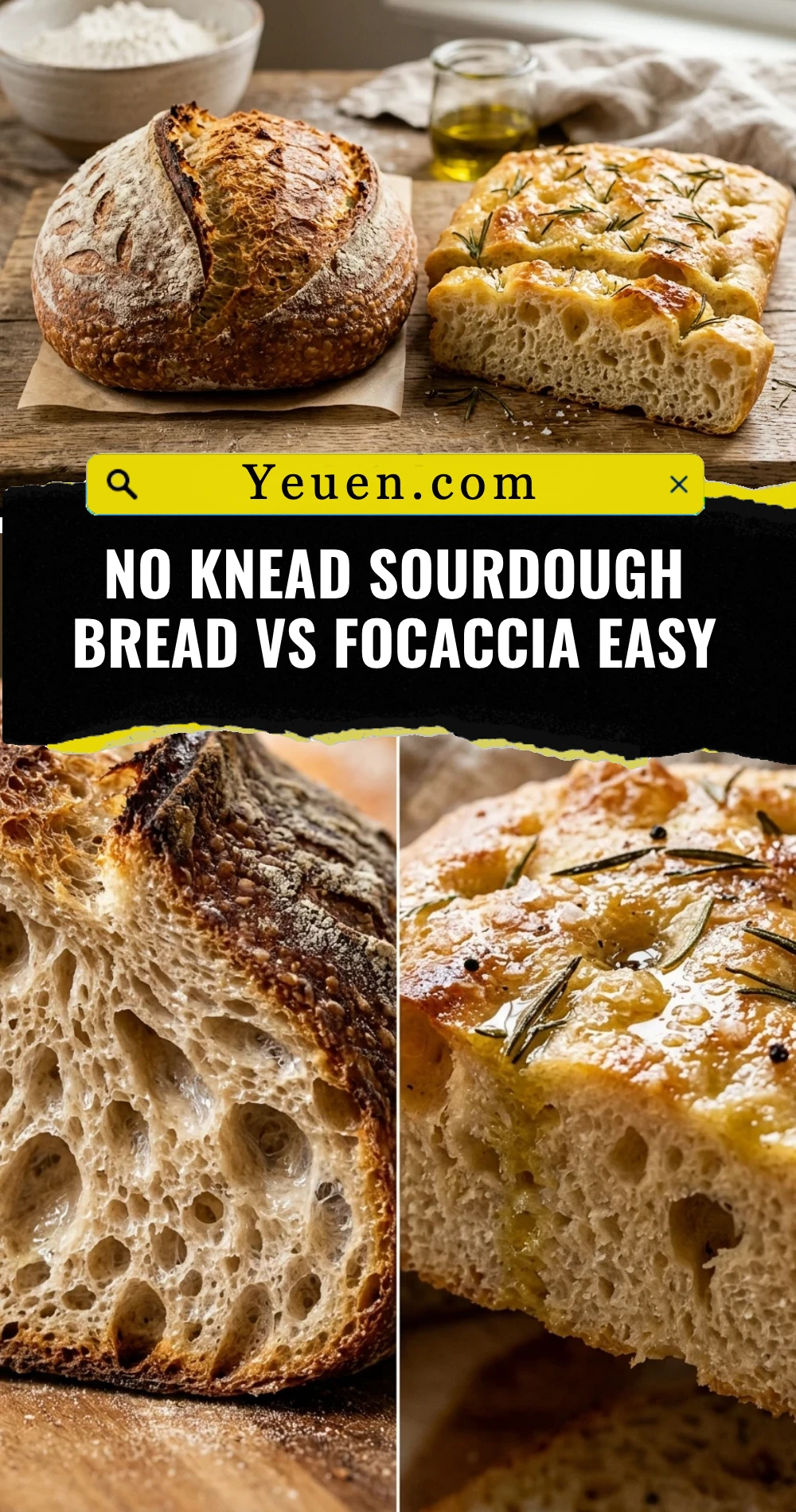
No Knead Sourdough Bread vs Focaccia Easy
There is nothing quite like the smell of fresh bread wafting through your kitchen, especially when you did not have to spend hours kneading the dough. Whether you crave the thick, crunchy crust of a classic sourdough loaf or the salty, olive-oil-drenched fluffiness of a focaccia, the “no-knead” method is your best friend. This approach relies on time rather than manual labor to develop gluten, making it perfect for beginners and busy home cooks alike. In this guide, we explore how one simple base dough can transform into two legendary breads, giving you professional results with almost zero effort. Get ready to master the art of effortless baking and decide which style wins your heart today.
Recipe Information
- Prep Time: 15 minutes (plus 12-18 hours fermentation)
- Cook Time: 45 minutes
- Total Time: 18 hours 45 minutes
- Servings: 10 slices
- Difficulty: Easy
Nutrition values
- Calories: 185 kcal
- Protein: 6g
- Carbs: 36g
Why Make This No Knead Sourdough Bread vs Focaccia Easy
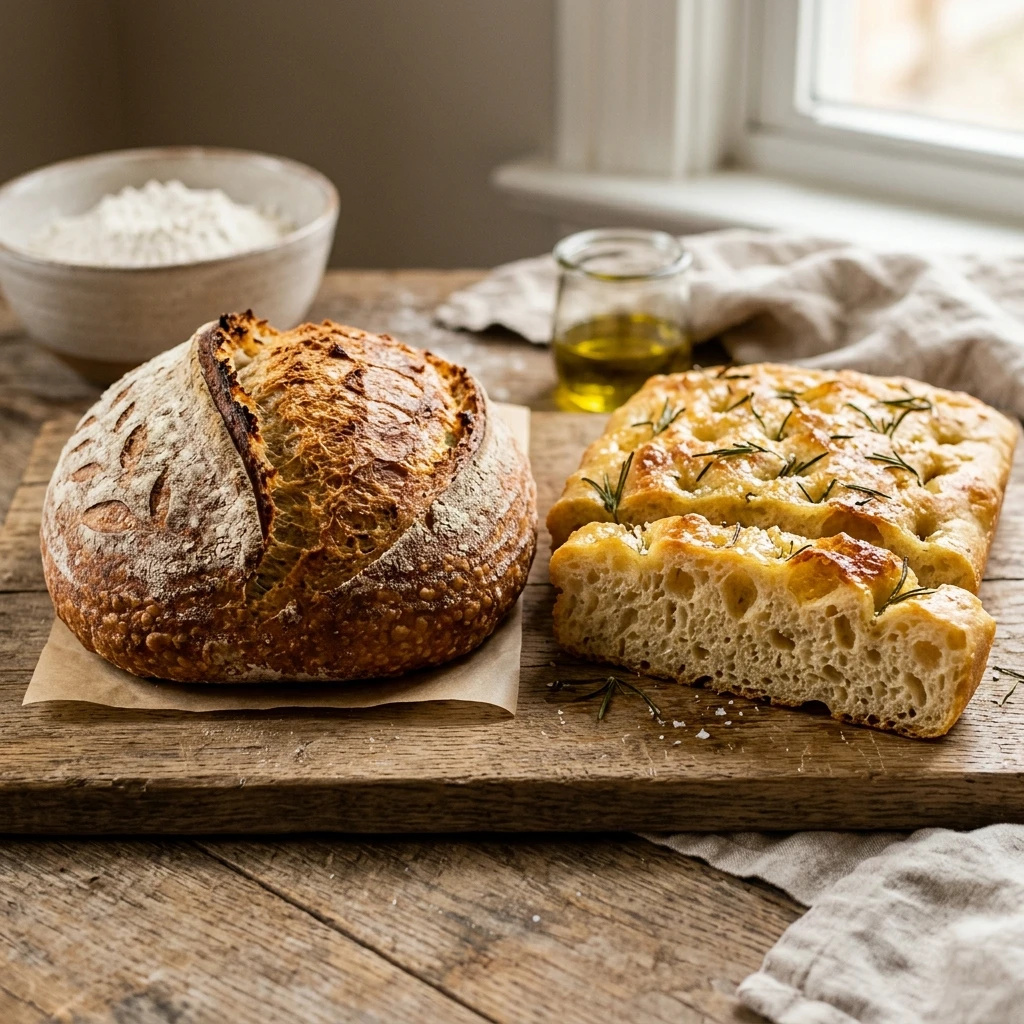
This recipe is a game-changer because it eliminates the most intimidating part of bread making: the kneading. By using a high-hydration dough and a long fermentation period, the natural enzymes and wild yeast do all the hard work for you. You get to enjoy that signature sourdough tang and a beautiful open crumb without the arm workout. Furthermore, this specific method is incredibly versatile. You can bake it in a Dutch oven for a rustic, artisan-style loaf or spread it onto a sheet pan for a dimpled, golden focaccia. It is the ultimate “set it and forget it” recipe that yields bakery-quality bread every single time.
Ingredients
- 100g active sourdough starter (bubbly and fed)
- 350g filtered warm water
- 500g bread flour (or all-purpose flour)
- 10g fine sea salt
- 2 tablespoons extra virgin olive oil (for the focaccia version)
- Flaky sea salt and rosemary (optional topping for focaccia)
Directions
Step 1: Mixing the Dough
In a large glass bowl, whisk together your active sourdough starter and warm water until the starter mostly dissolves. Add the flour and sea salt. Use a sturdy spatula or your hands to mix until a shaggy dough forms and no dry flour remains. Cover the bowl with a damp cloth or plastic wrap and let it rest for 30 minutes to allow the flour to fully hydrate.
Step 2: Bulk Fermentation
Perform a series of “stretch and folds” by grabbing one side of the dough, pulling it upward, and folding it over the center. Rotate the bowl and repeat this four times. Cover the bowl and leave it on your counter at room temperature for 12 to 18 hours. The dough should double in size and look bubbly and jiggly. This long rest builds the structure and the deep sourdough flavor.
Step 3: Shaping and Final Proof
For Sourdough Bread: Gently pull the dough onto a floured surface and fold the edges into the center to form a ball. Place it in a parchment-lined bowl or banneton for a final 1-hour proof. For Focaccia: Pour 2 tablespoons of olive oil into a 9×13 inch baking pan. Transfer the dough to the pan, coating it in oil. Let it rest for 1 to 2 hours until it spreads to the corners and looks very bubbly.
Step 4: Baking to Perfection
Preheat your oven to 450°F (230°C). If making the sourdough loaf, place a Dutch oven inside to preheat. For the loaf: Score the top with a sharp knife and bake inside the Dutch oven (lid on) for 20 minutes, then 20 minutes with the lid off. For the focaccia: Dimple the dough with your fingertips, sprinkle with sea salt, and bake for 25 to 30 minutes until the top is deeply golden and crisp.
Step 5: Cooling and Slicing
Transfer your bread to a wire rack immediately after baking. This step is crucial to prevent the bottom from becoming soggy. Resist the urge to cut into the bread while it is hot! Let the loaf or focaccia cool for at least 30 to 60 minutes. This allows the internal structure to set, ensuring a perfect texture when you finally take that first bite.
Expert Tips for Perfect No Knead Sourdough Bread vs Focaccia Easy
To achieve the best results, always use a kitchen scale to measure your ingredients in grams; volume measurements are often inaccurate in bread baking. Ensure your sourdough starter is at its peak—meaning it has doubled in size and passes the “float test” in water. If your kitchen is cold, the fermentation might take longer, so look for bubbles and growth rather than watching the clock. For the focaccia version, do not be afraid of the olive oil; it is what creates that iconic fried-bottom crust. Finally, if you want a more sour flavor, you can let the shaped dough sit in the refrigerator for a few hours before baking.
Delicious Variations
- Garlic and Herb Focaccia: Press fresh garlic cloves and sprigs of thyme into the dough before baking.
- Jalapeño Cheddar Sourdough: Fold in pickled jalapeños and cubed sharp cheddar during the final shaping of the loaf.
- Everything Bagel Style: Sprinkle everything bagel seasoning over the top of either dough before it hits the oven.
- Sweet Cinnamon Raisin: Add a handful of raisins and a tablespoon of cinnamon to the initial mix for a breakfast-friendly loaf.
- Pesto Swirl: Dollop basil pesto onto the focaccia dough and swirl it in with your fingertips during the dimpling process.
Frequently Asked Questions
Can I use a sourdough starter straight from the fridge?It is best to use a starter that has been fed 4-8 hours prior to mixing so it is at its most active state. A cold starter will significantly slow down the fermentation process.
What if my dough is too sticky to handle?No-knead dough is naturally high in hydration and will be sticky. Wet your hands with water when performing folds to prevent the dough from sticking to your skin without adding extra flour.
Do I really need a Dutch oven for the sourdough loaf?While not strictly mandatory, a Dutch oven traps steam, which is essential for a crispy crust and a good “oven spring.” If you do not have one, you can place a pan of water at the bottom of the oven to create steam.
Can I let the dough ferment for longer than 18 hours?If your kitchen is very warm, the dough may over-proof. If you cannot bake it within the 18-hour window, move the bowl to the refrigerator to slow down the yeast activity.
What flour works best for this recipe?Bread flour is ideal because it has a higher protein content, which creates a stronger gluten network. However, all-purpose flour works well for a softer, more tender crumb.
Conclusion
Whether you choose the rustic charm of a No Knead Sourdough Bread or the rich, dimpled texture of an Easy Focaccia, you cannot go wrong with this versatile base. Both options offer a satisfying crunch and a complex flavor profile that store-bought bread simply cannot match. By mastering this simple no-knead technique, you have unlocked the door to endless homemade bread possibilities. Experiment with different toppings, find your favorite baking vessel, and enjoy the delicious rewards of your “hard” work. Happy baking!