Follow Me On Pinterest!
Jiggly Sourdough Focaccia With Roasted Garlic And Herbs Bubbly
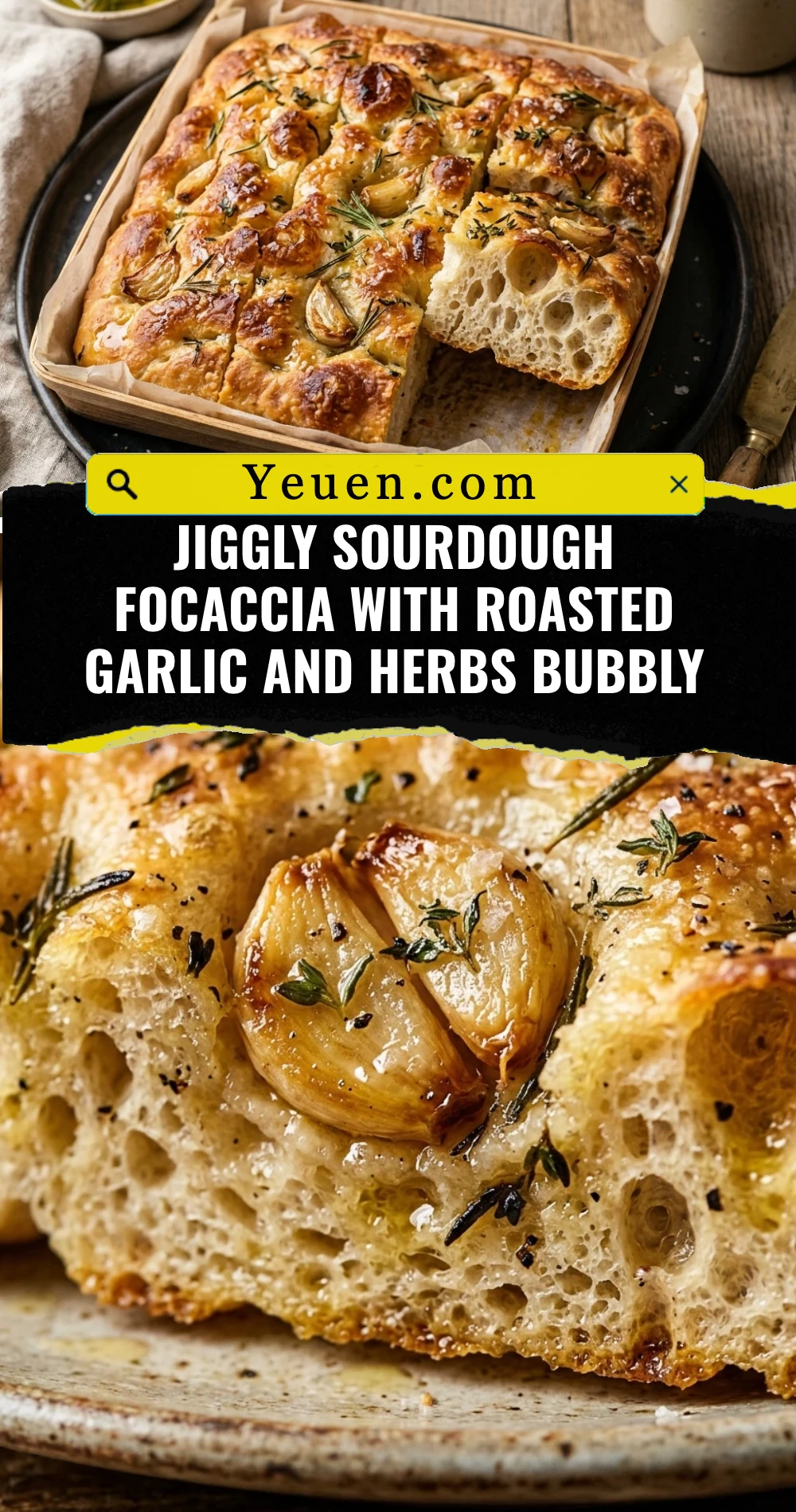
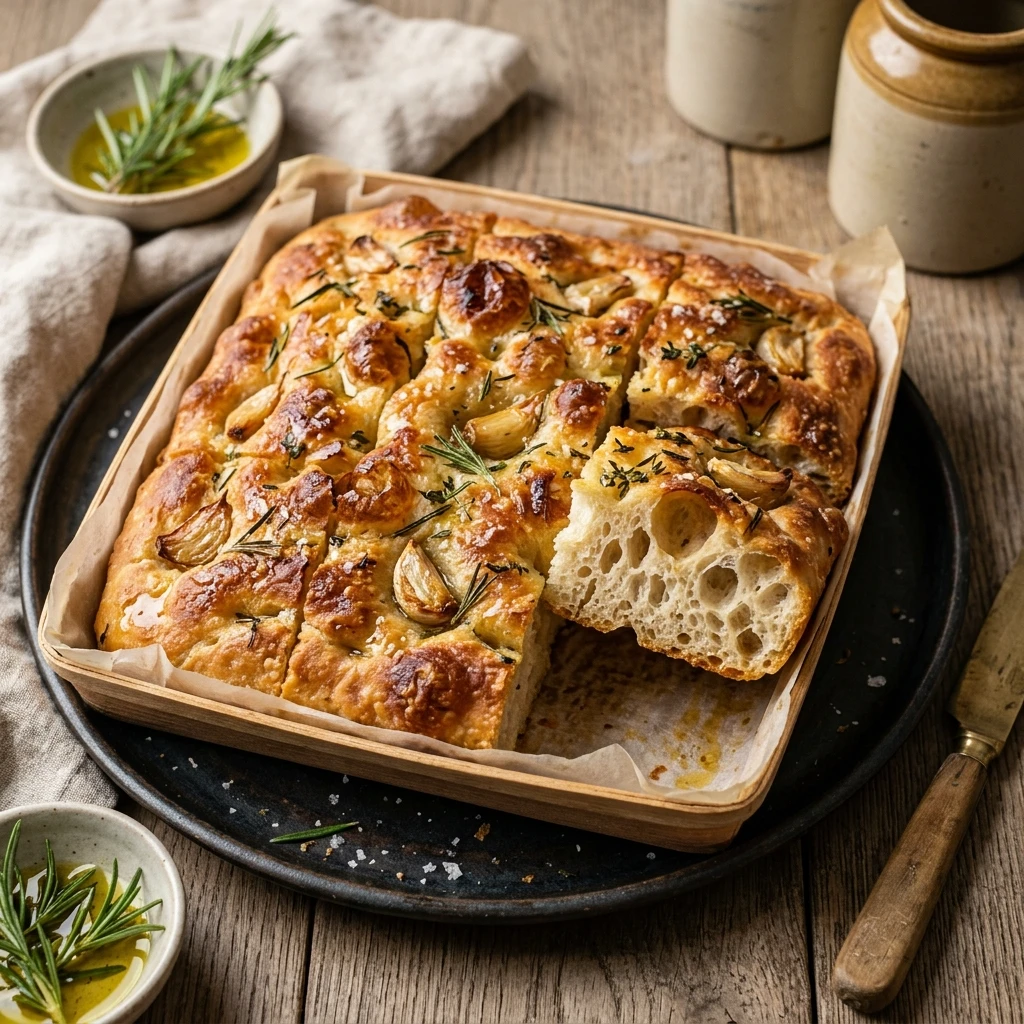
Imagine a bread so airy it literally jiggles when you shake the pan. This jiggly sourdough focaccia is the ultimate sensory experience for any home baker. It combines the tangy depth of a long-fermented starter with the mellow sweetness of roasted garlic and a garden’s worth of fresh, aromatic herbs. The result is a golden, olive-oil-soaked crust that shatters under your teeth to reveal a cloud-like interior filled with giant, lacy bubbles. Whether you are serving it alongside a hearty pasta or making it the star of your next charcuterie board, this bread delivers a “wow” factor that store-bought loaves simply cannot match.
Recipe Information
- Prep Time: 18 hours (includes fermentation)
- Cook Time: 25 minutes
- Total Time: 18 hours 25 minutes
- Servings: 12 servings
- Difficulty: Medium
Nutrition values
- Calories: 210 kcal
- Protein: 5g
- Carbs: 38g
Why Make This Jiggly Sourdough Focaccia With Roasted Garlic And Herbs Bubbly
This recipe is the holy grail of sourdough baking. Unlike dense sandwich loaves, this focaccia relies on high hydration to create that signature “jiggle” and massive air pockets. Using a sourdough starter instead of commercial yeast adds a complex, fermented flavor that balances perfectly with the richness of the olive oil. Roasting the garlic beforehand transforms sharp cloves into buttery, sweet gems that melt into the dough. It is a therapeutic process that rewards your patience with the most beautiful, bubbly crumb you have ever seen.
Ingredients
- 100g active, bubbly sourdough starter (fed within 4-6 hours)
- 400g warm water (about 85°F)
- 500g high-protein bread flour
- 10g fine sea salt
- 50g extra virgin olive oil (plus more for the pan and drizzling)
- 1 whole head of garlic
- 1 tablespoon fresh rosemary, chopped
- 1 tablespoon fresh thyme leaves
- Flaky sea salt for finishing
Directions
Step 1: Roast the Garlic
Preheat your oven to 400°F (200°C). Cut the top off the head of garlic to expose the cloves. Place it on a piece of aluminum foil, drizzle with a little olive oil, and wrap it tightly. Roast for 40 minutes until the cloves are soft and golden. Once cool, squeeze the roasted cloves out of their skins and mash them into a paste or leave them in small chunks. Set aside.
Step 2: Mix the Dough
In a large glass bowl, whisk together the active sourdough starter and warm water until the starter mostly dissolves. Add the bread flour and sea salt. Mix by hand or with a sturdy spatula until a shaggy dough forms and no dry flour remains. Cover the bowl with a damp cloth and let it rest for 30 minutes to autolyse.
Step 3: Stretch and Folds
Over the next 2 hours, perform four sets of “stretch and folds” every 30 minutes. Wet your hands, grab one side of the dough, pull it upward, and fold it over itself. Rotate the bowl and repeat four times per set. This builds the gluten structure needed to trap those big bubbles. During the final set of folds, gently fold in the roasted garlic chunks and half of the fresh herbs.
Step 4: Bulk Fermentation and Cold Proof
Cover the bowl tightly and let the dough rise at room temperature until it has increased in volume by about 50% and looks bubbly. This usually takes 4 to 6 hours depending on the warmth of your kitchen. Transfer the bowl to the refrigerator for a cold ferment of 12 to 14 hours. This long rest develops the flavor and makes the dough easier to handle.
Step 5: Final Proof and Dimpling
Generously coat a 9×13 inch metal baking pan with olive oil. Gently tip the cold dough into the pan. Do not force it to the corners yet. Let it rest and come to room temperature for 2 to 3 hours; it will naturally spread out. Once the dough is puffy and jiggles when you nudge the pan, drizzle more olive oil over the top. Use your fingertips to press straight down into the dough to create deep dimples, reaching all the way to the bottom of the pan.
Step 6: Bake to Perfection
Preheat your oven to 425°F (220°C). Sprinkle the remaining herbs and a generous amount of flaky sea salt over the dimpled dough. Bake for 20 to 25 minutes until the top is deeply golden brown and the edges are crispy. Immediately transfer the focaccia from the pan to a wire rack to prevent the bottom from getting soggy. Let it cool for at least 15 minutes before slicing.
Expert Tips for Perfect Jiggly Sourdough Focaccia With Roasted Garlic And Herbs Bubbly
To get those massive “bubbly” pockets, make sure your starter is at its absolute peak of activity. Using a metal baking pan rather than glass or ceramic ensures a much crispier bottom crust. If the dough resists stretching to the corners of the pan during the final proof, walk away for 15 minutes and let the gluten relax before trying again. Most importantly, do not be afraid of the olive oil—it is what creates the “fried” texture on the exterior and prevents the bread from sticking.
Delicious Variations
- Tomato and Balsamic: Press halved cherry tomatoes into the dimples and drizzle with a balsamic glaze after baking.
- Jalapeño Cheddar: Fold in pickled jalapeños and cubes of sharp cheddar cheese during the stretch and fold phase.
- Everything Bagel: Swap the herbs for a heavy dusting of everything bagel seasoning before baking.
- Sweet & Salty: Top with thin slices of peach and fresh basil, then finish with a drizzle of honey.
Frequently Asked Questions
Can I make this if I don’t have a sourdough starter?
This specific recipe is designed for the unique fermentation of sourdough. However, you can substitute the starter with a “poolish” made of 50g flour, 50g water, and a pinch of commercial yeast, though the flavor and “jiggle” will differ slightly.
How do I know when the bulk fermentation is finished?
Look for small bubbles on the surface and a noticeable increase in volume. The dough should feel light and airy, not dense. If you shake the bowl, the dough should wobble slightly.
Why did my focaccia stick to the pan?
This usually happens if you didn’t use enough olive oil or if your pan doesn’t have a good non-stick surface. Always use more oil than you think you need, especially in the corners.
Can I freeze sourdough focaccia?
Yes! Focaccia freezes beautifully. Wrap individual slices or the whole loaf in plastic wrap and then foil. Reheat in a 350°F oven for 10 minutes to restore the crispiness.
What is the best way to store leftovers?
Keep the focaccia in an airtight container at room temperature for up to two days. For the best texture, toast it lightly before eating leftovers to revive the crispy crust.
Conclusion
Baking this jiggly sourdough focaccia is as much about the process as it is about the final product. There is something deeply satisfying about watching the dough transform from a simple mix of flour and water into a bubbling, golden masterpiece. The combination of roasted garlic and fresh herbs creates an aroma that will fill your entire home. Slice it up, share it with friends, and enjoy the incredible textures that only a slow-fermented sourdough can provide. Happy baking!