Follow Me On Pinterest!
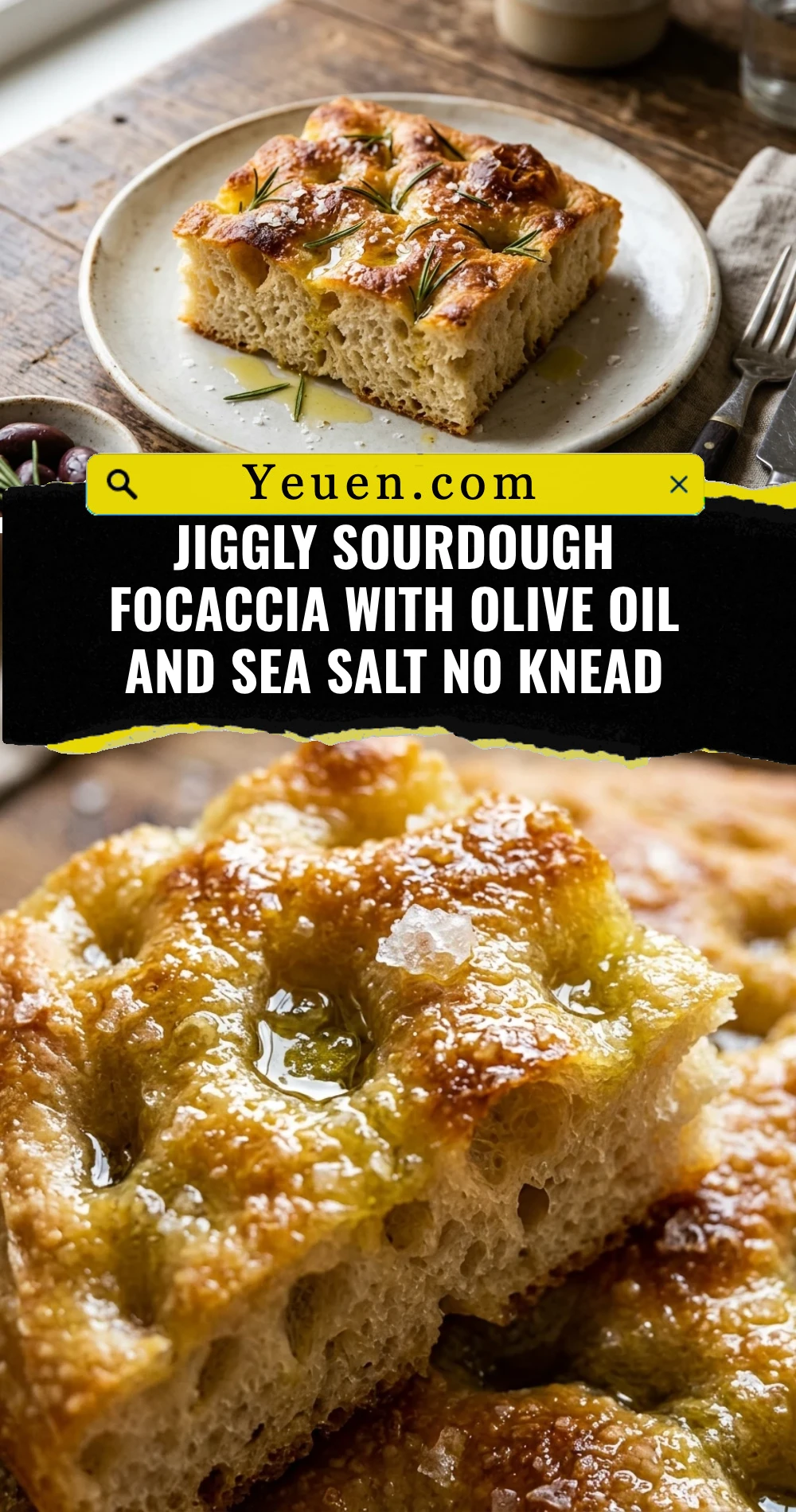
Jiggly Sourdough Focaccia With Olive Oil And Sea Salt No Knead
There is nothing quite as satisfying as poking your fingers into a cold, bubbly dough and watching it jiggle back at you. This Jiggly Sourdough Focaccia is the ultimate bread-making experience for those who love high-reward results with very little effort. Forget the intense kneading and messy counters; this recipe relies on time and hydration to create that iconic open crumb and crispy, golden crust. Bathed in rich extra virgin olive oil and finished with crunchy flakes of sea salt, it is a sensory delight that makes your kitchen smell like a professional Italian bakery.
Recipe Information
- Prep Time: 20 minutes (plus 18-24 hours fermenting)
- Cook Time: 25 minutes
- Total Time: 18 hours 45 minutes
- Servings: 12 servings
- Difficulty: Easy
Nutrition values
- Calories: 210 kcal per serving
- Protein: 5g
- Carbs: 34g
Why Make This Jiggly Sourdough Focaccia With Olive Oil And Sea Salt No Knead
This recipe is a game-changer for busy home bakers. Because it is a no-knead method, the gluten develops naturally over time in the refrigerator. The high hydration level ensures the dough stays incredibly soft and “jiggly,” which translates to a light, airy interior once baked. It uses your active sourdough starter to provide a complex, tangy flavor that store-bought yeast simply cannot replicate. Plus, it is incredibly versatile; you can serve it as a side for pasta, use it for gourmet sandwiches, or enjoy it all on its own as a snack.
Ingredients
- 100g active sourdough starter (fed and bubbly)
- 375g warm water
- 500g bread flour (or all-purpose flour)
- 10g fine sea salt
- 20g extra virgin olive oil (for the dough)
- 3-4 tablespoons extra virgin olive oil (for the pan and topping)
- Flaky sea salt (for finishing)
Directions
Step 1: Mixing the Dough
In a large mixing bowl, whisk together the active sourdough starter and warm water until the starter mostly dissolves. Add the flour and fine sea salt. Use a sturdy spatula or your hands to mix until a shaggy dough forms and no dry flour remains. Drizzle 20g of olive oil over the dough, turn it to coat, and cover the bowl with a damp cloth or plastic wrap. Let it rest for 30 minutes.
Step 2: Stretch and Folds
Perform three sets of “stretch and folds” every 30 minutes. To do this, grab one side of the dough, pull it upward, and fold it over the center. Rotate the bowl and repeat four times until the dough feels tighter. After the final set, cover the bowl tightly and place it in the refrigerator for 12 to 24 hours. This cold fermentation develops the flavor and creates those beautiful bubbles.
Step 3: Secondary Proofing
Generously coat a 9×13 inch baking pan with 2 tablespoons of olive oil. Gently transfer the cold dough into the pan. Do not force it to the corners yet. Cover the pan and let the dough rise at room temperature for 2 to 4 hours. The dough is ready when it has doubled in size, looks very bubbly, and jiggles easily when you shake the pan.
Step 4: Dimpling and Baking
Preheat your oven to 425°F (220°C). Drizzle the top of the dough with more olive oil. Grease your fingers and press them straight down into the dough to create deep dimples all over the surface. Sprinkle generously with flaky sea salt. Place the pan in the oven and bake for 20 to 25 minutes, or until the top is deep golden brown and the edges are crispy.
Step 5: Cooling and Serving
Remove the focaccia from the oven and let it rest in the pan for 5 minutes. Carefully transfer the bread to a wire cooling rack to prevent the bottom from becoming soggy. Allow it to cool for at least 15 to 20 minutes before slicing. This wait time ensures the crumb sets perfectly.
Expert Tips for Perfect Jiggly Sourdough Focaccia With Olive Oil And Sea Salt No Knead
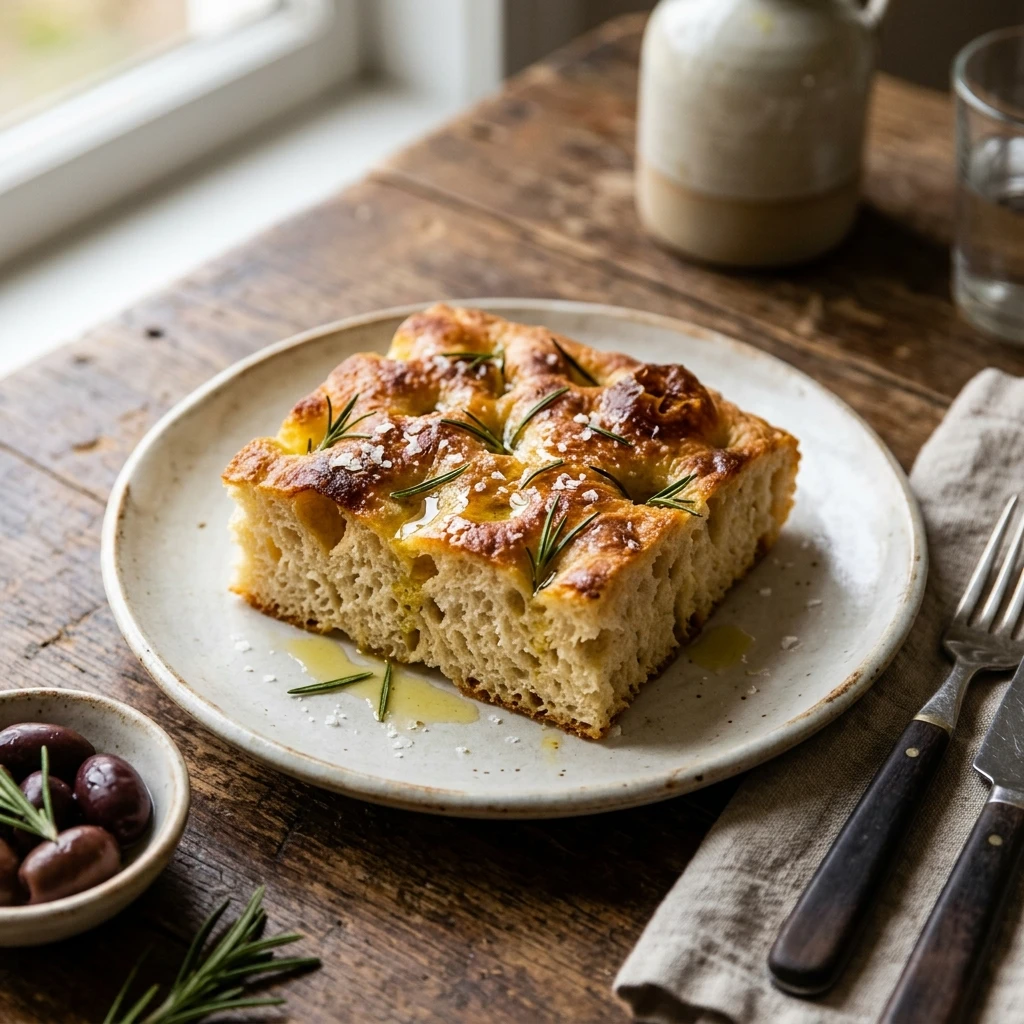
Use a high-quality extra virgin olive oil because the flavor shines through in the finished bread. If your kitchen is cold, your dough may take longer to proof; look for the “jiggle” rather than watching the clock. To get a truly crispy bottom, ensure you use enough oil in the pan—it essentially fries the bottom of the dough while it bakes. If you want a more decorative look, you can press fresh herbs like rosemary or sage into the dimples before baking.
Delicious Variations
- Garlic and Herb: Add minced garlic and fresh rosemary to the oil before dimpling.
- Tomato and Pesto: Press halved cherry tomatoes into the dough and swirl in small dollops of basil pesto.
- Caramelized Onion: Spread thinly sliced, sautéed onions over the top for a sweet and savory finish.
- Cheesy Crust: Sprinkle a handful of freshly grated Parmesan cheese over the top during the last 5 minutes of baking.
Frequently Asked Questions
Can I use sourdough discard instead of active starter?
For the best rise and the “jiggliest” texture, an active, bubbly starter is highly recommended. Discard may result in a denser bread that does not rise as well.
What if my dough isn’t bubbling?
Make sure your starter was truly active before mixing. Also, ensure your room temperature is warm enough during the second proof. If it’s cold, move the dough to a warmer spot like the inside of an oven with the light turned on.
Can I bake this in a cast iron skillet?
Absolutely! A 12-inch cast iron skillet works perfectly and produces an even crispier crust. Just make sure to grease it well with olive oil.
How do I store leftovers?
Store the focaccia in an airtight container at room temperature for up to 2 days. To revive the crunch, toast it in a 350°F oven for a few minutes.
Why is my focaccia sticking to the pan?
This usually happens if you didn’t use enough olive oil or if your pan isn’t non-stick. Always use a generous amount of oil, or line the bottom of the pan with parchment paper if you are worried about sticking.
Conclusion
Making this Jiggly Sourdough Focaccia is a therapeutic process that yields incredible results. The combination of the tangy sourdough, the rich olive oil, and the crunch of sea salt creates a flavor profile that is hard to beat. Whether you are a beginner or a seasoned baker, this no-knead method simplifies the art of bread making. Give it a try, and enjoy the most beautiful, bubbly loaf you have ever made in your own kitchen.