Follow Me On Pinterest!
Jiggly Sourdough Focaccia With Grapes And Rosemary Sweet
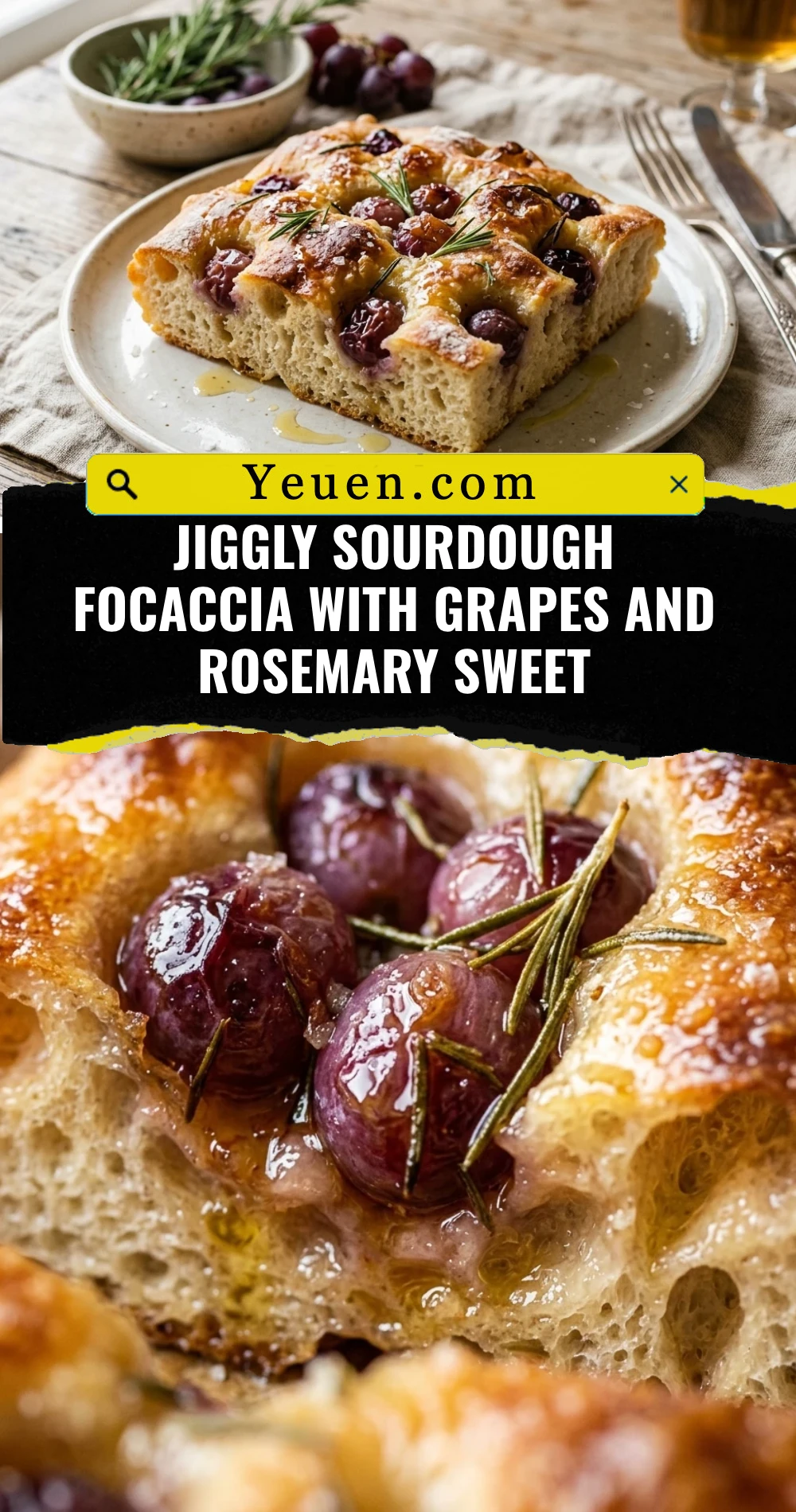
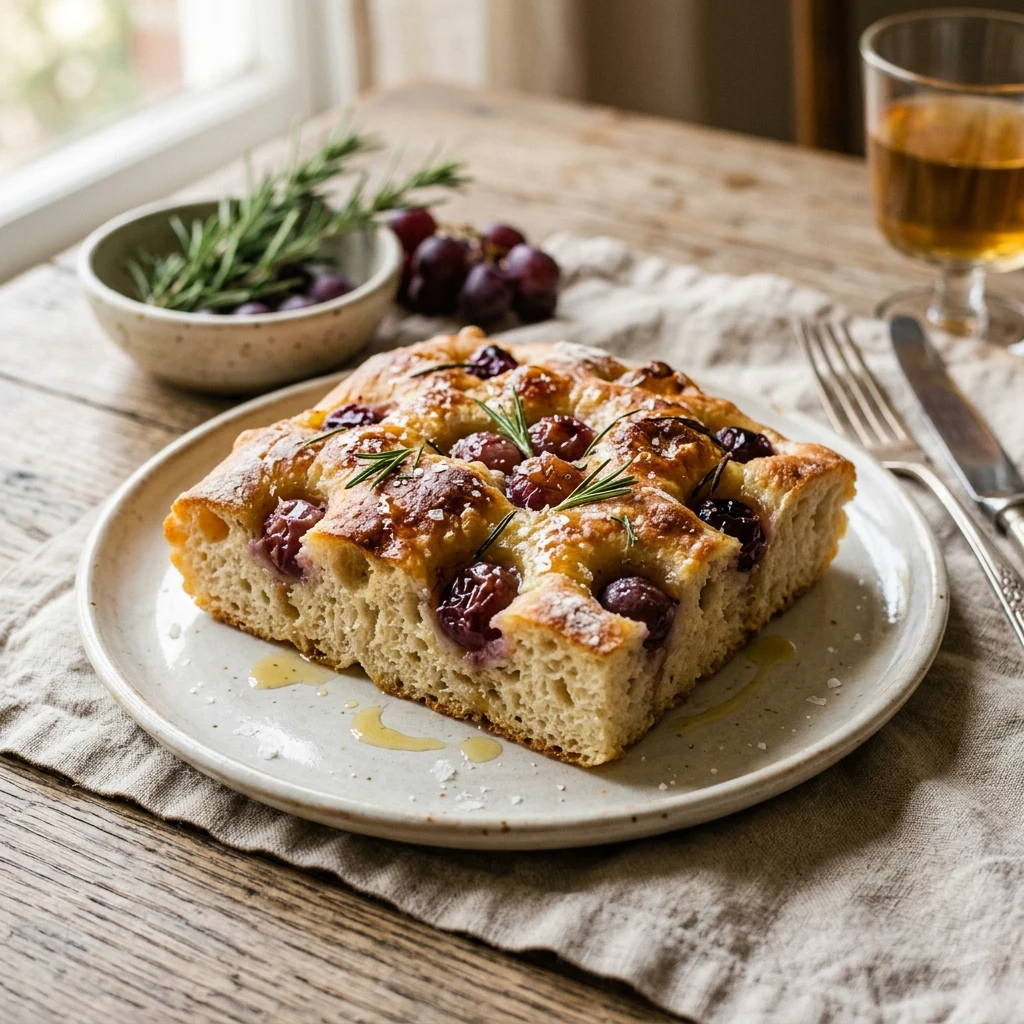
Imagine a bread so airy and hydrated that it literally wobbles when you shake the pan. This Jiggly Sourdough Focaccia with Grapes and Rosemary is the ultimate sweet-and-savory masterpiece. It combines the characteristic tang of a long-fermented sourdough starter with the burst of juicy roasted grapes and the piney aroma of fresh rosemary. Topped with a sprinkle of crunchy sugar and flaky salt, this focaccia offers a complex flavor profile that works perfectly as a decadent brunch centerpiece or a sophisticated afternoon snack. If you have been looking for that elusive “shimmering” crumb and a golden, olive-oil-fried crust, you have found the right recipe.
Recipe Information
- Prep Time: 30 minutes (active) + 12-18 hours (fermentation)
- Cook Time: 25 minutes
- Total Time: 18 hours 55 minutes
- Servings: 8 servings
- Difficulty: Medium
Nutrition values
- Calories: 285 kcal
- Protein: 6g
- Carbs: 42g
Why Make This Jiggly Sourdough Focaccia With Grapes And Rosemary Sweet
This recipe stands out because it maximizes hydration to achieve that famous “jiggly” texture. Unlike standard bread, this dough behaves more like a liquid, allowing for massive air bubbles and a marshmallow-soft interior. The addition of grapes provides a natural sweetness that caramelizes in the oven, creating small pockets of jam-like fruit. Rosemary cuts through the richness of the olive oil, while the sourdough fermentation makes the bread easier to digest and incredibly flavorful. It is a sensory experience that looks as beautiful as it tastes.
Ingredients
- 100g active sourdough starter (fed and bubbly)
- 350g lukewarm filtered water
- 450g high-protein bread flour
- 10g fine sea salt
- 20g honey or maple syrup
- 50g extra virgin olive oil (plus more for the pan)
- 1.5 cups red seedless grapes
- 2 tablespoons fresh rosemary sprigs
- 1 tablespoon turbinado sugar (coarse sugar)
- Flaky sea salt for finishing
Directions
Step 1: Mix the Dough
In a large glass bowl, whisk together the lukewarm water, sourdough starter, and honey until the starter mostly dissolves. Add the bread flour and sea salt. Mix by hand or with a sturdy spatula until a shaggy, sticky dough forms and no dry flour remains. Cover the bowl with a damp cloth and let it rest for 30 minutes to allow the flour to hydrate.
Step 2: Stretch and Folds
Wet your hands to prevent sticking. Reach under one side of the dough, pull it upward, and fold it over the center. Rotate the bowl and repeat this 4 times. Perform three sets of these “stretch and folds” spaced 30 minutes apart. You will notice the dough becoming smoother, stronger, and more elastic with each set. After the final set, the dough should look glossy.
Step 3: Bulk Fermentation
Cover the bowl tightly with plastic wrap or a beeswax wrap. Let the dough sit at room temperature (around 70°F) for 4 to 6 hours, or until it has grown in size by about 50% and shows visible bubbles on the surface. For the best flavor, place the bowl in the refrigerator overnight (12-14 hours) for a cold ferment.
Step 4: Second Proof and Shaping
Generously coat a 9×13 inch baking pan with 2-3 tablespoons of olive oil. Gently tip the dough into the pan. Do not force it to the corners yet. Let it rest for 2 to 4 hours at room temperature. During this time, the dough will naturally spread to the edges and become very bubbly and “jiggly.”
Step 5: Dimpling and Toppings
Preheat your oven to 425°F (220°C). Drizzle more olive oil over the top of the dough. Using your fingertips, press straight down into the dough to create deep dimples, making sure to touch the bottom of the pan. Press the red grapes deep into the dimples. Sprinkle the fresh rosemary, turbinado sugar, and flaky sea salt evenly over the surface.
Step 6: Baking
Place the pan in the center rack of the oven. Bake for 20 to 25 minutes until the top is deeply golden brown and the grapes have started to burst. For a crispier bottom, you can move the pan to the lower rack for the last 5 minutes. Remove from the oven and let it cool in the pan for 10 minutes before transferring to a wire rack. This prevents the bottom from getting soggy.
Expert Tips for Perfect Jiggly Sourdough Focaccia With Grapes And Rosemary Sweet
To get the most bubbles, ensure your sourdough starter is at its peak activity—it should be doubled or tripled in size and pass the “float test.” Use a high-protein bread flour (12% protein or higher) to support the high water content. When dimpling, don’t be afraid to be firm; you want to create deep wells so the olive oil and grape juices pool inside. If your dough feels too tight to stretch to the corners of the pan, let it rest for another 15 minutes and try again. Finally, always use high-quality extra virgin olive oil, as it provides the primary flavor for the crust.
Delicious Variations
If you want to experiment, try adding a drizzle of balsamic glaze over the finished bread for a tangy kick. You can also crumble goat cheese or gorgonzola over the top during the last 5 minutes of baking for a creamy, savory addition. For a different fruit profile, swap the grapes for sliced fresh figs or blackberries. If you prefer a more herbal notes, add a few leaves of fresh thyme along with the rosemary.
Frequently Asked Questions
Can I use all-purpose flour instead of bread flour?
You can, but the bread may not have the same height or “jiggle.” Bread flour contains more protein, which creates the gluten structure necessary to hold large air bubbles and a high water content. If using all-purpose, reduce the water by about 20 grams.
My dough didn’t bubble during the second proof. What happened?
Usually, this means the environment was too cold or the starter wasn’t active enough. Ensure your kitchen is warm (70-75°F) or place the dough in an off oven with the light turned on. Sourdough is sensitive to temperature and takes longer than commercial yeast.
How do I store leftover sweet focaccia?
This focaccia is best on the day it is made because of the fresh fruit. However, you can store leftovers in an airtight container at room temperature for 2 days. To revive it, toast it in a 350°F oven for 5 minutes to crisp up the edges.
Can I make this with commercial yeast?
Yes. If you don’t have a sourdough starter, use 7g of active dry yeast mixed with the water. Skip the overnight fermentation and proceed to the second proof once the dough has doubled in size (usually 1-2 hours).
Why are my grapes falling off the bread?
You must press the grapes deep into the dough during the dimpling stage. As the bread rises in the oven, it will naturally push the toppings upward. If they aren’t buried halfway into the dough, they will simply sit on top and roll off when sliced.
Conclusion
Making Jiggly Sourdough Focaccia With Grapes And Rosemary Sweet is a rewarding process that rewards patience with incredible texture. The contrast between the crunchy, salty exterior and the soft, sweet interior makes it a crowd favorite at any gathering. Whether you are a seasoned sourdough baker or a beginner looking to try something new, this recipe offers a foolproof way to achieve professional-level results at home. Enjoy the process of dimpling that airy dough and savor the aroma of roasting rosemary filling your kitchen.