Follow Me On Pinterest!
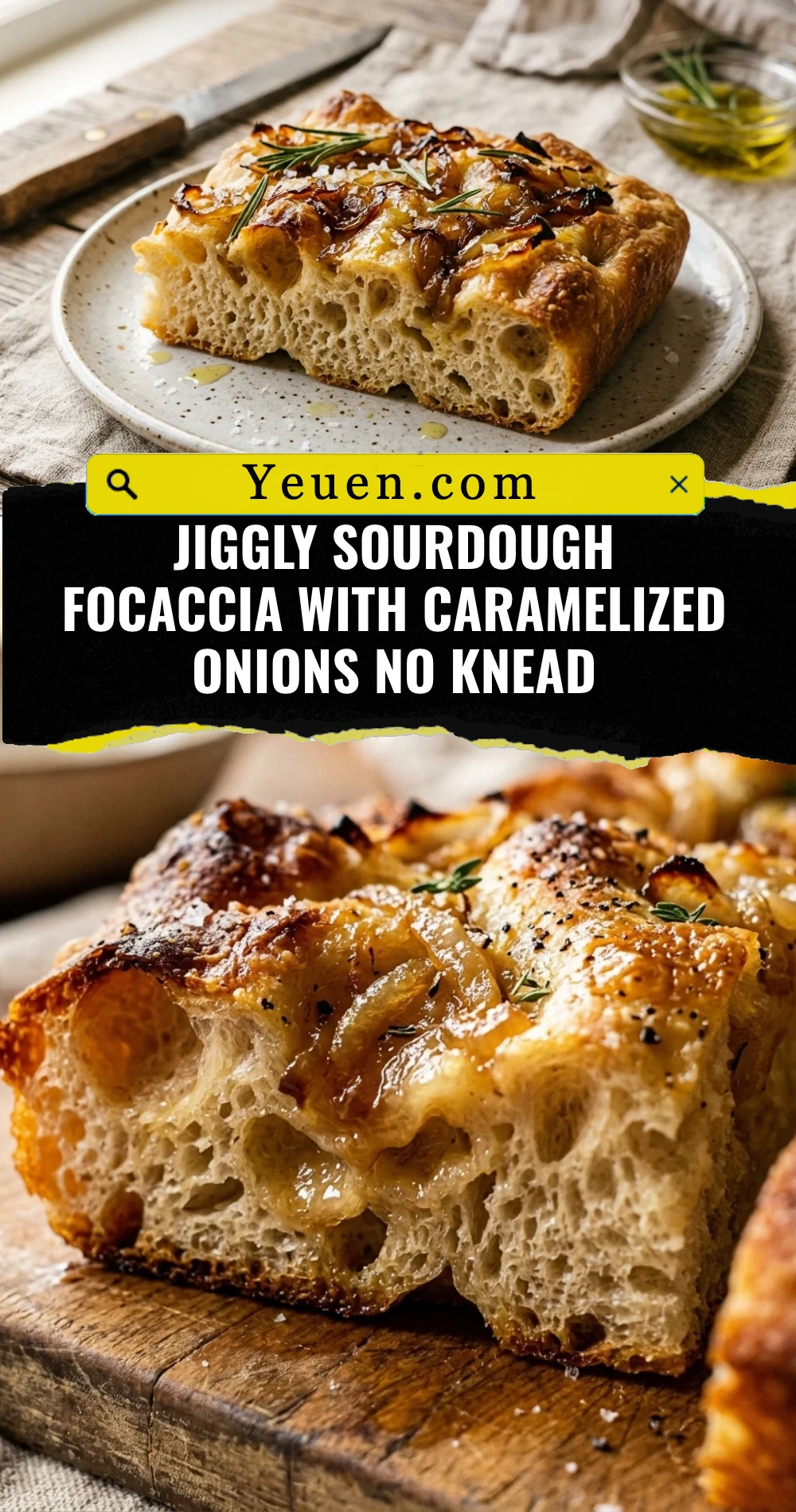
Jiggly Sourdough Focaccia With Caramelized Onions No Knead
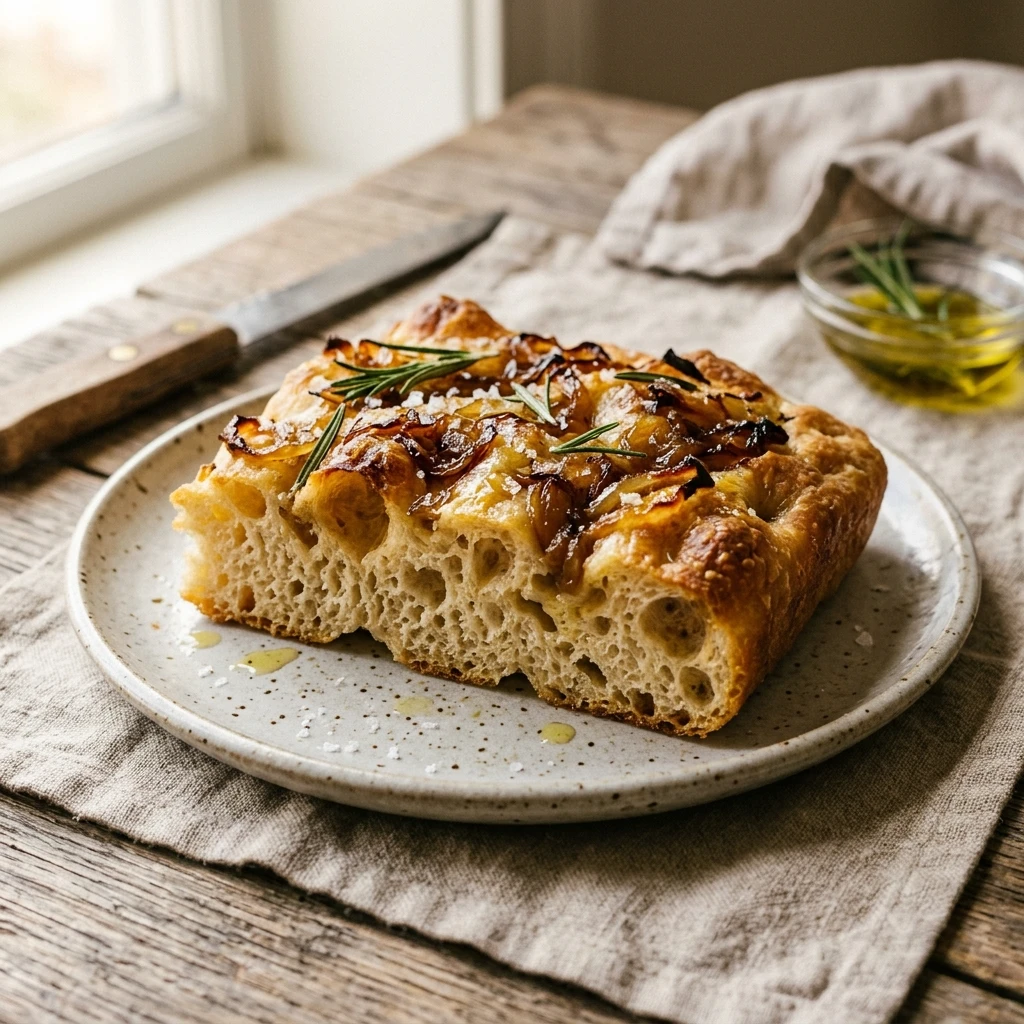
There is something magical about a dough so hydrated and airy that it actually jiggles when you shake the pan. This jiggly sourdough focaccia with caramelized onions is the ultimate bread-making experience for those who love high-reward, low-effort recipes. By skipping the kneading process and letting time do the heavy lifting, you create a crumb that is soft, bouncy, and filled with those iconic sourdough bubbles. Topped with deeply sweet, golden-brown caramelized onions and a generous drizzle of olive oil, this focaccia strikes the perfect balance between a tangy sourdough base and a savory-sweet topping. Whether you are a seasoned baker or a sourdough novice, this recipe will turn your kitchen into a professional artisan bakery.
Recipe Information
- Prep Time: 30 minutes (active) + 18 hours (fermentation)
- Cook Time: 25 minutes
- Total Time: 18 hours 55 minutes
- Servings: 10 servings
- Difficulty: Easy
Nutrition values
- Calories: 285 kcal
- Protein: 7g
- Carbs: 42g
Why Make This Jiggly Sourdough Focaccia With Caramelized Onions No Knead
This recipe is a game-changer for anyone who wants artisanal bread without the physical labor of kneading. The high hydration level ensures that the interior stays incredibly moist and “jiggly,” while the long cold ferment in the refrigerator develops a complex, tangy flavor that quick breads simply can’t match. Using caramelized onions adds a layer of sophisticated sweetness that pairs perfectly with the salty sea salt flakes and rich olive oil. It is the perfect side dish for pasta, a base for gourmet sandwiches, or a standalone snack that will disappear from the table in minutes.
Ingredients
- 100g active, bubbly sourdough starter (fed within 4-8 hours)
- 400g warm water (filtered)
- 500g high-protein bread flour
- 10g sea salt
- 20g extra virgin olive oil (for the dough)
- 3 large yellow onions, thinly sliced
- 2 tablespoons butter
- 1 tablespoon balsamic vinegar
- Additional extra virgin olive oil for the pan and drizzling
- Flaky sea salt for finishing
Directions
Step 1: Mix the Dough
In a large mixing bowl, whisk together your active sourdough starter and warm water until the starter is mostly dissolved and the water looks milky. Add the bread flour, sea salt, and 20g of olive oil. Use a sturdy spatula or your hands to mix until all the flour is hydrated and a shaggy dough forms. Cover the bowl with a damp cloth or plastic wrap and let it rest for 30 minutes to allow the flour to fully absorb the liquid.
Step 2: Stretch and Folds
Instead of kneading, you will perform a series of “stretch and folds” to build strength. Wet your hand, grab one side of the dough, pull it upward, and fold it over toward the center. Rotate the bowl and repeat this 4 times. Perform 3 sets of these folds, spaced 30 minutes apart. You will notice the dough becoming smoother and more elastic with each set. After the final set, cover the bowl and let the dough rise at room temperature for 2 to 4 hours until it has grown by about 50%.
Step 3: Cold Ferment
Transfer the covered bowl to the refrigerator for a long cold ferment. This should last anywhere from 12 to 72 hours. This step is crucial for developing those large air bubbles and the signature sourdough tang. The cold environment slows down the yeast while allowing the bacteria to create deep flavor profiles.
Step 4: Pan Proof and Caramelize Onions
Generously coat a 9×13 inch metal baking pan with olive oil. Gently transfer the cold dough into the pan. Do not force it to the corners yet; let it rest and warm up at room temperature for 2 to 4 hours. While the dough is proofing, melt butter in a skillet over medium-low heat. Add sliced onions and a pinch of salt. Cook slowly, stirring occasionally, for about 30-40 minutes until they are deep golden brown. Stir in the balsamic vinegar at the end and let them cool.
Step 5: Dimple and Bake
Preheat your oven to 425°F (220°C). Once the dough has filled the pan and looks bubbly and jiggly, drizzle more olive oil over the top. Use your fingertips to press straight down into the dough, creating deep dimples all over the surface. Spread the caramelized onions evenly over the top and sprinkle with flaky sea salt. Bake for 20 to 25 minutes until the crust is golden brown and the bottom is crisp. Transfer to a wire rack immediately to prevent a soggy bottom.
Expert Tips for Perfect Jiggly Sourdough Focaccia With Caramelized Onions No Knead
To get the most “jiggle,” ensure your water-to-flour ratio stays high. If the dough feels too sticky to handle, just wet your hands with water rather than adding more flour. Using a metal pan rather than glass or ceramic will give you a much crispier bottom crust. For the best caramelized onions, be patient; cooking them too fast will burn them instead of drawing out their natural sugars. Always wait at least 15 minutes before slicing into the focaccia to allow the internal structure to set.
Delicious Variations
- Rosemary and Garlic: Add fresh rosemary needles and minced garlic to the caramelized onions for an aromatic twist.
- Goat Cheese Topper: Dollop small amounts of goat cheese over the onions before baking for a creamy, tart contrast.
- Hot Honey Drizzle: After baking, drizzle the focaccia with spicy honey to enhance the sweetness of the onions.
- Everything Bagel Style: Sprinkle everything bagel seasoning over the oil and onions for extra crunch and savory flavor.
Frequently Asked Questions
Can I use sourdough discard instead of active starter?
For this specific recipe, an active, bubbly starter is highly recommended because it provides the lift needed for a jiggly, airy texture. If you use discard, the bread will be much denser and won’t have the same height or bubble structure.
How do I know when the focaccia is finished proofing in the pan?
The dough should look very bubbly and “puffy.” If you gently shake the pan, the dough should wobble like jelly. If it still feels stiff or hasn’t reached the edges of the pan, let it proof for another hour.
Why did my focaccia stick to the pan?
Focaccia requires a surprising amount of olive oil. Ensure you coat the bottom and sides of the pan thoroughly. If you are worried about sticking, you can line the bottom of the pan with parchment paper, but make sure to oil the paper as well.
How should I store leftovers?
Store leftovers in an airtight container at room temperature for up to 2 days. To revive the texture, reheat slices in a 350°F oven or a toaster oven for a few minutes until the crust becomes crisp again.
Can I make the dough the same day instead of cold proofing?
Yes, you can skip the fridge and let it rise at room temperature until doubled, but you will lose the signature “jiggle” and the depth of flavor that comes from the slow cold fermentation process.
Conclusion
This jiggly sourdough focaccia with caramelized onions is more than just bread; it is a centerpiece that celebrates the beauty of slow baking. The contrast between the salty, olive-oil-soaked crust and the sweet, jammy onions makes it an instant favorite for any gathering. By letting time and high hydration do the work for you, you can achieve professional-level results with very little active effort. Give this no-knead method a try, and you will never want to go back to standard store-bought bread again!