Follow Me On Pinterest!
Fluffy Japanese Souffle Pancakes Classic Golden
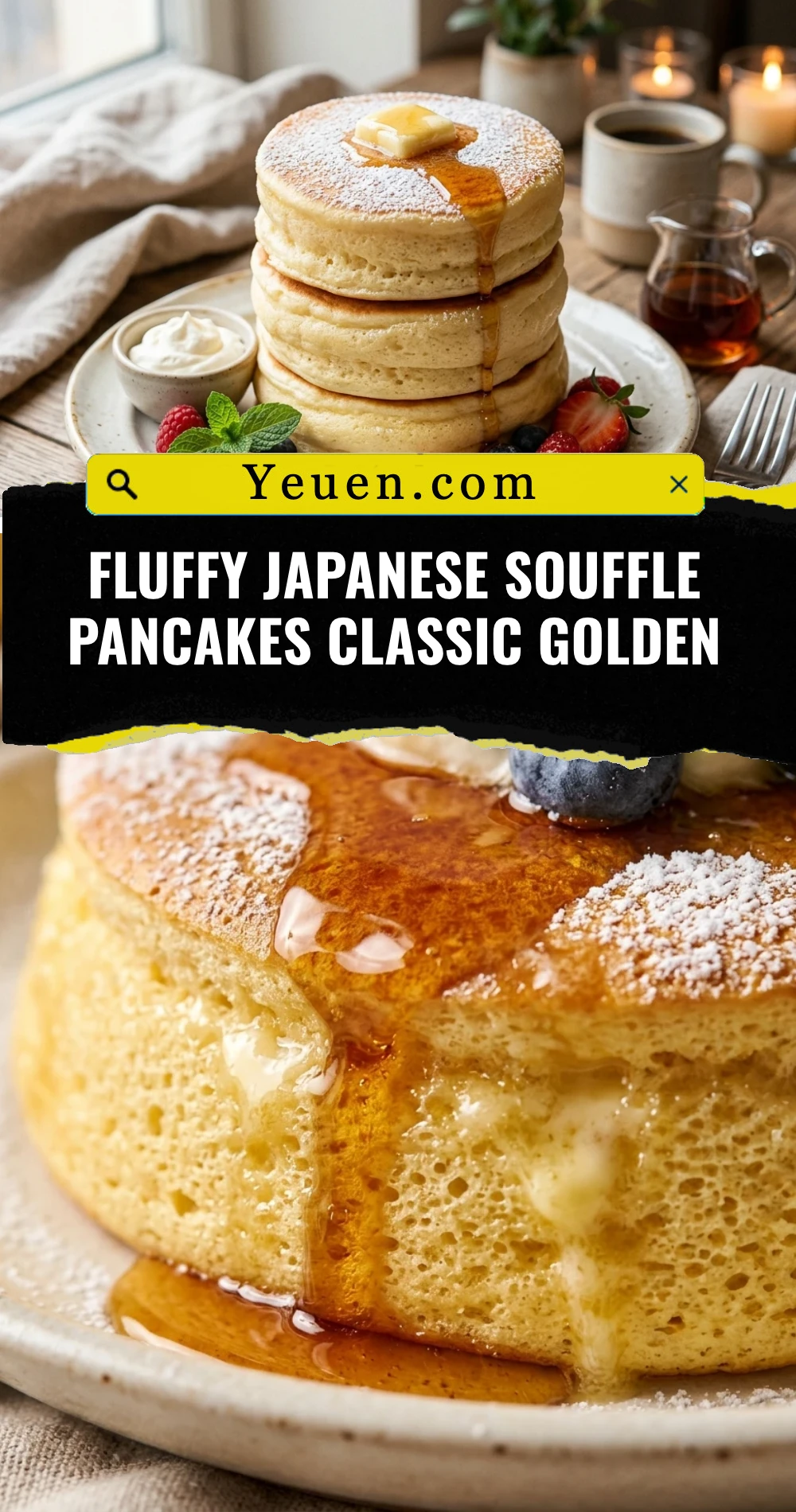
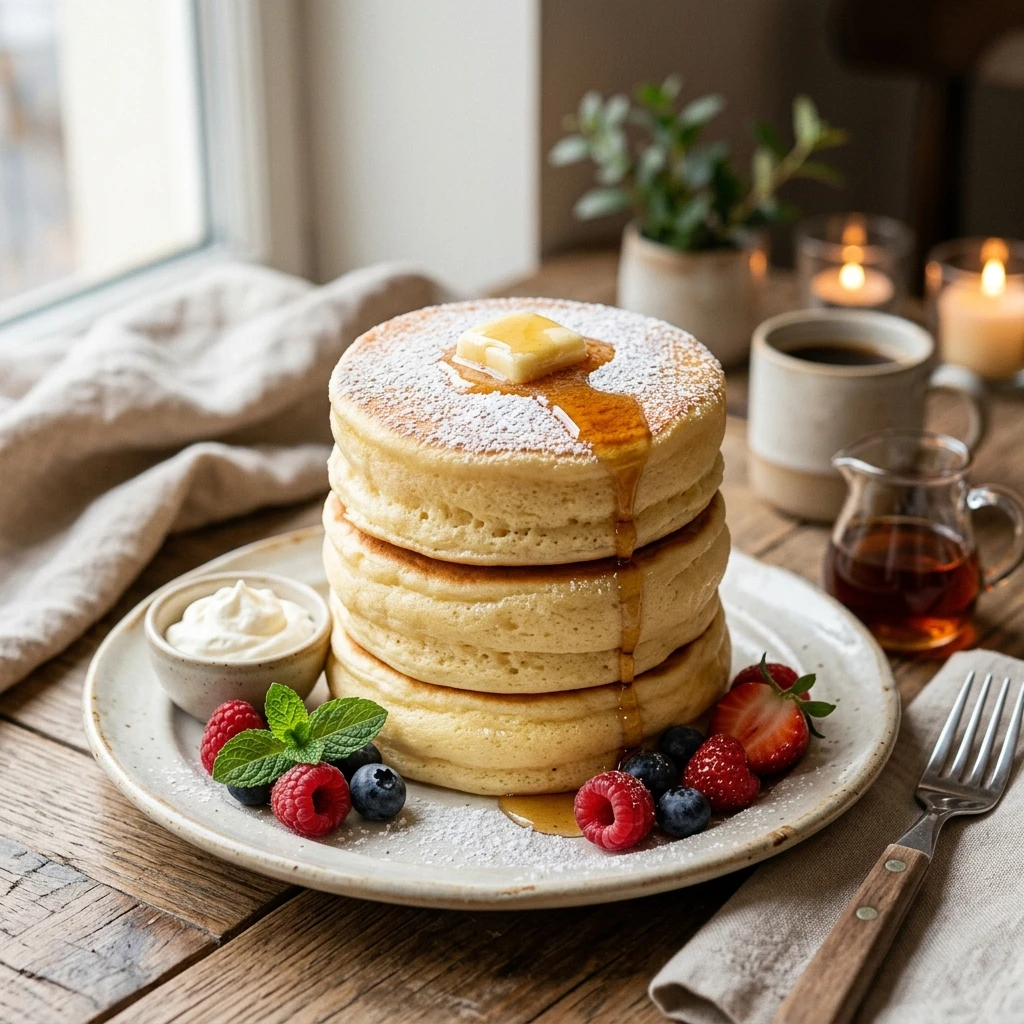
Imagine biting into a cloud that tastes like a sweet, buttery dream. That is exactly what it feels like to eat these Fluffy Japanese Souffle Pancakes. Unlike traditional flat pancakes, these wobbly masterpieces stand tall and airy, melting the moment they hit your tongue. You do not need a trip to a high-end Tokyo café to experience this breakfast magic; you can recreate that iconic golden crust and pillowy texture right in your own kitchen. Let’s master the art of the perfect souffle pancake together and turn your next brunch into a viral-worthy event.
Recipe Information
- Prep Time: 20 minutes
- Cook Time: 15 minutes
- Total Time: 35 minutes
- Servings: 2 servings (makes about 4-6 pancakes)
- Difficulty: Medium
Nutrition values
- Calories: 290 kcal
- Protein: 9g
- Carbs: 36g
Why Make This Fluffy Japanese Souffle Pancakes Classic Golden
These pancakes are the ultimate breakfast luxury. They offer a unique texture that sits somewhere between a light sponge cake and a delicate souffle. Making them at home allows you to control the sweetness and ensures they are served fresh and hot—the only way they should be eaten. They use simple pantry staples like eggs, flour, and sugar, but the technique transforms these humble ingredients into something truly extraordinary. Plus, watching them wobble on the plate is incredibly satisfying!
Ingredients
- 2 large eggs (separated into yolks and whites)
- 1.5 tablespoons whole milk
- 1/4 teaspoon vanilla extract
- 1/4 cup all-purpose flour
- 1/2 teaspoon baking powder
- 2 tablespoons granulated sugar
- 1/4 teaspoon cream of tartar (or a few drops of lemon juice)
- 1 tablespoon vegetable oil (for the pan)
- 2 tablespoons water (for steaming)
- Optional toppings: Butter, maple syrup, fresh berries, or whipped cream
Directions
Step 1: Create the Egg Yolk Base
In a small mixing bowl, whisk together the two egg yolks, milk, and vanilla extract until the mixture is smooth and pale. Sift the all-purpose flour and baking powder into the bowl. Whisk gently until just combined. Do not overmix at this stage; you want a thick, smooth paste without any large lumps.
Step 2: Whip the Meringue
In a separate, perfectly clean glass or metal bowl, begin beating the egg whites with the cream of tartar using an electric hand mixer. Start on low speed until the whites become frothy. Gradually add the sugar one-third at a time while increasing the speed to medium-high. Continue beating until the whites form stiff, glossy peaks that stand straight up when you lift the beaters. This meringue is the secret to the pancake’s height.
Step 3: Fold the Batter Gently
Add about one-third of the meringue to the egg yolk mixture. Use a whisk to gently incorporate it; this lightens the base. Now, switch to a silicone spatula. Add the rest of the meringue and fold it in using a very gentle “cut and fold” motion. Be careful not to deflate the air bubbles you worked so hard to create. Stop as soon as no white streaks remain.
Step 4: The Low-Heat Steaming Process
Preheat a non-stick frying pan over the lowest possible heat setting. Lightly grease the surface with vegetable oil and wipe off any excess with a paper towel. Scoop large mounds of batter onto the pan, stacking them vertically. Add 1 tablespoon of water to the empty spaces of the pan and cover immediately with a lid. The steam helps the pancakes cook through without burning the bottoms. Cook for about 5 to 6 minutes.
Step 5: Flip and Finish
Carefully lift the lid and add a tiny bit more batter to the top of each pancake if you have any left. Use a wide spatula to very gently flip each pancake over. Add another tablespoon of water to the pan, cover again, and cook for another 4 to 5 minutes. The pancakes should be golden brown on both sides and feel stable but jiggly.
Step 6: Plating
Transfer the pancakes to a plate immediately. They will naturally deflate slightly after a few minutes, so serve them while they are at their tallest. Top with a pat of butter, a generous drizzle of maple syrup, and fresh fruit for the classic golden look.
Expert Tips for Perfect Fluffy Japanese Souffle Pancakes Classic Golden
- Use Cold Eggs: Cold egg whites stabilize better and create a stronger meringue, which is essential for holding the height of the pancake.
- Keep the Heat Low: If your pan is too hot, the bottom will burn before the center cooks. Patience is your best friend here; keep the flame at its lowest setting.
- The Lid is Mandatory: You cannot skip the lid. The trapped steam is what actually cooks the middle of these thick pancakes.
- Wipe the Pan: Don’t leave pools of oil in the pan. A light film applied with a paper towel ensures a perfectly even, golden-brown crust.
- Stiff Peaks Matter: If your meringue is runny, your pancakes will be flat. Beat until the peaks are firm and do not droop.
Delicious Variations
- Matcha Green Tea: Sift 1 teaspoon of high-quality matcha powder in with the flour for an earthy flavor and vibrant green color.
- Chocolate Chip: Sprinkle a few mini chocolate chips onto the batter mounds just before you put the lid on for the first time.
- Lemon Poppy Seed: Add lemon zest to the yolk mixture and a teaspoon of poppy seeds for a bright, citrusy twist.
- Savory Style: Omit the vanilla and half the sugar. Serve with crispy bacon and a fried egg on the side for a sweet-and-salty combo.
Frequently Asked Questions
Why did my pancakes turn out flat?
Flat pancakes usually happen for two reasons: either the egg whites weren’t beaten to stiff peaks, or you deflated the air while folding the batter. Make sure the meringue is very firm and fold as gently as possible.
Can I make the batter in advance?
Unfortunately, no. The air bubbles in the meringue begin to pop almost immediately. For the fluffiest results, you must cook the batter as soon as it is mixed.
Do I need a special ring mold?
While some people use metal ring molds to get perfectly circular sides, you don’t need them. Scooping the batter into tall mounds works perfectly well and gives them a more authentic, rustic look.
What if I don’t have cream of tartar?
You can substitute the cream of tartar with an equal amount of lemon juice or white vinegar. The acid helps stabilize the egg white proteins, ensuring a strong meringue.
How do I know when they are ready to flip?
The surface of the pancake should look slightly matte and no longer wet. If you gently touch the side and it doesn’t stick to your finger, it is usually safe to flip.
Conclusion
Mastering the Fluffy Japanese Souffle Pancake is a rewarding culinary skill that brings a touch of whimsy to your breakfast table. While the technique requires a little bit of practice and a lot of patience, the result is a breakfast experience unlike any other. These golden, airy treats prove that with just a few eggs and the right method, you can create something truly magical. Grab your whisk and get ready to enjoy the fluffiest pancakes you have ever tasted!