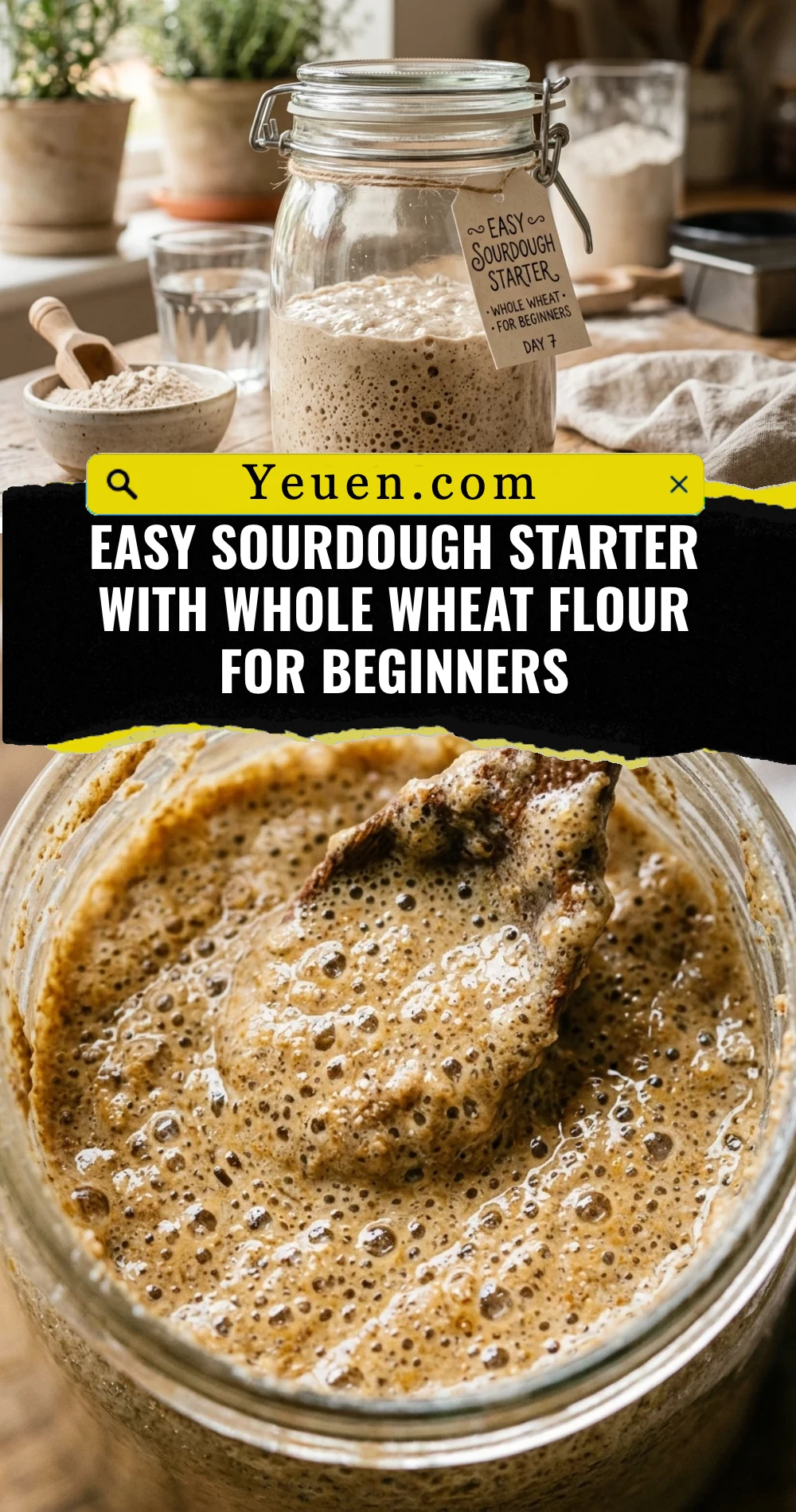
Follow Me On Pinterest!
Easy Sourdough Starter With Whole Wheat Flour For Beginners
Starting your own sourdough journey feels like a rite of passage for any home baker, and using whole wheat flour is the absolute best way to ensure success. Whole wheat flour contains more nutrients and wild yeast than processed white flour, which means your starter will likely bubble to life much faster. You do not need a laboratory or fancy equipment to make this happen. With just two simple ingredients and a bit of patience, you will create a living culture that gives your bread incredible flavor, a chewy texture, and a beautiful rise. Let’s get your kitchen smelling like a professional bakery with this foolproof guide for beginners.
Recipe Information
- Prep Time: 10 minutes (per day)
- Cook Time: 0 minutes
- Total Time: 7 days
- Servings: 1 Starter (approximately 2 cups)
- Difficulty: Easy
Nutrition values
Note: Values are estimated per 1/2 cup serving of active starter.
- Calories: 110 kcal
- Protein: 4g
- Carbs: 22g
Why Make This Easy Sourdough Starter With Whole Wheat Flour For Beginners
Whole wheat flour is a powerhouse for sourdough beginners. Because the flour retains the bran and germ, it provides a diverse range of minerals and vitamins that “feed” the wild yeast and beneficial bacteria. This leads to a more robust fermentation process compared to using all-purpose flour alone. You will notice more activity, more bubbles, and a more complex, nutty aroma. Additionally, a whole wheat starter is more resilient to temperature changes and minor feeding delays, making it the perfect low-stress entry point into the world of wild yeast baking.
Ingredients
- 1 bag of high-quality Whole Wheat Flour
- Filtered water (room temperature)
- A clean glass jar (at least 1-quart capacity)
- A digital kitchen scale (highly recommended) or measuring cups
- A breathable cover (like a paper towel, cloth, or loose lid)
Directions
Step 1: Initial Mixing and Activation
On the first day, place your glass jar on a digital scale and tare it to zero. Add 50 grams of whole wheat flour and 50 grams of filtered water to the jar. Stir the mixture vigorously with a small spatula or spoon until no dry flour remains. The consistency should be like a thick, pasty pancake batter. Scrape down the sides of the jar so you can clearly see the mixture. Cover the jar loosely with a cloth or a lid that isn’t screwed on tight. Place it in a warm spot (70-75°F) out of direct sunlight for 24 hours.
Step 2: The Daily Feeding Cycle
From day 2 through day 6, you must feed your starter every 24 hours. Start by “discarding” half of the mixture to make room for fresh food. Leave about 50 grams of starter in the jar. Add 50 grams of whole wheat flour and 50 grams of filtered water. Stir well to incorporate oxygen and fresh nutrients. By day 3 or 4, you should see small bubbles forming and notice a slightly sour or fruity smell. If the mixture looks dry, add an extra teaspoon of water; if it looks too runny, add a pinch more flour. Repeat this process daily, watching for the starter to begin rising and falling.
Step 3: Testing for Maturity and Storage
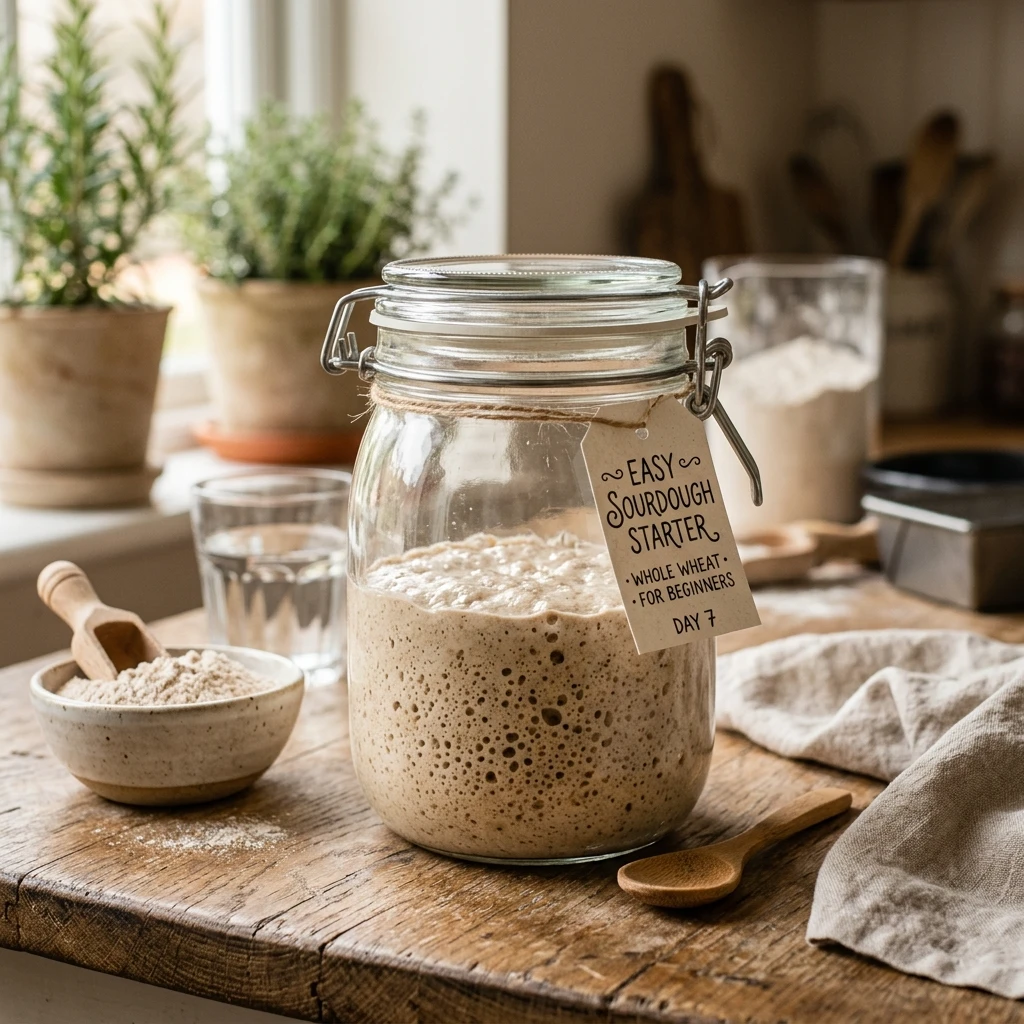
By day 7, your starter should be bubbly, spongy, and double in size within 4 to 6 hours after a feeding. To test if it is ready for baking, drop a small spoonful of the active starter into a glass of water. If it floats, it is full of carbon dioxide and ready to leaven bread! If it sinks, continue the daily feeding cycle for a few more days. Once mature, you can keep it on the counter and feed it daily, or move it to the refrigerator and feed it once a week to keep it dormant but healthy.
Expert Tips for Perfect Easy Sourdough Starter With Whole Wheat Flour For Beginners
- Use Filtered Water: Chlorine in tap water can sometimes inhibit the growth of wild yeast. Use filtered or bottled water for the best results.
- Consistency is Key: Try to feed your starter at the same time every day to establish a predictable fermentation rhythm.
- Temperature Matters: If your house is cold, your starter will grow slowly. Place it near a warm appliance or on top of the refrigerator to speed things up.
- Mark the Progress: Use a rubber band around the outside of the jar to mark the level of the starter right after you feed it. This helps you see exactly how much it has risen.
- Don’t Panic Over Liquid: If a dark liquid (called “hooch”) forms on top, don’t worry. It just means your starter is hungry. Pour it off and proceed with a normal feeding.
Delicious Variations
- Rye Hybrid: Substitute half of the whole wheat flour with rye flour for an even more aggressive fermentation and an earthy, spicy flavor profile.
- The Transition: Once your starter is strong (after 2 weeks), you can gradually transition it to an all-purpose white starter by feeding it white flour instead of whole wheat.
- Honey Boost: If your starter feels sluggish on day 3, add a tiny drop of raw honey to provide a quick sugar source for the yeast.
Frequently Asked Questions
What is “discard” and do I have to throw it away?
Discard is the portion of the starter you remove before feeding. You don’t have to throw it away! You can save it in a separate jar in the fridge to make pancakes, waffles, or crackers. We discard so the starter doesn’t grow to an unmanageable size.
My starter smells like vinegar or gym socks, is it ruined?
Not at all! Sourdough goes through various aromatic phases. A vinegary or funky smell usually means the bacteria are working hard but the yeast needs more food. Keep feeding it, and the scent will eventually turn into a pleasant, yeasty tang.
What should I do if I see mold?
If you see fuzzy green, black, or pink spots on the surface or the sides of the jar, throw the whole thing away and start over. Mold is rare if you use clean jars and fresh flour, but it is better to be safe than sorry.
Can I use a metal spoon to stir my starter?
Yes, modern stainless steel is perfectly fine for stirring. However, avoid leaving metal lids in direct contact with the starter for long periods, as the acidity can eventually corrode some metals. Glass or food-grade plastic is best for long-term storage.
How long can I leave my starter in the fridge without feeding?
A healthy, mature starter can usually survive 2 to 3 weeks in the fridge without a feeding. If you plan to leave it longer, give it a large feeding (more flour and water than usual) before putting it away to ensure it has enough “fuel.”
Conclusion
Building an easy sourdough starter with whole wheat flour is a rewarding process that connects you to the ancient traditions of baking. While it requires a few minutes of attention each day, the result is a living ingredient that will provide you with delicious, crusty bread for years to come. Remember that every kitchen has its own unique environment, so your starter might take slightly longer or shorter to mature than others. Stay patient, keep feeding it, and soon you will be pulling a steaming loaf of homemade sourdough out of your oven!