Follow Me On Pinterest!
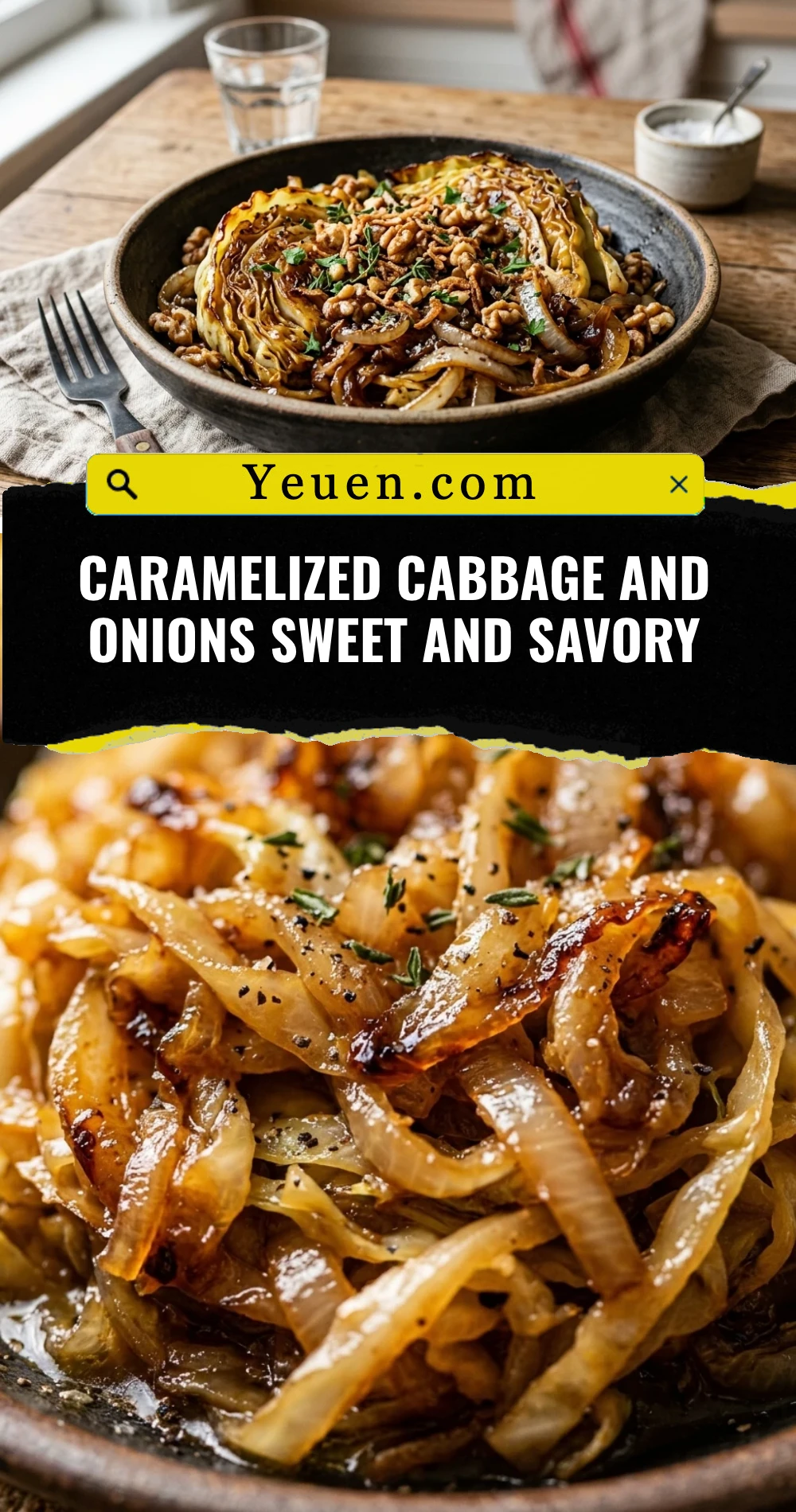
Caramelized Cabbage And Onions Sweet And Savory
There is a specific kind of magic that happens when you take two humble, affordable vegetables and subject them to low heat and a little bit of fat. Caramelized cabbage and onions transform from crunchy, sharp aromatics into a silky, jammy, and deeply flavorful side dish that steals the spotlight from any main course. This recipe isn’t just about cooking; it’s about patience and the Maillard reaction. As the natural sugars in the cabbage and onions break down, they develop a rich, amber hue and a complex sweetness that balances perfectly with a touch of salt and acid. Whether you are looking for a comforting holiday side or a simple way to elevate a Tuesday night dinner, this dish is the ultimate “flavor for pennies” solution that will have everyone asking for seconds.
Recipe Information
- Prep Time: 10 minutes
- Cook Time: 40 minutes
- Total Time: 50 minutes
- Servings: 4 servings
- Difficulty: Easy
Nutrition values
- Calories: 135 kcal
- Protein: 2g
- Carbs: 14g
Why Make This Caramelized Cabbage And Onions Sweet And Savory
This dish is a masterclass in flavor building. It is incredibly budget-friendly, using ingredients that stay fresh in your pantry and crisper drawer for weeks. It’s also naturally gluten-free and can easily be made vegan, making it a safe bet for any dinner party. The texture is what truly sets it apart—tender and buttery with slightly crispy, charred edges that provide a smoky depth. It pairs beautifully with everything from roasted pork chops and grilled sausages to simple mashed potatoes or even served atop a thick slice of sourdough toast.
Ingredients
- 1 medium head of green cabbage (about 2 lbs), cored and thinly sliced
- 2 large yellow onions, thinly sliced into half-moons
- 3 tablespoons unsalted butter (or olive oil for vegan)
- 2 tablespoons extra-virgin olive oil
- 1 teaspoon kosher salt, plus more to taste
- 1/2 teaspoon freshly cracked black pepper
- 1 tablespoon apple cider vinegar or balsamic vinegar
- Optional: 1 teaspoon brown sugar or honey for extra sweetness
- Optional: Fresh parsley for garnish
Directions
Step 1: Prep the Vegetables
Start by removing any wilted outer leaves from the cabbage. Cut the head in quarters and remove the tough inner core. Thinly slice the cabbage into ribbons, about 1/4 inch thick. Peel your onions and slice them into thin half-moons. Keeping the slices uniform ensures that everything cooks at the same rate and reaches that perfect jammy consistency together.
Step 2: Sauté the Aromatics
Place a large heavy-bottomed skillet or a Dutch oven over medium heat. Add the butter and olive oil. Once the butter has melted and begins to foam, add the sliced onions. Sauté the onions for about 5 to 7 minutes, stirring occasionally, until they become translucent and start to show the faintest hint of golden brown at the edges.
Step 3: Wilt the Cabbage
Add the sliced cabbage to the skillet. It might look like a massive amount of vegetables, but don’t worry—cabbage contains a lot of water and will shrink significantly. Season with salt and pepper immediately; the salt helps draw out moisture, which aids the caramelization process. Toss the cabbage and onions together to coat them in the fat. Cover the pan with a lid for about 5 minutes to let the steam soften the cabbage ribbons.
Step 4: The Caramelization Process
Remove the lid and turn the heat down to medium-low. This is the most important part of the recipe. Cook the mixture for 25 to 30 minutes, stirring every few minutes. You want the cabbage and onions to slowly brown without burning. If the pan looks too dry or the vegetables are sticking, add a splash of water or broth. The vegetables should turn a deep golden-brown and become very soft.
Step 5: Deglaze and Season
Once the mixture is rich and caramelized, stir in the apple cider vinegar (and the optional sugar or honey if you prefer a sweeter profile). Use a wooden spoon to scrape up any browned bits from the bottom of the pan—that is where the concentrated flavor lives. Cook for another 2 minutes until the vinegar has reduced and coated everything. Taste and add more salt or pepper if needed.
Step 6: Plating
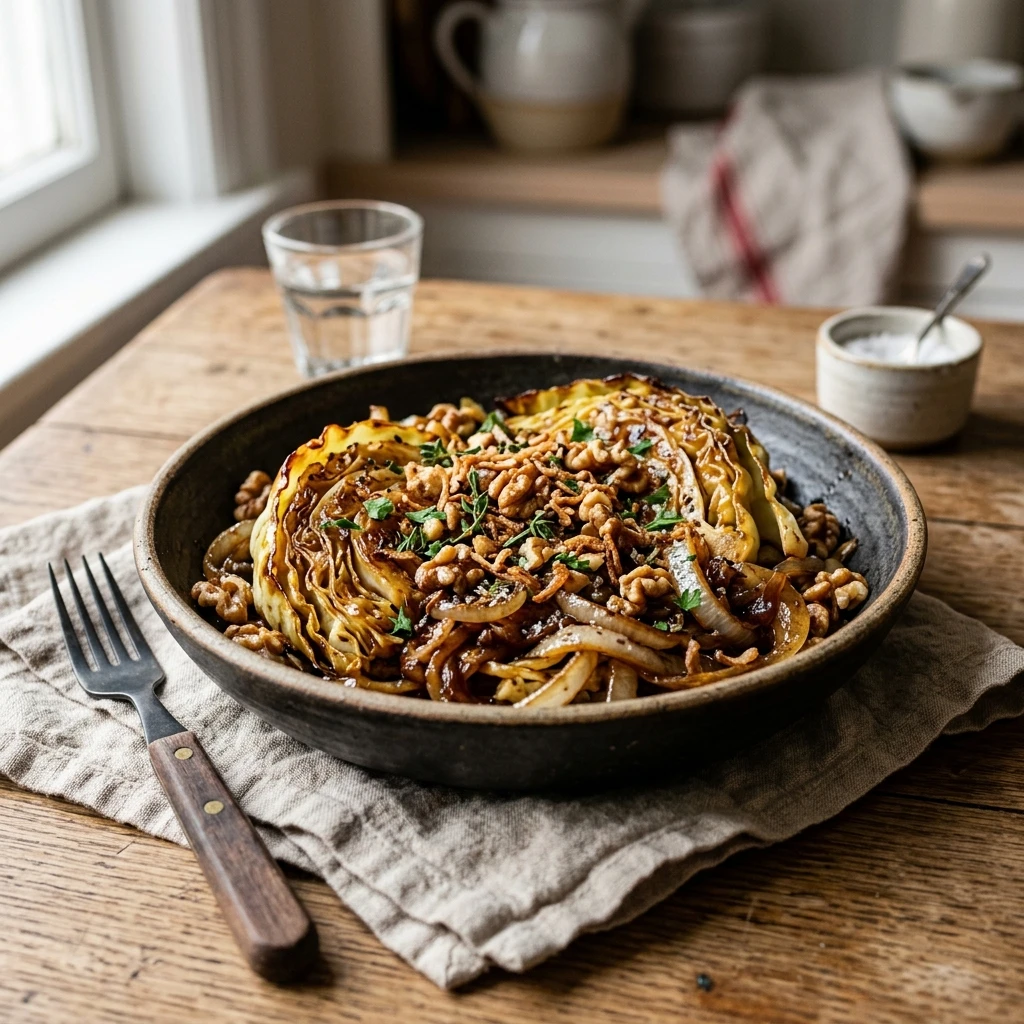
Transfer the caramelized cabbage and onions to a warmed serving bowl. Garnish with a sprinkle of fresh chopped parsley for a pop of color and freshness. Serve hot as a side dish, or room temperature as a topping for sandwiches or grain bowls.
Expert Tips for Perfect Caramelized Cabbage And Onions Sweet And Savory
The secret to perfect caramelization is a heavy-duty pan. A cast-iron skillet or a heavy stainless steel pan distributes heat more evenly than thin aluminum pans, preventing hot spots that cause burning. Also, resist the urge to stir constantly. The vegetables need contact time with the heat to develop those brown, sugary crusts. If you are in a rush, don’t turn up the heat to high; you’ll end up with charred, bitter cabbage instead of sweet, tender ribbons. Lastly, always finish with acid—the vinegar cuts through the richness of the butter and brightens the whole dish.
Delicious Variations
- The Smoky Version: Stir in some chopped cooked bacon or a teaspoon of smoked paprika at the end for a campfire-style depth.
- The Herbaceous Twist: Add a teaspoon of dried thyme or caraway seeds during the sautéing phase to give the dish an earthy, traditional European flavor.
- The Spicy Kick: Toss in a pinch of red pepper flakes or a dash of hot honey to contrast the sweetness.
- The Richer Finish: Stir in a tablespoon of heavy cream or a dollop of sour cream right before serving for a luscious, velvety texture.
Frequently Asked Questions
What is the best type of cabbage to use?
Green cabbage is the standard and works best because it holds its structure well while softening. You can use Savoy cabbage for a more delicate texture, or red cabbage for a striking color, though red cabbage will require a bit more acid to maintain its vibrant hue.
Can I make this ahead of time?
Yes! This dish actually tastes better the next day as the flavors continue to meld. Store it in an airtight container in the fridge for up to 4 days. Reheat gently in a skillet over low heat with a tiny splash of water.
How do I prevent the cabbage from getting mushy?
The key is to not over-crowd the pan at the start if possible, and to ensure you aren’t adding too much liquid. If you find it getting too wet, turn the heat up slightly and stir more frequently to evaporate the excess moisture.
What can I serve this with?
It is incredibly versatile. It’s a classic pairing for Polish pierogi, German sausages (like bratwurst), or a simple roasted chicken. It also makes a fantastic topping for burgers or a filling for savory crepes.
Is this recipe keto-friendly?
Yes, cabbage and onions are relatively low in net carbs. To keep it strictly keto, omit the optional sugar or honey and use olive oil or butter as your fat source. It provides a satisfying, high-fiber side that fits well within a low-carb lifestyle.
Conclusion
Caramelized cabbage and onions prove that you don’t need expensive ingredients to create a gourmet experience at home. This recipe celebrates the beauty of slow cooking and simple flavors. By taking the time to let the vegetables brown and sweeten, you create a dish that is comforting, sophisticated, and incredibly addictive. Give this a try the next time you see a head of cabbage in your kitchen—you might just find it becomes your new favorite way to eat your greens!