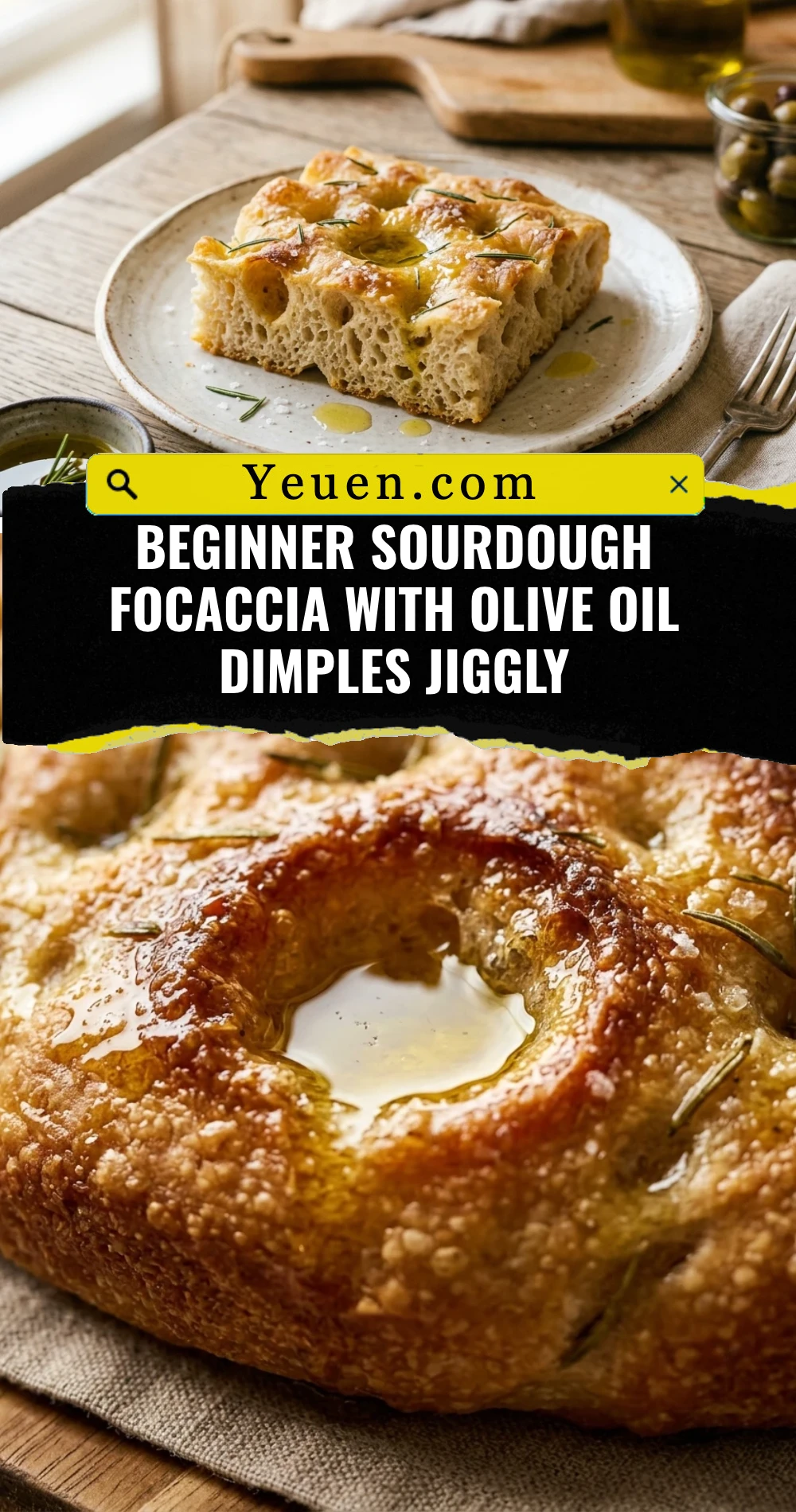
Follow Me On Pinterest!
Beginner Sourdough Focaccia With Olive Oil Dimples Jiggly
If you have ever scrolled through social media and felt a pang of envy at those golden, bubbly, “jiggly” slabs of focaccia, this recipe is for you. Many people feel intimidated by sourdough, thinking it requires a degree in chemistry and a professional-grade oven. However, sourdough focaccia is the ultimate entry point for any budding baker. It is forgiving, requires no complex shaping, and rewards you with a crusty, olive-oil-soaked crumb that practically bounces when you touch it. Whether you are using a mature starter or a slightly neglected one, this guide will help you achieve those iconic deep dimples and a texture that is as fun to poke as it is to eat.
Recipe Information
- Prep Time: 20 minutes (active time)
- Cook Time: 25 minutes
- Total Time: 18 hours (includes fermentation)
- Servings: 8 servings
- Difficulty: Easy
Nutrition values
- Calories: 210 kcal
- Protein: 6g
- Carbs: 38g
Why Make This Beginner Sourdough Focaccia With Olive Oil Dimples Jiggly
This recipe removes the stress of sourdough. Unlike a traditional boule, you do not have to worry about “oven spring” or scoring patterns. The high hydration level creates a “jiggly” dough that is incredibly satisfying to work with. The heavy use of olive oil ensures a crispy bottom and a rich flavor that complements the natural tang of the sourdough. It is the perfect side dish for pasta, a base for gourmet sandwiches, or just a snack to tear off and eat while it is still warm from the pan.
Ingredients
- 100g active sourdough starter (fed and bubbly)
- 375g warm water
- 500g bread flour (or all-purpose flour)
- 10g fine sea salt
- 20g extra virgin olive oil (for the dough)
- 3-4 tablespoons extra virgin olive oil (for the pan and topping)
- Flaky sea salt for finishing
- Optional: Fresh rosemary, garlic cloves, or cherry tomatoes
Directions
Step 1: Mixing the Dough
In a large mixing bowl, whisk together your active sourdough starter and the warm water until the starter mostly dissolves. Add the flour and the 10g of salt. Mix by hand or with a sturdy spatula until a shaggy dough forms and no dry flour remains. Drizzle in 20g of olive oil and squeeze it into the dough. Cover the bowl with a damp cloth or plastic wrap and let it rest for 30 minutes to hydrate.
Step 2: Stretch and Folds
Wet your hands to prevent sticking. Grab one side of the dough, pull it upward, and fold it over into the center. Rotate the bowl and repeat this 4 times. Perform three sets of these “stretch and folds” spaced 30 minutes apart. This builds the strength needed to hold those beautiful air bubbles without heavy kneading.
Step 3: Bulk Fermentation
Cover the bowl tightly and let the dough sit at room temperature for 8 to 12 hours (usually overnight). The dough should double in size and look jiggly with visible bubbles on the surface. If your house is cold, this may take longer. Look for a light, airy texture rather than watching the clock.
Step 4: The Second Rise in the Pan
Pour 2 tablespoons of olive oil into a 9×13 inch baking pan, coating the bottom and sides thoroughly. Gently transfer the dough into the pan. Do not force it to the corners yet. Flip the dough once so it is coated in oil. Let it rest, uncovered, for 2 to 4 hours. During this time, the dough will naturally spread to fill the pan and become incredibly puffy and “jiggly.”
Step 5: Dimpling and Baking
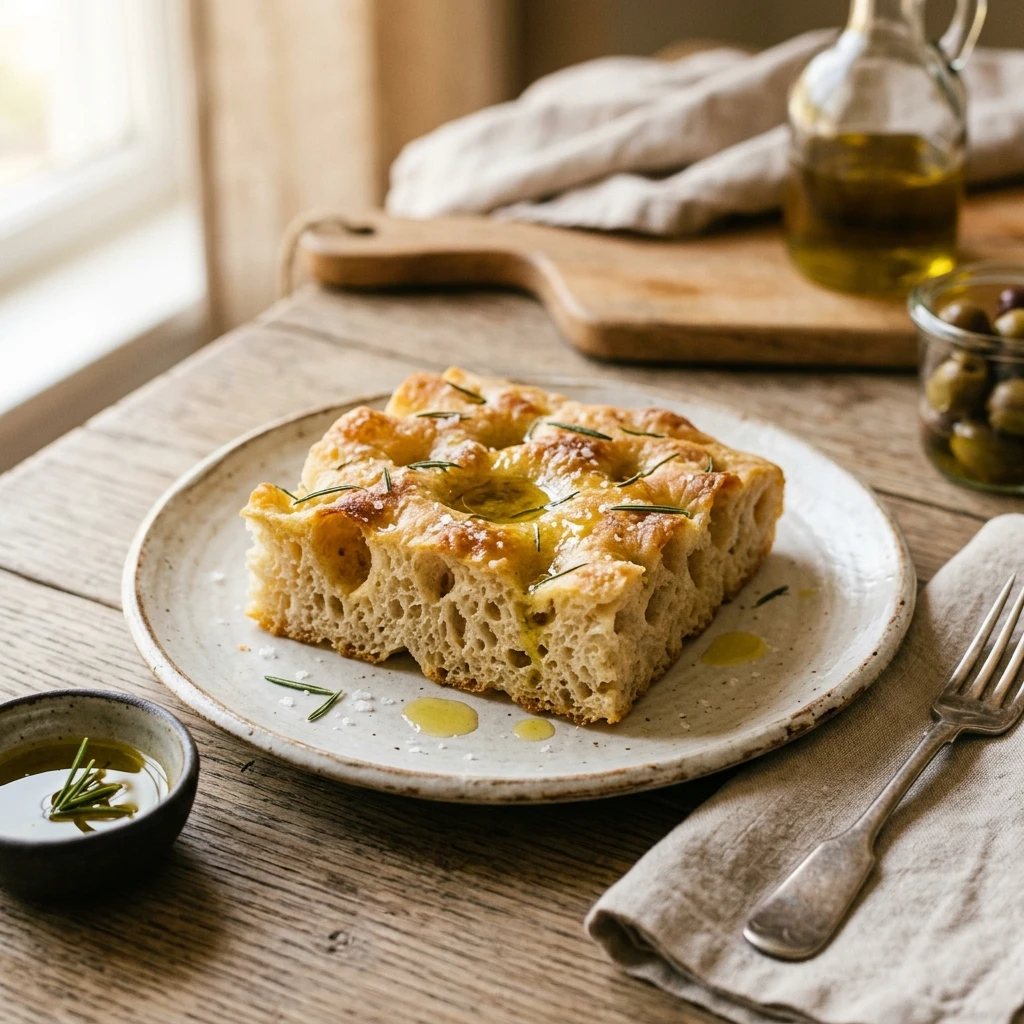
Preheat your oven to 425°F (220°C). Drizzle another tablespoon of olive oil over the top of the dough. Grease your fingers and press them straight down into the dough to create deep dimples. The dough should bubble up around your fingers. Sprinkle with flaky salt and any desired toppings. Bake for 20 to 25 minutes until the top is golden brown and the bottom is crisp. Transfer to a wire rack immediately to keep the bottom crunchy.
Expert Tips for Perfect Beginner Sourdough Focaccia With Olive Oil Dimples Jiggly
To get the best results, always use a metal baking pan if possible; it conducts heat better than glass and creates a crispier bottom crust. Do not be afraid of the olive oil—focaccia is essentially fried in the pan, which gives it that incredible texture. If your dough feels too tight to stretch to the corners of the pan in Step 4, let it rest for another 15 minutes and try again. Finally, ensure your starter is truly active and “peaky” before you begin for the fluffiest results.
Delicious Variations
Once you master the base recipe, try adding toppings to change the flavor profile. A “Garlic and Herb” version uses roasted garlic cloves and fresh thyme pressed into the dimples. For a “Mediterranean” twist, add sliced kalamata olives, sun-dried tomatoes, and a sprinkle of feta cheese. You can even go sweet by topping the dough with sliced grapes, rosemary, and a dusting of coarse sugar before baking.
Frequently Asked Questions
Can I use sourdough discard instead of an active starter?
Yes, you can use discard, but the rise time will be much longer and the bread will be denser. For the “jiggly” high-rise effect, an active, bubbly starter is highly recommended.
Why did my focaccia stick to the pan?
This usually happens if you did not use enough olive oil or if the pan is not well-seasoned. Make sure the entire surface of the pan is slick with oil before adding the dough.
How do I know when the bulk fermentation is finished?
The dough should have increased in volume significantly and feel very light. When you shake the bowl gently, the dough should wobble like jelly.
Can I let the dough rise in the fridge?
Absolutely. You can do the bulk fermentation in the fridge for up to 48 hours. This actually develops a deeper, more complex sour flavor. Just bring it to room temperature before the final dimpling step.
What is the best way to reheat sourdough focaccia?
Reheat slices in a 350°F oven or a toaster oven for about 5 minutes. This restores the crunch to the crust that a microwave would turn soggy.
Conclusion
Baking sourdough doesn’t have to be a high-stress endeavor. This beginner sourdough focaccia is proof that with a little patience and a lot of olive oil, anyone can create bakery-quality bread at home. The process of dimpling the dough is therapeutic, and the smell of roasting olive oil and sourdough permeating your kitchen is unbeatable. Slice it up, share it with friends, and enjoy the pride of your very first jiggly sourdough masterpiece!