Follow Me On Pinterest!
Beginner Sourdough Focaccia With Olive Oil Dimples Jiggly
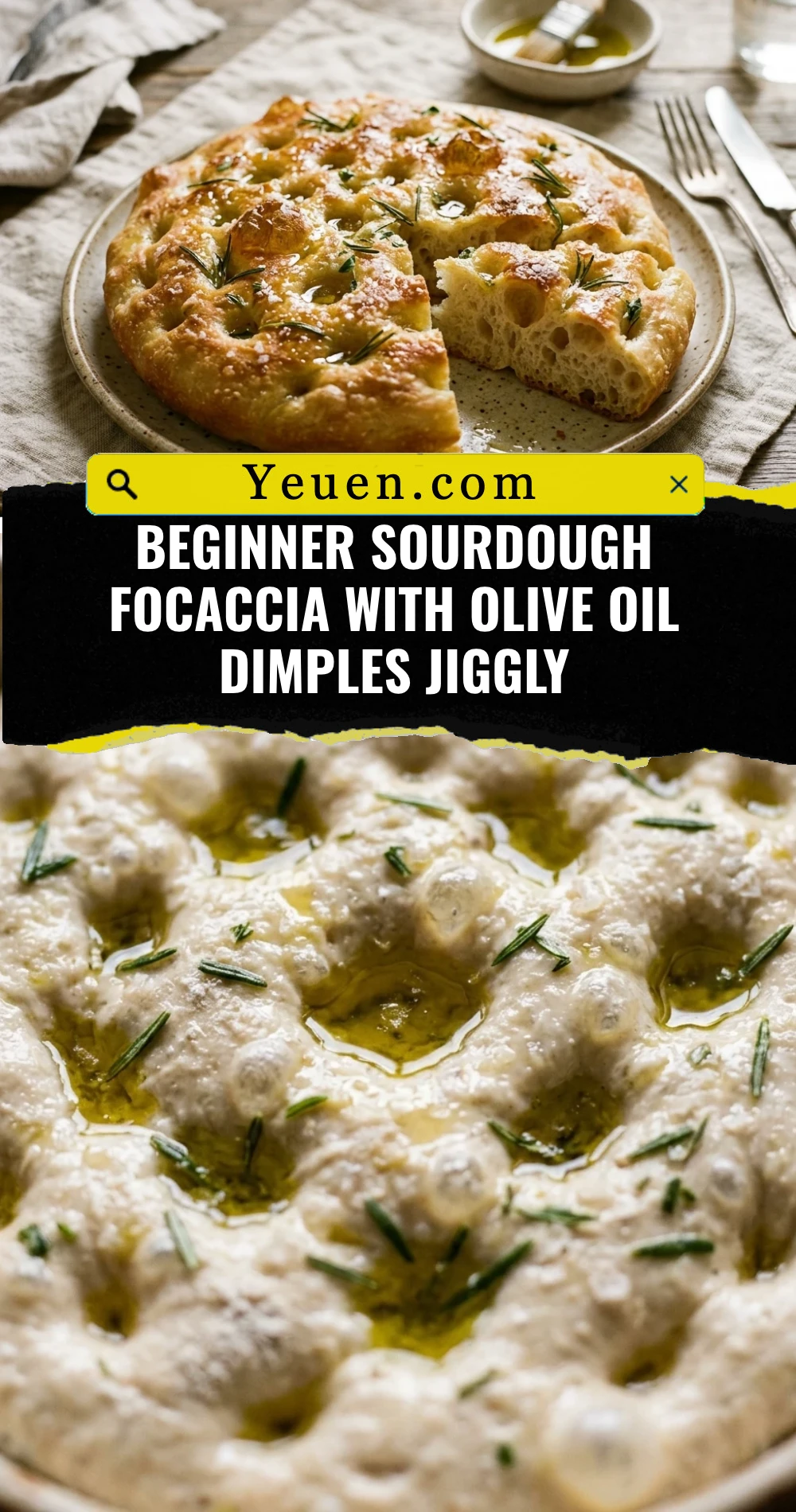
There is nothing quite as satisfying as watching a tray of sourdough focaccia jiggle like a bowl of jelly right before it hits the oven. If you have been intimidated by the complex world of sourdough, this beginner-friendly focaccia is your perfect entry point. It is incredibly forgiving, requires no kneading, and results in a golden, crispy crust with a soft, airy interior. Those deep olive oil dimples act as little reservoirs for flavor, making every bite a rich, savory experience. Whether you are using a bubbly active starter or looking for a way to use up your discard, this recipe will turn you into a sourdough pro in no time.
Recipe Information
- Prep Time: 20 minutes active (plus 12-18 hours fermenting)
- Cook Time: 25 minutes
- Total Time: 18 hours 45 minutes
- Servings: 8 servings
- Difficulty: Easy
Nutrition values
- Calories: 265 kcal
- Protein: 7g
- Carbs: 38g
Why Make This Beginner Sourdough Focaccia With Olive Oil Dimples Jiggly
This recipe is the ultimate low-stress baking project. Unlike traditional sourdough loaves that require precise shaping and scoring, focaccia is meant to be rustic and casual. You get to skip the intense kneading and let time do the work for you. The high hydration level creates that famous “jiggly” dough that is so fun to dimple with your fingers. Plus, the extra-virgin olive oil creates a fried-bread texture on the bottom that is absolutely addictive. It is the best way to impress friends and family with minimal effort.
Ingredients
- 100g active sourdough starter (bubbly and fed)
- 375g warm water
- 500g bread flour (all-purpose also works)
- 10g fine sea salt
- 20g honey or maple syrup (optional, helps with browning)
- 1/4 cup extra-virgin olive oil (divided)
- Flaky sea salt for topping
- Fresh rosemary (optional)
Directions
Step 1: Mixing the Dough
In a large mixing bowl, whisk together your warm water, sourdough starter, and honey until the starter mostly dissolves. Add the bread flour and sea salt. Use a sturdy spatula or your hands to mix until a shaggy dough forms and no dry flour remains. Cover the bowl with a damp cloth or plastic wrap and let it rest for 30 minutes to allow the flour to hydrate.
Step 2: Stretch and Folds
After the rest, perform one set of “stretch and folds.” Reach under one side of the dough, pull it upward, and fold it over the center. Rotate the bowl and repeat this 4 times until the dough feels slightly tighter. Cover and let the dough sit at room temperature for 8 to 12 hours (overnight) until it has doubled in size and looks bubbly.
Step 3: The Second Proof
Generously coat a 9×13 inch baking pan with 2 tablespoons of olive oil. Gently transfer the fermented dough into the pan. Do not force it to the corners yet. Flip the dough once so it is coated in oil. Let it rest, uncovered, in a warm spot for 2 to 4 hours. During this time, the dough will naturally spread to the edges and become very jiggly and full of air bubbles.
Step 4: Dimpling and Seasoning
Preheat your oven to 425°F (220°C). Pour the remaining olive oil over the top of the dough. Grease your fingers well. Press your fingertips straight down into the dough to create deep dimples all over. You should see bubbles rising and the dough should feel very soft. Sprinkle generously with flaky sea salt and add rosemary if desired.
Step 5: Baking and Cooling
Place the pan in the center of the oven and bake for 20 to 25 minutes. The top should be golden brown and the edges should be crispy. For an extra-crispy bottom, you can bake it for an additional 2 minutes on the bottom rack. Remove from the oven and let it cool in the pan for 5 minutes before transferring it to a wire rack. This prevents the bottom from getting soggy.
Expert Tips for Perfect Beginner Sourdough Focaccia With Olive Oil Dimples Jiggly
Always use a high-quality extra-virgin olive oil because it provides the primary flavor for the crust. If your dough is resisting stretching to the corners of the pan, let it rest for another 15 minutes to relax the gluten, then try again. For the best “jiggle,” ensure your fermentation environment is warm enough; a cold kitchen will significantly slow down the rise. Don’t be afraid to get messy during the dimpling stage—pushing your fingers all the way to the bottom of the pan is what creates those iconic oil pockets. Finally, wait at least 15 minutes before slicing to let the interior structure set.

Delicious Variations
- Garlic and Herb: Press sliced garlic cloves and fresh thyme into the dimples before baking.
- Tomato and Basil: Top with halved cherry tomatoes and finish with fresh basil leaves after baking.
- Cheesy Jalapeño: Scatter pickled jalapeños and shredded cheddar cheese over the top for a spicy kick.
- Everything Bagel: Sprinkle everything bagel seasoning over the oil-drenched dough before it hits the oven.
- Sweet Sourdough: Skip the rosemary and use cinnamon sugar and a drizzle of honey for a breakfast version.
Frequently Asked Questions
Can I use sourdough discard instead of active starter?
Yes, you can use discard, but the rise time will be much longer. If your discard is very old, you may want to add a tiny pinch of commercial yeast (1/4 tsp) to help it along, otherwise, stick to active starter for the best “jiggly” results.
What if my dough doesn’t bubble during the second proof?
This usually means the dough is too cold or the starter wasn’t active enough. Move the pan to a warmer spot, like inside an oven with the light turned on (but the heat off), and give it more time. Patience is key with sourdough.
How do I store leftover focaccia?
Focaccia is best eaten the day it is made. However, you can store leftovers in an airtight container at room temperature for up to 2 days. To revive it, toast it in a 350°F oven for a few minutes until the crust crisps up again.
Can I make the dough ahead of time?
Absolutely. After the initial stretch and folds, you can put the covered bowl in the fridge for up to 3 days. This “cold ferment” actually improves the flavor and makes the dough even easier to handle when you are ready to bake.
Why is my focaccia sticking to the pan?
Sticking usually happens if there isn’t enough oil or if the pan isn’t non-stick. Use a generous amount of olive oil. If you are worried, you can line the bottom of the pan with parchment paper, then oil the parchment before adding the dough.
Conclusion
Mastering this Beginner Sourdough Focaccia With Olive Oil Dimples Jiggly is a rewarding experience that proves sourdough doesn’t have to be difficult. With a little bit of patience and a lot of olive oil, you can create a bakery-quality loaf right in your own kitchen. The combination of the tangy sourdough flavor and the crispy, salty crust makes this bread the perfect side dish for any meal or a stand-alone snack. Once you see that first batch jiggle, you will want to make this recipe every single weekend.