Follow Me On Pinterest!
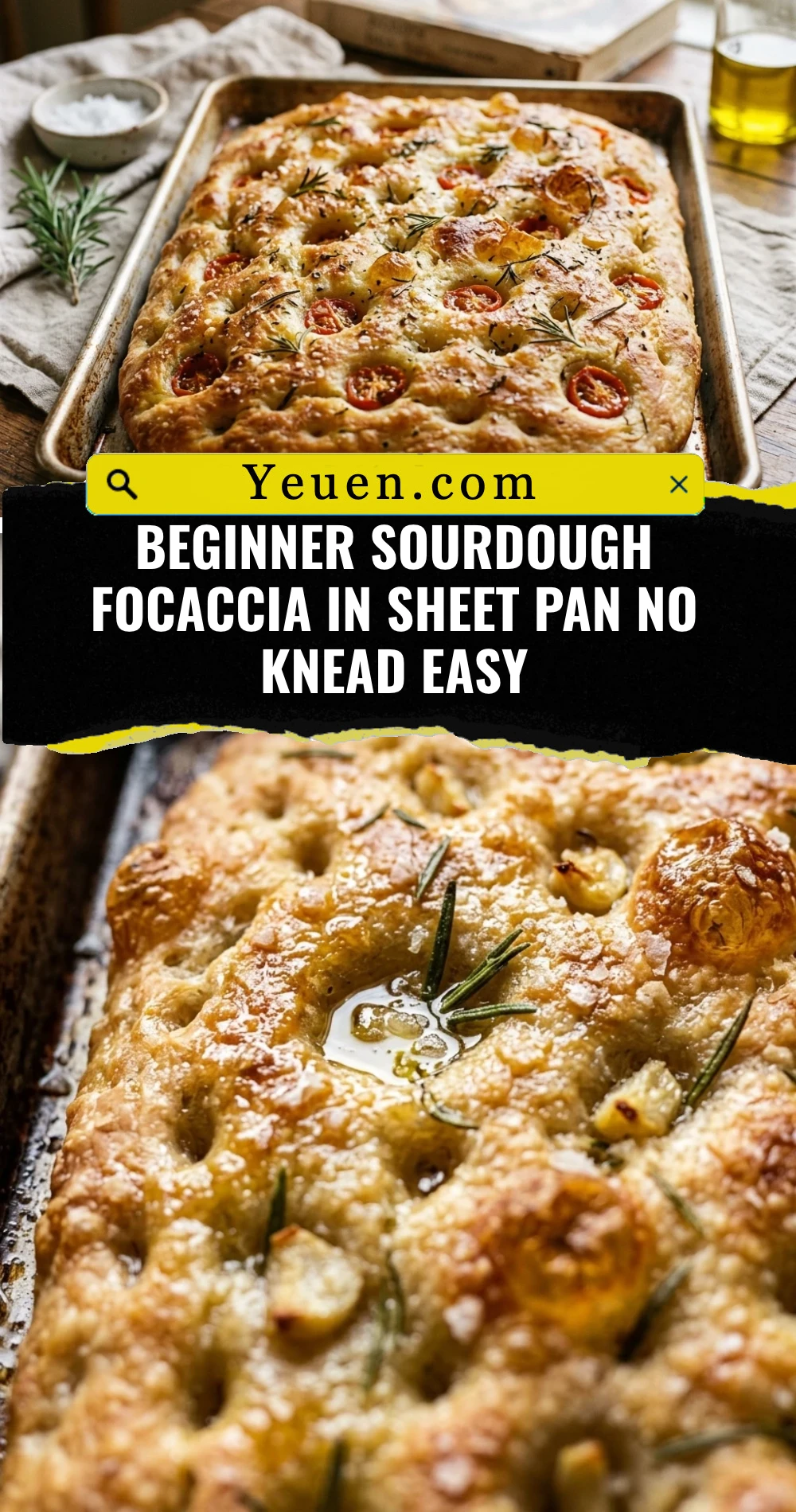
Beginner Sourdough Focaccia In Sheet Pan No Knead Easy
There is something truly magical about the aroma of fresh bread wafting through your home, and this beginner-friendly sourdough focaccia is the perfect way to experience that joy without any stress. If you have been intimidated by sourdough in the past, this recipe is your golden ticket. It requires absolutely no kneading, uses a simple sheet pan, and relies on the slow, natural fermentation of your sourdough starter to create a crumb that is airy, chewy, and full of those iconic bubbles. Whether you are a seasoned baker or just starting your fermented flour journey, this focaccia delivers a golden, olive oil-soaked crust that will make you feel like a professional Italian baker in your own kitchen.
Recipe Information
- Prep Time: 20 minutes (active time)
- Cook Time: 25 minutes
- Total Time: 18 hours 45 minutes (includes fermentation)
- Servings: 12 servings
- Difficulty: Easy
Nutrition values
- Calories: 210 kcal
- Protein: 5g
- Carbs: 38g
Why Make This Beginner Sourdough Focaccia In Sheet Pan No Knead Easy
This recipe removes all the technical barriers of traditional sourdough. Because it is a “no-knead” dough, you let time and hydration do the heavy lifting for you. Using a sheet pan ensures an even bake and provides plenty of surface area for that delicious, crispy bottom fried in olive oil. It is incredibly versatile, making it the perfect side dish for pasta, a base for gourmet sandwiches, or a standalone snack. Plus, it is one of the most forgiving ways to use your sourdough starter, as the high hydration naturally creates a beautiful texture without complex shaping techniques.
Ingredients
- 100g active sourdough starter (bubbly and fed)
- 375g warm water
- 15g honey or maple syrup
- 500g bread flour (all-purpose also works)
- 10g fine sea salt
- 50g extra virgin olive oil (divided)
- Fresh rosemary sprigs
- Flaky sea salt for topping
Directions
Step 1: Mix the Dough
In a large mixing bowl, whisk together the active sourdough starter, warm water, and honey until the starter mostly dissolves. Add the bread flour and fine sea salt. Use a sturdy spatula or your hands to mix until a shaggy dough forms and no dry flour remains. Cover the bowl with a damp cloth or plastic wrap and let it rest for 30 minutes to autolyse.
Step 2: Stretch and Folds
After the rest, reach under one side of the dough, pull it up, and fold it over the center. Rotate the bowl and repeat this 4 times. This replaces kneading by gently building gluten. Cover and let the dough sit in a warm spot for bulk fermentation for about 8 to 12 hours (or overnight) until it has doubled in size and looks bubbly.
Step 3: Transfer to Sheet Pan
Pour about 2 tablespoons of olive oil into a 9×13 inch metal sheet pan, coating the bottom and sides thoroughly. Gently tip the fermented dough into the pan. Do not force it to the edges yet. Flip the dough once to coat both sides in oil, cover it, and let it rest for another 2 to 4 hours. During this time, the dough will naturally spread to fill the pan.
Step 4: Dimpling and Toppings
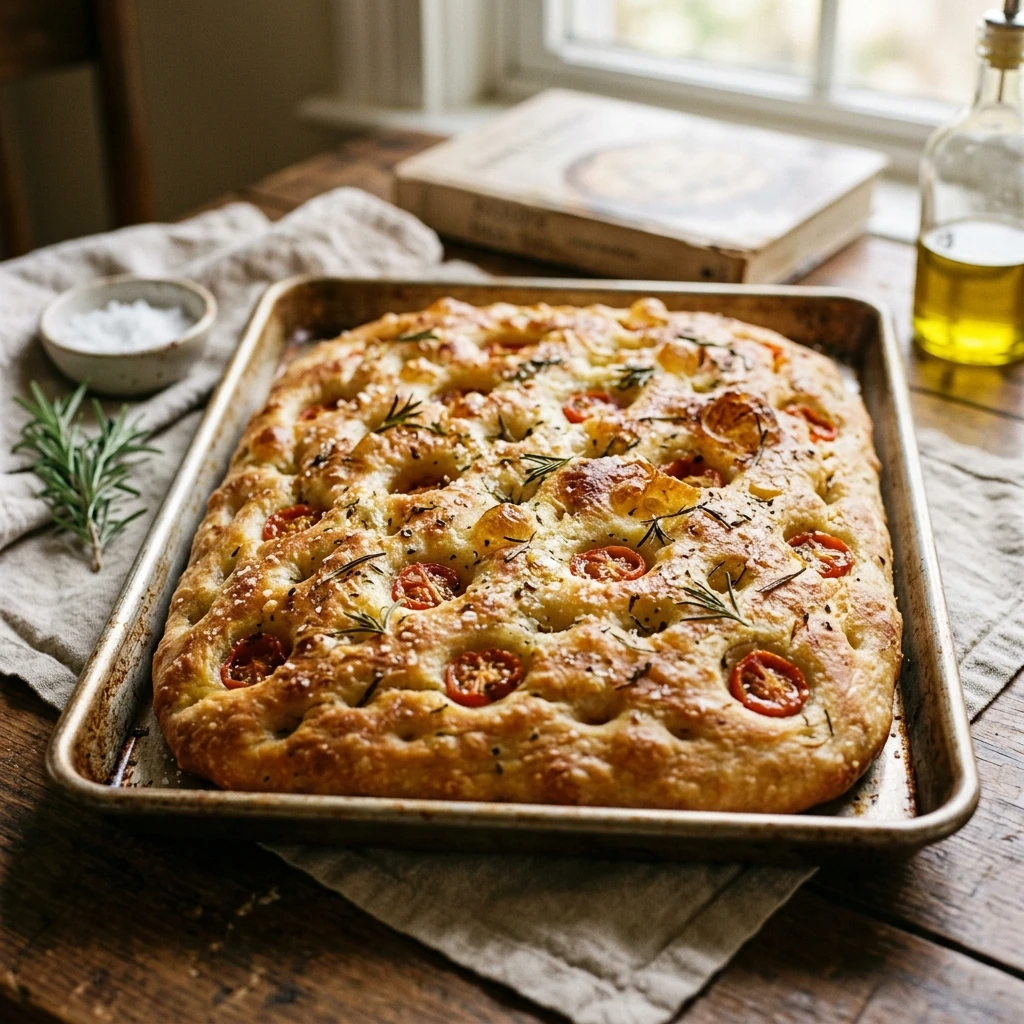
Preheat your oven to 425°F (220°C). Once the dough is puffy and fills the pan, drizzle the remaining olive oil over the top. Grease your fingers and press them straight down into the dough to create deep dimples all over the surface. Sprinkle with fresh rosemary and a generous pinch of flaky sea salt.
Step 5: Baking
Place the sheet pan on the middle rack of the oven. Bake for 20 to 25 minutes, or until the top is a deep golden brown and the edges are crispy. If you want an extra crispy bottom, you can move the pan to the lowest rack for the last 5 minutes of baking.
Step 6: Cooling and Serving
Remove the pan from the oven and let the focaccia cool in the pan for 5 minutes. Transfer the bread to a wire rack to prevent the bottom from becoming soggy. Slice into squares and serve warm.
Expert Tips for Perfect Beginner Sourdough Focaccia In Sheet Pan No Knead Easy
For the best results, use a metal baking pan rather than glass or ceramic; metal conducts heat better, ensuring a truly crispy bottom crust. When dimpling the dough, make sure your fingers go all the way down until you feel the bottom of the pan; this creates those deep pockets where the olive oil can pool. If your kitchen is cold, your fermentation might take longer, so look for bubbles and a “jiggly” texture rather than just following the clock. Finally, always use high-quality extra virgin olive oil, as its flavor is the star of this bread.
Delicious Variations
You can easily customize your focaccia with different toppings. Try a “Pizza Focaccia” by adding halved cherry tomatoes and dried oregano before baking. For a savory kick, press thin slices of garlic and pitted kalamata olives into the dimples. If you prefer something sweet and savory, top the dough with sliced grapes, fresh thyme, and a drizzle of honey. You can even add shredded parmesan cheese in the last 10 minutes of baking for a salty, cheesy crust.
Frequently Asked Questions
Can I use sourdough discard instead of active starter?
You can use discard, but the rise will take significantly longer, and the bread may be denser. For the best “beginner” results with big bubbles, an active, bubbly starter is highly recommended.
What if my dough doesn’t stretch to the corners of the pan?
Don’t force it. If the dough resists, it just needs to relax. Cover it, wait 30 minutes, and try again. It will eventually spread out as it proofs.
How should I store leftover focaccia?
Keep it in an airtight container at room temperature for up to 2 days. To revive the crispiness, toast it in a 350°F oven for a few minutes before eating.
Can I freeze sourdough focaccia?
Yes! Slice the focaccia and freeze it in a freezer-safe bag for up to 3 months. You can toast individual slices directly from the freezer.
Why is my focaccia sticking to the pan?
This usually happens if you didn’t use enough olive oil or if the pan isn’t well-seasoned. Be generous with the oil—it’s essential for both flavor and easy removal.
Conclusion
Mastering sourdough doesn’t have to be a complicated ordeal involving hours of kneading and complex shaping. This beginner sourdough focaccia proves that with just a few simple ingredients and a bit of patience, you can create bakery-quality bread at home. The combination of the tangy sourdough flavor and the rich, crispy olive oil crust is truly unbeatable. Once you see how easy it is to pull a bubbling, golden sheet pan of focaccia out of your own oven, it will surely become a staple in your weekly baking routine. Grab your starter and get baking!