
Follow Me On Pinterest!
Bubbly Sourdough Focaccia With Potato Slices And Rosemary
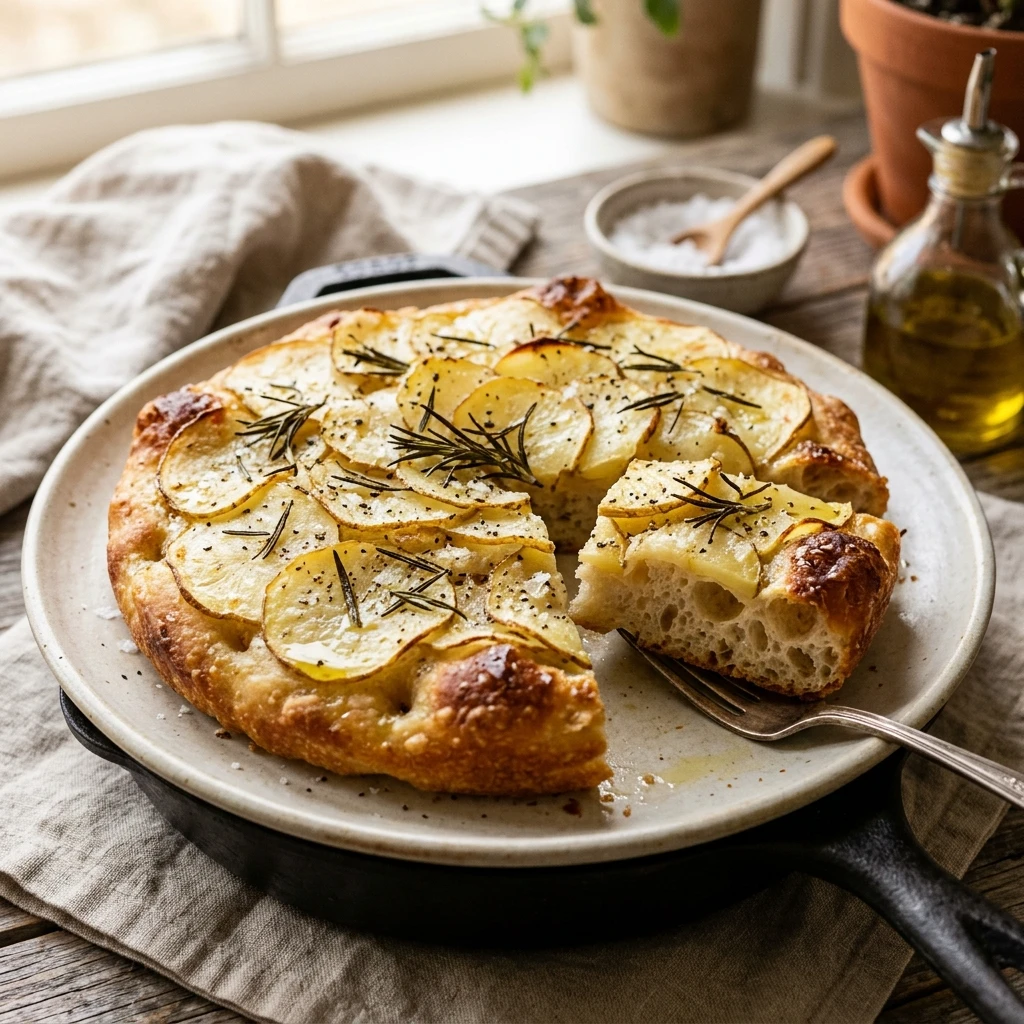
There is nothing quite like the smell of fresh sourdough baking in the oven, especially when it is topped with earthy rosemary and golden potato slices. This bubbly sourdough focaccia is the ultimate comfort food, combining a crispy, olive-oil-fried bottom with a light, airy crumb. The sourdough starter adds a complex tang that pairs perfectly with the starchy sweetness of thinly sliced Yukon Gold potatoes. Whether you are serving this as a side dish for a dinner party or enjoying it as a stand-alone snack, the deep dimples and golden crust will make it an instant favorite in your kitchen.
Recipe Information
- Prep Time: 30 minutes (plus 12-18 hours fermentation)
- Cook Time: 25 minutes
- Total Time: 18 hours 55 minutes
- Servings: 8 servings
- Difficulty: Medium
Nutrition values
- Calories: 285 kcal
- Protein: 7g
- Carbs: 48g
Why Make This Bubbly Sourdough Focaccia With Potato Slices And Rosemary
This recipe transforms a few simple ingredients into a masterpiece of texture and flavor. Using a long fermentation process ensures your dough is full of those signature sourdough bubbles that everyone loves to see on social media. The potato slices act almost like chips on top of the bread, crisping up in the oven while the rosemary infuses the olive oil with a woodsy aroma. It is a fantastic way to use your active sourdough starter and create a visually stunning bread that tastes even better than it looks.
Ingredients
- 100g active sourdough starter (fed and bubbly)
- 375g warm water
- 500g high-protein bread flour
- 10g fine sea salt
- 50g extra virgin olive oil (divided)
- 2 medium Yukon Gold potatoes, sliced paper-thin
- 2 tablespoons fresh rosemary leaves
- Flaky sea salt for finishing
Directions
Step 1: Mixing the Dough
In a large mixing bowl, whisk together the active sourdough starter and warm water until the starter is mostly dissolved. Add the bread flour and sea salt. Use your hands or a sturdy spatula to mix until a shaggy dough forms and no dry flour remains. Cover the bowl with a damp cloth and let it rest for 30 minutes to allow the flour to hydrate.
Step 2: Stretch and Folds
Perform a series of four “stretch and folds” every 30 minutes. To do this, grab one side of the dough, pull it upward, and fold it over toward the center. Rotate the bowl and repeat three more times. This builds the gluten structure without intense kneading. After the final set of folds, cover the bowl tightly and let the dough rise at room temperature for 4 to 6 hours, or until it has increased in volume by about 50% and looks jiggly.
Step 3: Cold Fermentation and Final Proof
Transfer the dough to a well-oiled 9×13 inch baking pan. Gently stretch it toward the corners, but do not force it if it resists. Cover the pan and place it in the refrigerator for 12 to 18 hours. This cold ferment develops the flavor and creates the bubbles. On the day of baking, remove the pan from the fridge and let it sit in a warm spot for 2 to 3 hours until the dough fills the pan and looks very bubbly.
Step 4: Preparing the Potato Topping
While the dough finishes its final proof, slice your potatoes as thinly as possible using a mandoline or a very sharp knife. Place the slices in a bowl of cold water for 10 minutes to remove excess starch, then pat them completely dry with a paper towel. Toss the dried slices with a tablespoon of olive oil to prevent them from browning or curling too much in the oven.
Step 5: Dimpling and Baking
Preheat your oven to 425°F (220°C). Drizzle the remaining olive oil over the surface of the proofed dough. Use your fingertips to press deep into the dough, creating characteristic dimples all over the surface. Arrange the potato slices in an overlapping pattern on top, then sprinkle with fresh rosemary and flaky sea salt. Bake for 20 to 25 minutes until the crust is deep golden brown and the potatoes are crispy at the edges. Let it cool in the pan for 10 minutes before transferring to a wire rack.
Expert Tips for Perfect Bubbly Sourdough Focaccia With Potato Slices And Rosemary
For the best results, use a high-quality extra virgin olive oil; it provides the bulk of the flavor for the crust. Make sure your potatoes are sliced thin enough to see through; if they are too thick, they will not soften and crisp up in time. If your dough is sticking to the pan, try lining the bottom with parchment paper before adding the oil. Lastly, do not rush the final proof. The dough should be light, airy, and full of visible air bubbles before it ever touches the oven.
Delicious Variations
You can customize this focaccia by adding thin slices of red onion or cloves of roasted garlic alongside the potatoes. For a cheesy twist, sprinkle some Pecorino Romano or Gruyère over the potatoes during the last 5 minutes of baking. If you prefer a bit of heat, a drizzle of chili oil or a sprinkle of red pepper flakes after baking adds a wonderful kick that complements the rosemary perfectly.
Frequently Asked Questions
Can I use sourdough discard instead of active starter?
For this specific recipe, an active, bubbly starter is recommended to ensure the bread rises properly and achieves those large air bubbles. If you use discard, the bread will be much denser and may not have the same airy texture.
Why do I need to soak the potato slices?
Soaking the potato slices removes excess surface starch. This prevents the slices from sticking together and helps them achieve a crispier texture in the oven rather than becoming gummy.
How do I store leftover focaccia?
Store leftovers in an airtight container at room temperature for up to two days. To revive the crispy texture, reheat slices in a 350°F oven or a toaster oven for a few minutes. Avoid the microwave, as it will make the bread soggy.
Can I make the dough faster without the fridge?
Yes, you can let the dough proof entirely at room temperature, but you will lose the deep flavor development and the ease of handling cold dough. The bubbles are also generally more prominent after a cold ferment.
What pan is best for baking focaccia?
A metal baking pan is ideal because it conducts heat quickly, leading to a crispier bottom crust. Glass or ceramic pans work but may require a few extra minutes of baking time to get the same level of browning.
Conclusion
Baking this bubbly sourdough focaccia with potato slices and rosemary is a rewarding process that yields professional-level results at home. The contrast between the soft, fermented dough and the crispy, salted potatoes is truly unmatched. This bread is more than just a side dish; it is a centerpiece that celebrates the art of slow fermentation and simple ingredients. Give yourself the time to let the dough develop, and you will be rewarded with a beautiful, fragrant loaf that disappears almost as fast as it comes out of the oven.