Follow Me On Pinterest!
No Knead Sourdough Focaccia Overnight Ferment For Beginners
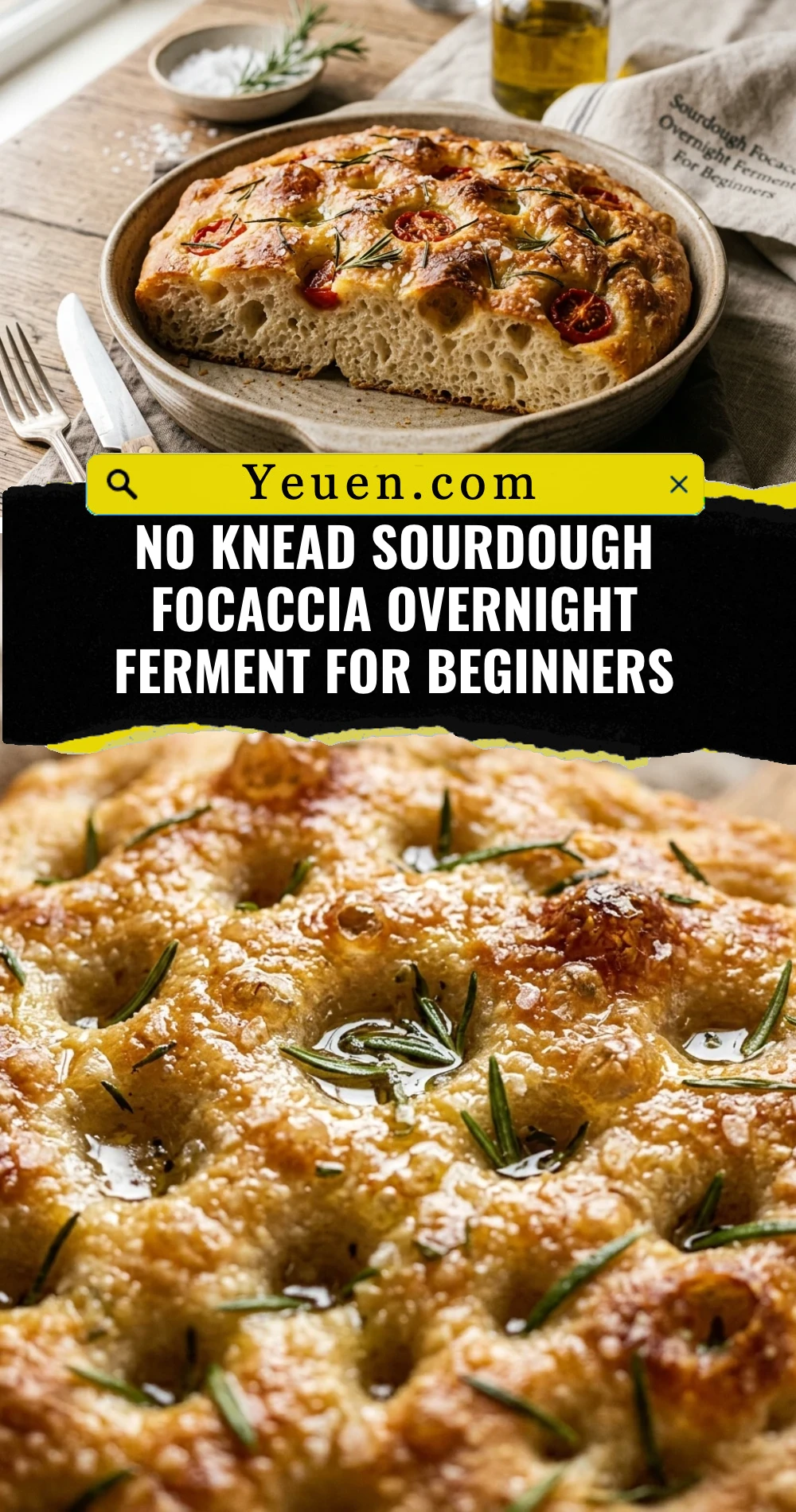
Imagine waking up to the irresistible aroma of freshly baked bread without spending hours kneading dough or cleaning up a floury mess. This No Knead Sourdough Focaccia Overnight Ferment is the ultimate “set it and forget it” recipe for beginners. By letting time and biology do the heavy lifting, you achieve a complex, tangy flavor and a signature airy texture with those iconic oily dimples. Whether you are a seasoned sourdough pro or just getting started with your first starter, this recipe guarantees a golden, crispy crust and a pillowy interior every single time.
Recipe Information
- Prep Time: 15 minutes
- Cook Time: 25 minutes
- Total Time: 18 hours 40 minutes
- Servings: 8
- Difficulty: Easy
Nutrition values
- Calories: 265 kcal
- Protein: 7g
- Carbs: 44g
Why Make This No Knead Sourdough Focaccia Overnight Ferment For Beginners
This recipe removes the intimidation factor from sourdough baking. Traditional bread often requires complex folding schedules and high-intensity kneading, but this focaccia relies on high hydration and a long cold ferment to build structure. The overnight rest in the refrigerator breaks down gluten and sugars, making the bread easier to digest and incredibly flavorful. It is the perfect low-stress way to use your active sourdough starter and impress your friends with a professional-looking loaf.
Ingredients
- 100g active, bubbly sourdough starter
- 375g warm water (about 80°F)
- 500g bread flour (all-purpose also works)
- 10g fine sea salt
- 20g extra virgin olive oil (for the dough)
- 4 tablespoons extra virgin olive oil (for the pan and drizzling)
- 1 tablespoon fresh rosemary, chopped
- Flaky sea salt for finishing
Directions
Step 1: Mixing the Dough
In a large mixing bowl, whisk together the active sourdough starter and warm water until the starter is mostly dissolved and the water looks milky. Add the bread flour and fine sea salt. Use a sturdy spatula or your hands to mix until a shaggy dough forms and no dry flour remains. Drizzle 20g of olive oil over the dough and turn it once to coat. Cover the bowl with a damp cloth or plastic wrap and let it rest at room temperature for 30 minutes.
Step 2: Stretch and Folds
After the 30-minute rest, perform one set of “stretch and folds.” Reach under one side of the dough, pull it upward, and fold it over the center. Rotate the bowl and repeat this 4 to 6 times until the dough feels slightly more cohesive. This replaces traditional kneading by gently building gluten strength.
Step 3: Overnight Fermentation
Cover the bowl tightly with plastic wrap or a lid to prevent the dough from drying out. Place the bowl in the refrigerator for 12 to 24 hours. This cold ferment is where the flavor develops and the bubbles begin to form. The dough will slowly rise and become more elastic during this time.
Step 4: Pan Prep and Second Rise
Generously coat a 9×13 inch metal baking pan with 2 tablespoons of olive oil. Gently transfer the cold dough into the pan. Do not force it to the corners yet. Flip the dough once so it is coated in oil. Cover the pan and let it sit in a warm spot for 2 to 4 hours. The dough is ready when it has filled the pan, looks jiggly, and is covered in small surface bubbles.
Step 5: Dimpling and Topping
Preheat your oven to 425°F (220°C). Drizzle the remaining 2 tablespoons of olive oil over the top of the dough. Grease your fingers with oil to prevent sticking. Use your fingertips to press straight down into the dough to create deep dimples all over the surface. Sprinkle with fresh rosemary and flaky sea salt.
Step 6: Baking
Place the pan on the middle rack of the oven. Bake for 20 to 25 minutes, or until the top is deep golden brown and the edges are crispy. If you prefer an extra-crunchy bottom, bake for another 2 minutes on the lowest rack. Remove from the oven and let it cool in the pan for 5 minutes before transferring to a wire rack. This prevents the bottom from getting soggy.
Expert Tips for Perfect No Knead Sourdough Focaccia Overnight Ferment For Beginners
Always use a metal pan if possible, as it conducts heat better than glass and creates a crispier bottom crust. Ensure your sourdough starter is at its peak—meaning it has doubled in size and is full of bubbles—before mixing the dough. If your kitchen is cold, the second rise in the pan might take longer; look for the “jiggle” rather than watching the clock. Do not be afraid of the olive oil! It is what gives focaccia its signature fried-bread texture and rich flavor.
Delicious Variations
- Garlic and Herb: Add minced garlic and dried oregano to the oil before dimpling.
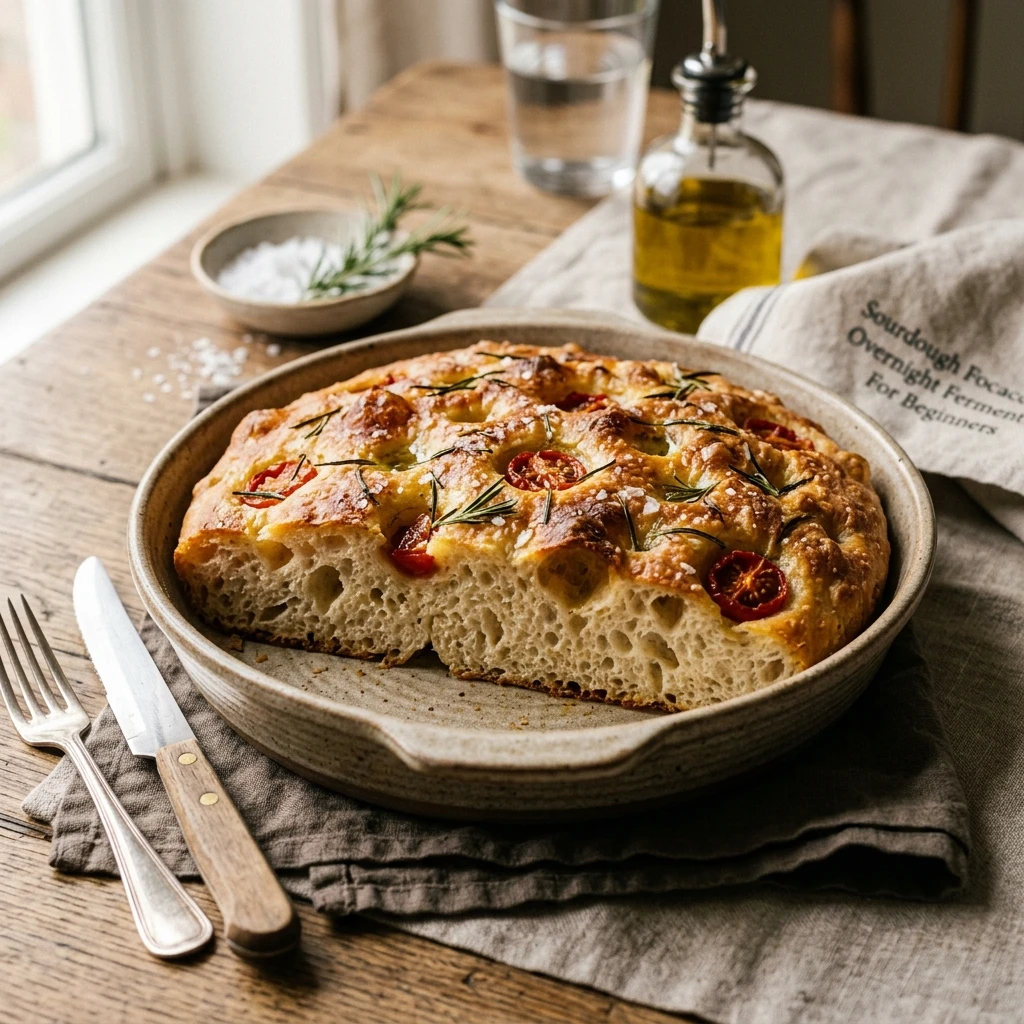
- Tomato and Pesto: Press cherry tomato halves and small dollops of basil pesto into the dimples.
- Caramelized Onion: Top with thinly sliced onions that have been sautéed until soft and sweet.
- Everything Bagel: Swap the rosemary for everything bagel seasoning for a salty, savory crunch.
- Cheese Lover’s: Sprinkle grated parmesan or fontina cheese over the dough 5 minutes before it finishes baking.
Frequently Asked Questions
Can I use sourdough discard instead of active starter?
For the best rise and airy texture, I recommend using an active, bubbly starter. Discard does not have the leavening power needed for a no-knead recipe and may result in a flat, dense bread. If you must use discard, you may need to add a pinch of commercial yeast to help it rise.
What if my dough is too sticky to handle?
Focaccia dough is naturally high hydration, which means it will be very sticky. Do not add more flour! Wet your hands with water or coat them in olive oil before touching the dough. This allows you to handle the dough easily without it sticking to your skin.
How do I know when the fermentation is finished?
The dough should look significantly puffed up and have visible bubbles on the surface. When you gently shake the pan, the dough should jiggle like gelatin. If it still looks dense and heavy, let it sit in a warm spot for another hour.
Can I leave the dough in the fridge for longer than 24 hours?
Yes, you can leave it for up to 48 hours. The longer it stays in the fridge, the more “sour” the flavor will become. However, after 48 hours, the gluten may start to break down too much, leading to a dough that won’t hold its bubbles well.
How should I store leftover focaccia?
Focaccia is best eaten on the day it is baked. If you have leftovers, store them in an airtight container at room temperature for up to two days. To revive the crust, toast slices in a pan with a little olive oil or reheat them in a 350°F oven for 5 minutes.
Conclusion
Mastering the No Knead Sourdough Focaccia Overnight Ferment is a rewarding journey that proves great bread doesn’t require hard labor. By utilizing the overnight cold ferment, you unlock professional-grade flavors and textures in your own home kitchen. This recipe is forgiving, versatile, and consistently produces a crowd-pleasing loaf. Once you see those golden bubbles emerging from your oven, you will never want to go back to store-bought bread again. Grab your starter and start your overnight ferment today!