
Follow Me On Pinterest!
Easy Sourdough Focaccia With Big Air Pockets ASMR Bread
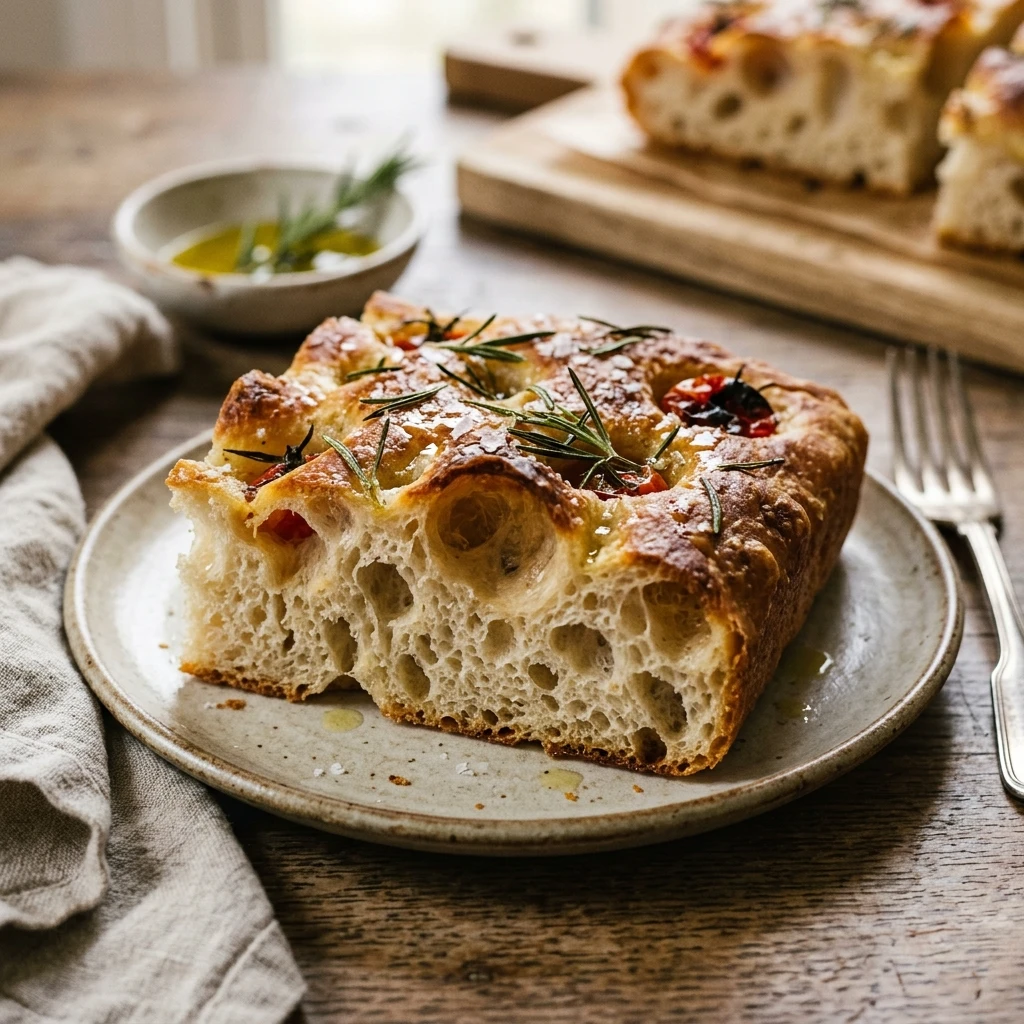
There is something hypnotic about the sound of a crispy sourdough crust shattering under a knife. If you have ever scrolled through social media and found yourself mesmerized by the “poke test” on a bubbly dough, this recipe is for you. This Easy Sourdough Focaccia focuses on achieving those massive, translucent air pockets and a golden, olive-oil-drenched crust that creates the ultimate ASMR experience. You do not need expert-level shaping skills or a fancy oven to master this. With a little bit of patience and a bubbly sourdough starter, you will transform simple pantry staples into a masterpiece that sounds as good as it tastes.
Recipe Information
- Prep Time: 18 hours (includes fermentation)
- Cook Time: 25 minutes
- Total Time: 18 hours 25 minutes
- Servings: 8 servings
- Difficulty: Easy
Nutrition values
- Calories: 245 kcal
- Protein: 6g
- Carbs: 38g
Why Make This Easy Sourdough Focaccia With Big Air Pockets ASMR Bread
This recipe is the perfect entry point for sourdough beginners because it is incredibly forgiving. Unlike a traditional sourdough loaf, you do not need to worry about scoring patterns or achieving a perfect “ear.” The high hydration levels naturally create those sought-after air bubbles, and the heavy use of olive oil ensures a crispy, fried-bottom texture that is impossible to resist. It is a sensory experience from start to finish—from the squish of the dough between your fingers to the rhythmic crackle of the crust as it cools. Plus, it serves as the ultimate canvas for seasonal herbs, flaky salt, and garden vegetables.
Ingredients
- 100g active, bubbly sourdough starter (fed within 4-8 hours)
- 375g warm water (filtered)
- 500g bread flour (or high-protein all-purpose flour)
- 10g fine sea salt
- 20g extra virgin olive oil (for the dough)
- 3-4 tablespoons extra virgin olive oil (for the pan and dimpling)
- Flaky sea salt (for topping)
- Fresh rosemary (optional)
Directions
Step 1: Mixing the Dough
In a large mixing bowl, whisk together your active sourdough starter and warm water until the starter mostly dissolves into a milky liquid. Add the bread flour, sea salt, and 20g of olive oil. Mix by hand or with a sturdy spatula until a shaggy dough forms and no dry flour remains. Cover the bowl with a damp cloth or plastic wrap and let it rest for 30 minutes to allow the flour to hydrate.
Step 2: Stretch and Folds
With wet hands, perform a series of “stretch and folds.” Reach under one side of the dough, pull it upward, and fold it over the center. Rotate the bowl and repeat this 4 times until you have gone all the way around. Repeat this process every 30 minutes for a total of 3 sets. This builds the gluten structure necessary to trap those big ASMR air pockets. After the final set, cover the dough and let it sit at room temperature for 2 to 4 hours until it looks jiggly and has grown by about 50%.
Step 3: Cold Fermentation
Transfer the dough into a well-oiled 9×13 inch metal baking pan. Gently flip the dough to coat both sides in oil. Do not try to stretch it to the corners yet; it will resist you. Cover the pan tightly and place it in the refrigerator for 12 to 24 hours. This cold ferment develops a deep flavor and makes the dough much easier to handle while encouraging large bubble formation.
Step 4: The Dimpling ASMR
Remove the pan from the fridge 2 hours before you plan to bake. Let the dough come to room temperature and naturally spread to the corners of the pan. Once the dough is puffy and covered in small bubbles, drizzle the remaining olive oil over the top. Grease your fingers well. Press your fingertips straight down into the dough to the bottom of the pan, creating deep craters. This is the “ASMR moment”—you should hear and feel the large bubbles shifting. Sprinkle generously with flaky sea salt and rosemary.
Step 5: Baking to Perfection
Preheat your oven to 425°F (220°C). Place the pan on the middle rack and bake for 20 to 25 minutes. The focaccia is done when the top is deep golden brown and the edges are pulling away from the pan, looking crispy and fried. Immediately transfer the bread from the pan to a wire cooling rack to prevent the bottom from getting soggy. Listen to the “sourdough song”—the faint crackling sound the crust makes as it hits the air.
Expert Tips for Perfect Easy Sourdough Focaccia With Big Air Pockets ASMR Bread
To get those giant bubbles, use a high-protein bread flour rather than standard all-purpose flour. The extra protein creates a stronger gluten network that can hold more air. Additionally, never skip the cold ferment. The cold temperature slows down the yeast but allows the enzymes to work their magic, resulting in a more complex flavor and a more resilient bubble structure. Finally, be aggressive with your olive oil. The oil essentially fries the bottom of the dough against the metal pan, creating that signature crunch that defines a great focaccia.
Delicious Variations
- Roasted Garlic and Thyme: Press whole cloves of confit garlic into the dimples before baking.
- Tomato and Pesto: Dot the surface with halved cherry tomatoes and swirls of fresh basil pesto.
- Hot Honey and Jalapeño: Top with thin jalapeño slices and drizzle with spicy honey immediately after taking it out of the oven.
- Olive and Onion: Use pitted Kalamata olives and thinly sliced red onions for a Mediterranean flair.
Frequently Asked Questions
Can I use sourdough discard instead of active starter?
For the best air pockets and rise, an active, bubbly starter is highly recommended. Discard will not have the same leavening power, resulting in a flatter, denser bread. If you must use discard, you may need to add a pinch of commercial yeast to help it along.
Why didn’t my dough get big bubbles?
The most common reasons are under-fermentation or using a weak starter. Ensure your starter is doubling or tripling in size before use. Also, make sure your kitchen isn’t too cold during the initial bulk rise; warmth helps the yeast produce the gas needed for those pockets.
What is the best pan for baking focaccia?
A heavy-duty metal baking pan or a cast-iron skillet is best. Metal conducts heat quickly, which helps the bottom crust get crispy. Glass or ceramic pans often result in a paler, softer bottom crust.
How do I store leftover focaccia?
Focaccia is best on the first day. To store leftovers, wrap them in foil and keep at room temperature for up to two days. To revive the crunch, reheat slices in a 350°F oven or a toaster oven for a few minutes until the oil sizzles again.
My dough is too sticky to handle, what should I do?
High hydration dough is naturally very sticky! Do not add more flour. Instead, keep your hands wet with water when performing folds and well-oiled when dimpling. This prevents the dough from clinging to your skin without ruining the hydration ratio.
Conclusion
Baking this Easy Sourdough Focaccia is a therapeutic process that rewards your patience with incredible texture and sound. By following the cold-ferment method and being generous with your dimpling, you create a bread that is as beautiful to look at as it is delicious to eat. Whether you serve it as a side for dinner or use it as the base for a gourmet sandwich, this airy, crispy masterpiece will surely become a staple in your sourdough rotation. Fire up your oven and get ready for the most satisfying crunch of your life!