Follow Me On Pinterest!
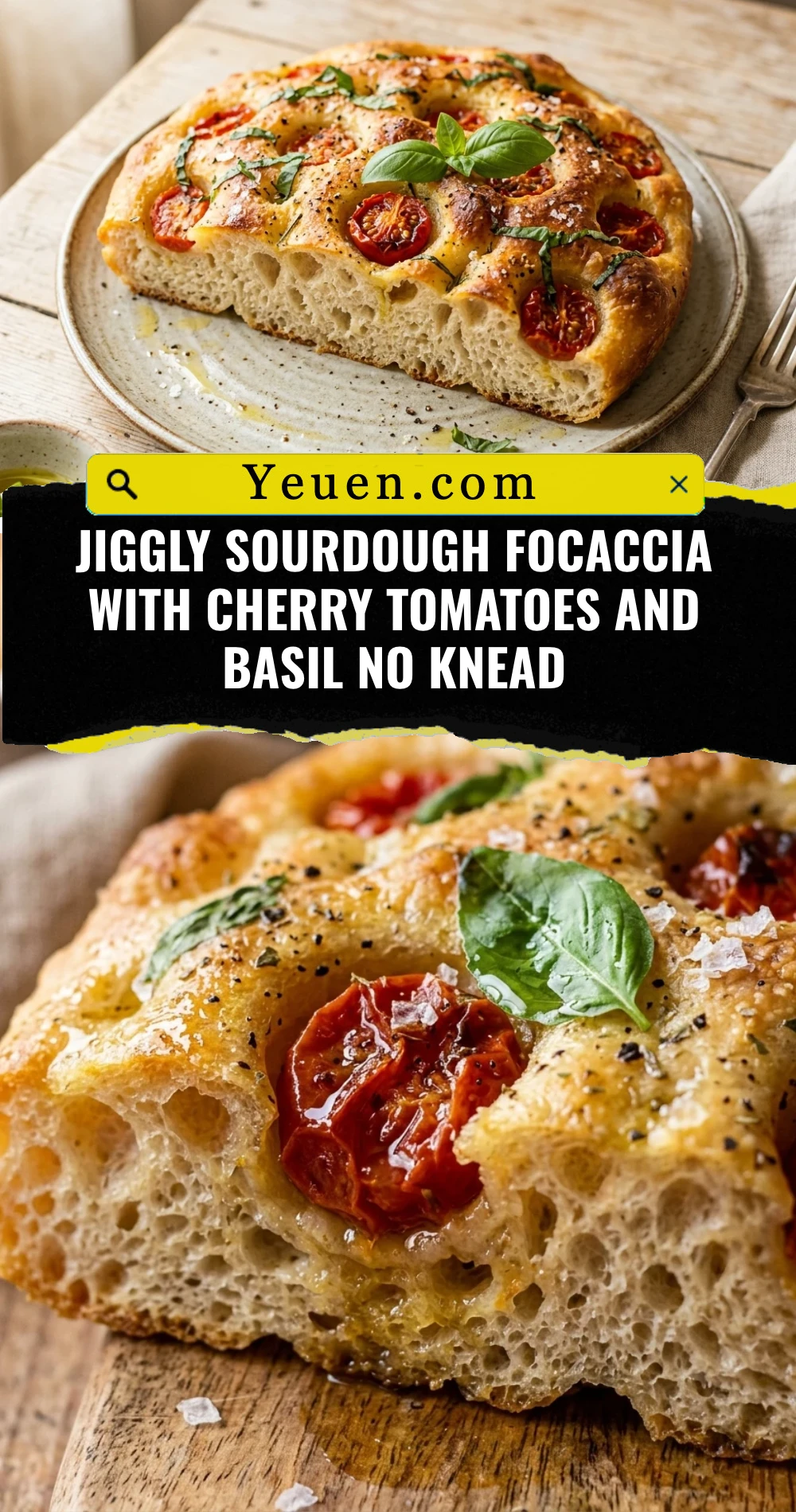
Jiggly Sourdough Focaccia With Cherry Tomatoes And Basil No Knead
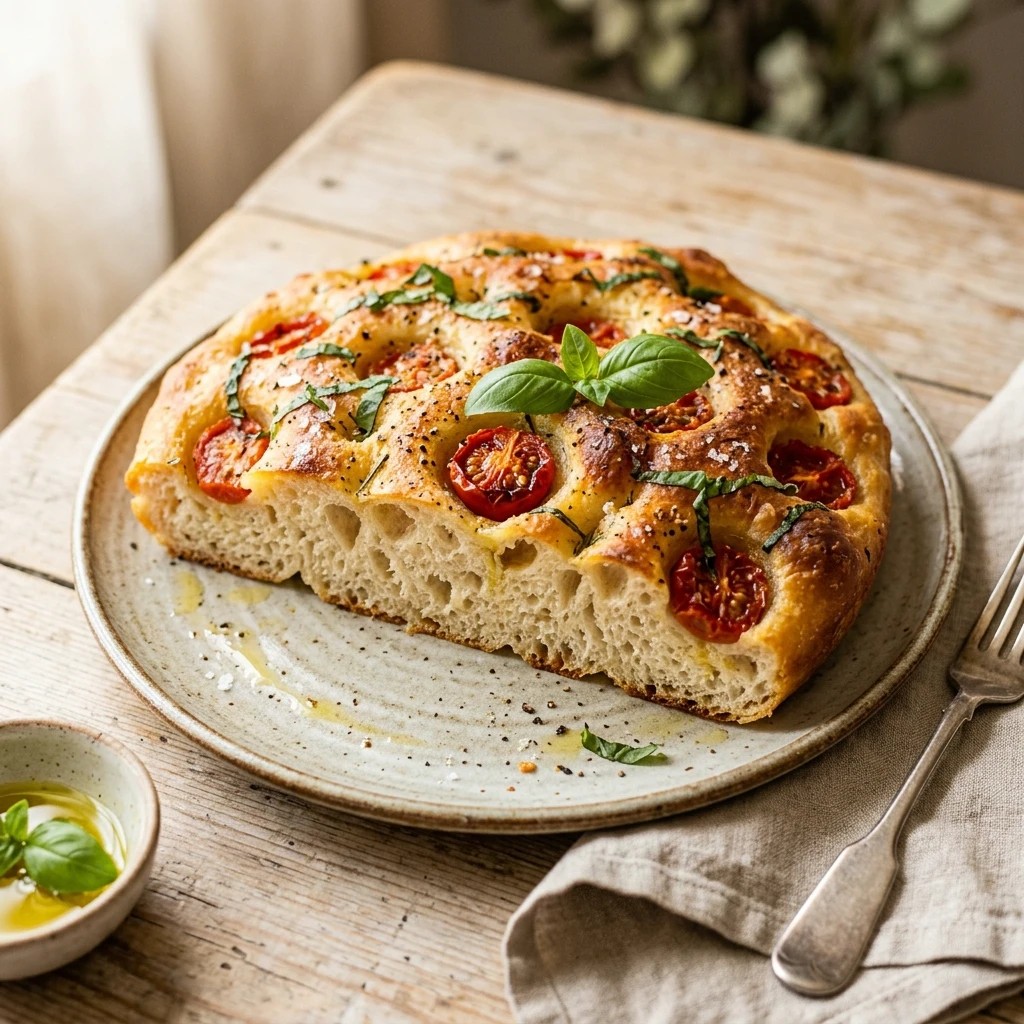
Imagine pulling a golden, bubbly masterpiece from your oven that wobbles with every movement. This jiggly sourdough focaccia is the ultimate bread-making experience, combining the tangy complexity of a slow-fermented starter with the effortless technique of a no-knead recipe. By letting time do the heavy lifting, you achieve a crumb that is airy, light, and incredibly soft. Topped with juicy, bursting cherry tomatoes and fragrant fresh basil, this focaccia isn’t just a side dish; it is the star of the table. Whether you are a seasoned sourdough baker or a beginner looking for a foolproof win, this recipe delivers professional-quality results with minimal active work.
Recipe Information
- Prep Time: 18 hours (includes fermentation)
- Cook Time: 25 minutes
- Total Time: 18 hours 25 minutes
- Servings: 8 servings
- Difficulty: Easy
Nutrition values
- Calories: 265 kcal
- Protein: 7g
- Carbs: 48g
Why Make This Jiggly Sourdough Focaccia With Cherry Tomatoes And Basil No Knead
This recipe removes the intimidation factor often associated with sourdough. You do not need a stand mixer or strong forearms for kneading; instead, a simple series of folds and a long rest create the perfect gluten structure. The high hydration level is the secret behind that famous “jiggle,” ensuring the bread stays moist and springy. Beyond the texture, the combination of roasted cherry tomatoes and fresh basil creates a Mediterranean flavor profile that appeals to everyone. It is the perfect canvas for high-quality olive oil and flaky sea salt, making it an impressive addition to dinner parties or a luxurious base for sandwiches.
Ingredients
- 100g active, bubbly sourdough starter
- 375g warm water
- 500g high-protein bread flour
- 10g fine sea salt
- 20g extra virgin olive oil (for the dough)
- Extra olive oil for drizzling and pan coating
- 1 cup cherry tomatoes, halved
- 1/2 cup fresh basil leaves
- Flaky sea salt for finishing
Directions
Step 1: Mixing the Dough
In a large mixing bowl, whisk together your active sourdough starter and warm water until the starter mostly dissolves. Add the bread flour and fine sea salt. Use a sturdy spatula or your hands to mix until no dry flour remains. The dough will look shaggy and sticky. Cover the bowl with a damp cloth or plastic wrap and let it rest for 30 minutes to allow the flour to hydrate fully.
Step 2: Strengthening with Stretch and Folds
After the rest, wet your hand and perform a series of “stretch and folds.” Reach under one side of the dough, pull it up, and fold it over the center. Rotate the bowl and repeat this four times. Let the dough rest for 30 minutes, then repeat this process twice more. You will notice the dough becoming smoother and more elastic with each set. After the final fold, drizzle the 20g of olive oil over the dough to coat it.
Step 3: Overnight Cold Fermentation
Cover the bowl tightly and place it in the refrigerator for 12 to 15 hours. This cold ferment is crucial for developing the deep sourdough flavor and making the dough easy to handle. During this time, the bubbles will develop slowly, creating that sought-after airy structure.
Step 4: Final Proofing in the Pan
Generously coat a 9×13 inch baking pan with olive oil. Gently transfer the cold dough into the pan. Do not force it to the corners yet; let it rest at room temperature for 2 to 4 hours. As the dough warms up, it will naturally spread to fill the pan and become incredibly bubbly and “jiggly.”
Step 5: Dimpling and Decorating
Preheat your oven to 425°F (220°C). Drizzle more olive oil over the top of the dough. Using your fingertips, press straight down into the dough to create deep dimples—this is the most satisfying part! Press the halved cherry tomatoes into the dimples. Note: Wait to add the basil until after baking to prevent it from burning, or tuck it deep into the dough if you prefer it roasted.
Step 6: Baking to Perfection
Place the pan in the center of the oven and bake for 20 to 25 minutes. The edges should be deep golden brown and crispy, and the tomatoes should be slightly blistered. Remove from the oven and immediately top with fresh basil leaves and a generous sprinkle of flaky sea salt. Allow it to cool in the pan for 10 minutes before transferring to a wire rack.
Expert Tips for Perfect Jiggly Sourdough Focaccia With Cherry Tomatoes And Basil No Knead
To achieve the best results, always use a starter that is at its peak activity. If your starter is sluggish, your bread won’t have the bubbles needed for that jiggle. When dimpling, ensure your fingers are well-oiled to prevent sticking. For a truly crispy bottom, use a metal baking pan rather than glass or ceramic, as metal conducts heat more efficiently. If you find your dough isn’t stretching to the corners of the pan during the final proof, simply let it rest for another 15 minutes and try again; the gluten just needs to relax.
Delicious Variations
While cherry tomatoes and basil are classic, you can easily customize this focaccia. Try a “Garlic and Rosemary” version by pushing whole garlic cloves and fresh rosemary sprigs into the dimples. For a salty kick, add pitted kalamata olives and crumbled feta cheese. If you enjoy a bit of heat, drizzle the finished bread with hot honey and sprinkle with red pepper flakes. You can even make a “Pesto Swirl” focaccia by dolloping small amounts of basil pesto over the dough before dimpling.
Frequently Asked Questions
Can I use all-purpose flour instead of bread flour?
You can, but bread flour has a higher protein content which helps support the high water content and creates a better chew and structure. If using all-purpose, you might need to reduce the water by 10-20g.
What if I don’t have 18 hours to wait?
You can speed up the process by leaving the dough at room temperature for the bulk fermentation instead of refrigerating it. This will take about 4-6 hours depending on your kitchen temperature, though the flavor will be less complex.
Why is my focaccia sticking to the pan?
This usually happens if you didn’t use enough olive oil or if your pan isn’t non-stick. Be very generous with the oil; it acts as both a flavoring and a release agent. You can also line the bottom with parchment paper for extra insurance.
Can I use dried basil instead of fresh?
Yes, but add dried basil to the dough during the mixing stage or sprinkle it on before baking. Fresh basil is best added at the very end to preserve its bright color and delicate flavor.
How do I store leftovers?
Store leftover focaccia in an airtight container at room temperature for up to 2 days. To revive the crispy texture, reheat slices in a toaster oven or a 350°F oven for a few minutes. It also freezes beautifully for up to a month.
Conclusion
Mastering the jiggly sourdough focaccia is a rewarding journey that proves you don’t need complicated machinery to create artisan bread. This no-knead method relies on the magic of fermentation to build strength and flavor, resulting in a texture that is light as air. The bright acidity of the cherry tomatoes and the aromatic punch of fresh basil make every bite feel like a summer day in Italy. Share this with friends, use it for your favorite sandwiches, or enjoy it warm right out of the pan—just be prepared for everyone to ask for the recipe!