
Follow Me On Pinterest!
My Classic Deviled Eggs That Never Fail
Whether you are hosting a festive holiday brunch, a summer backyard barbecue, or a simple Sunday family gathering, nothing disappears faster than a plate of deviled eggs. They are the ultimate nostalgic appetizer—creamy, tangy, and perfectly bite-sized. While there are countless ways to dress them up with trendy toppings, there is something truly special about a classic recipe done right. This version focuses on the perfect balance of flavors and a velvety smooth filling that looks as good as it tastes. If you have ever struggled with rubbery whites or stubborn shells, this “never fail” guide will turn you into a deviled egg pro in no time.
Recipe Information
- Prep Time: 15 minutes
- Cook Time: 10 minutes
- Total Time: 25 minutes
- Servings: 12 egg halves
- Difficulty: Easy
Nutrition values
- Calories: 72 kcal per half
- Protein: 3.2g
- Carbs: 0.8g
Why Make This My Classic Deviled Eggs That Never Fail
This recipe stands out because it prioritizes texture and consistency. Many recipes result in a filling that is either too dry or far too oily. By using a specific ratio of mayonnaise to Dijon mustard and a touch of acid from apple cider vinegar, you achieve a bright flavor profile that cuts through the richness of the yolk. It is a reliable, “old-school” method that uses pantry staples you likely already have on hand. Plus, the technique for boiling the eggs ensures they are easy to peel every single time, saving you from the frustration of mangled egg whites.
Ingredients
- 6 large eggs (preferably a week old for easier peeling)
- 3 tablespoons high-quality mayonnaise
- 1 teaspoon Dijon mustard
- 1 teaspoon apple cider vinegar
- 1/8 teaspoon salt (or to taste)
- 1/8 teaspoon freshly ground black pepper
- Smoked paprika for garnish
- Fresh chives or parsley, finely chopped (optional garnish)
Directions
Step 1: Hard Boiling the Eggs
Place the eggs in a single layer in a medium saucepan and cover them with cold water by at least an inch. Turn the heat to high and bring the water to a full rolling boil. As soon as the water boils, turn off the heat and cover the pan with a tight-fitting lid. Let the eggs sit in the hot water for exactly 10 to 12 minutes. This “off-heat” method prevents the dreaded green ring around the yolk and keeps the whites tender.
Step 2: The Ice Bath and Peeling
While the eggs sit, prepare a large bowl filled with cold water and plenty of ice. Once the timer goes off, use a slotted spoon to immediately transfer the eggs into the ice bath. Let them chill for at least 5 minutes. To peel, gently tap the egg on a hard surface to crack the shell all over. Peel under cool running water, starting from the wider end where the air pocket is located. The water helps the shell slip right off the membrane.
Step 3: Preparing the Filling
Slice each peeled egg in half lengthwise. Gently remove the yolks and place them into a small mixing bowl. Set the empty egg white halves onto a serving platter. Use a fork to mash the yolks until they turn into fine crumbles. Add the mayonnaise, Dijon mustard, apple cider vinegar, salt, and pepper. Stir vigorously until the mixture is completely smooth and creamy. For an ultra-luxurious texture, you can push the yolks through a fine-mesh sieve before adding the wet ingredients.
Step 4: Piping and Presentation
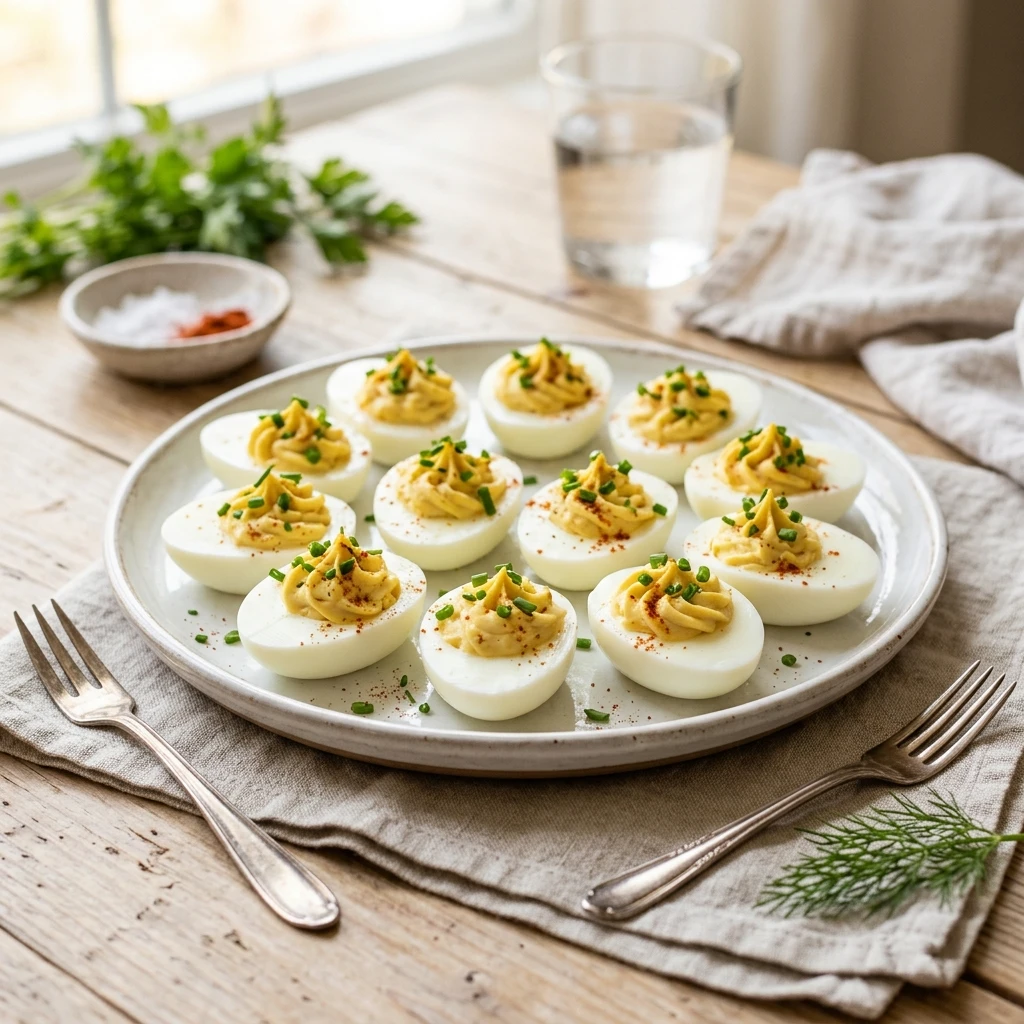
You can spoon the filling into the egg whites, but for a professional look, use a piping bag fitted with a large star or round tip. If you don’t have a piping bag, simply snip the corner off a plastic sandwich bag. Pipe the filling generously into the center of each egg white. Dust the tops lightly with smoked paprika and sprinkle with fresh herbs if desired. Chill in the refrigerator for at least 30 minutes before serving to let the flavors meld.
Expert Tips for Perfect My Classic Deviled Eggs That Never Fail
- Use Older Eggs: Fresh eggs are delicious, but their membranes stick tightly to the shell. Eggs that have been in your fridge for a week or two are much easier to peel after boiling.
- The Sieve Trick: If you want a restaurant-quality “mousse” texture, press your cooked yolks through a fine-mesh strainer using the back of a spoon. It eliminates every single lump.
- Don’t Skip the Acid: The apple cider vinegar provides a necessary tang. If you don’t have it, substitute it with lemon juice or even a splash of pickle juice.
- Steady the Whites: If your egg halves are sliding around the plate, slice a tiny sliver off the bottom of the white to create a flat surface.
Delicious Variations
- Bacon and Chive: Fold in finely crumbled crispy bacon and extra chives for a smoky, savory crunch.
- Spicy Jalapeño: Add a teaspoon of minced pickled jalapeños to the filling and top each egg with a fresh jalapeño slice.
- Everything Bagel: Skip the paprika and garnish with “Everything Bagel” seasoning for a modern, garlicky twist.
- Sriracha Lime: Swap the mustard for a teaspoon of Sriracha and the vinegar for lime juice for a zesty, spicy kick.
Frequently Asked Questions
How far in advance can I make deviled eggs?
You can boil and peel the eggs up to two days in advance. However, for the best results, wait to fill the eggs until the day you plan to serve them. Store the whites and the filling separately in airtight containers to keep them fresh.
How do I prevent the filling from being too runny?
Always start with less mayonnaise than you think you need. You can always add more, but you can’t take it away. If your filling is already too soft, add an extra hard-boiled yolk to thicken it up.
Why did my egg yolks turn green?
The green/gray ring is caused by overcooking. The sulfur in the white reacts with the iron in the yolk when exposed to high heat for too long. Stick to the 10-12 minute “off-heat” soaking method and use an ice bath immediately to stop the cooking process.
What is the best way to transport deviled eggs?
If you travel often with this dish, invest in a dedicated deviled egg carrier with recessed slots. If you don’t have one, you can transport the whites in a container and the filling in a piping bag, then fill them once you arrive at your destination.
Can I use Greek yogurt instead of mayonnaise?
Yes, you can substitute plain Greek yogurt for a tangier, higher-protein version. Keep in mind that yogurt is thinner than mayo, so you may need to use slightly less to maintain a pipeable consistency.
Conclusion
Mastering the classic deviled egg is a culinary rite of passage that every home cook should enjoy. This recipe delivers a foolproof result that balances creaminess with a sharp, savory bite. Once you have perfected this base, the possibilities for customization are endless. Whether you keep them traditional with a dash of paprika or experiment with bold new toppings, these eggs are guaranteed to be the star of your next gathering. Give this method a try and watch how quickly they disappear!