Follow Me On Pinterest!
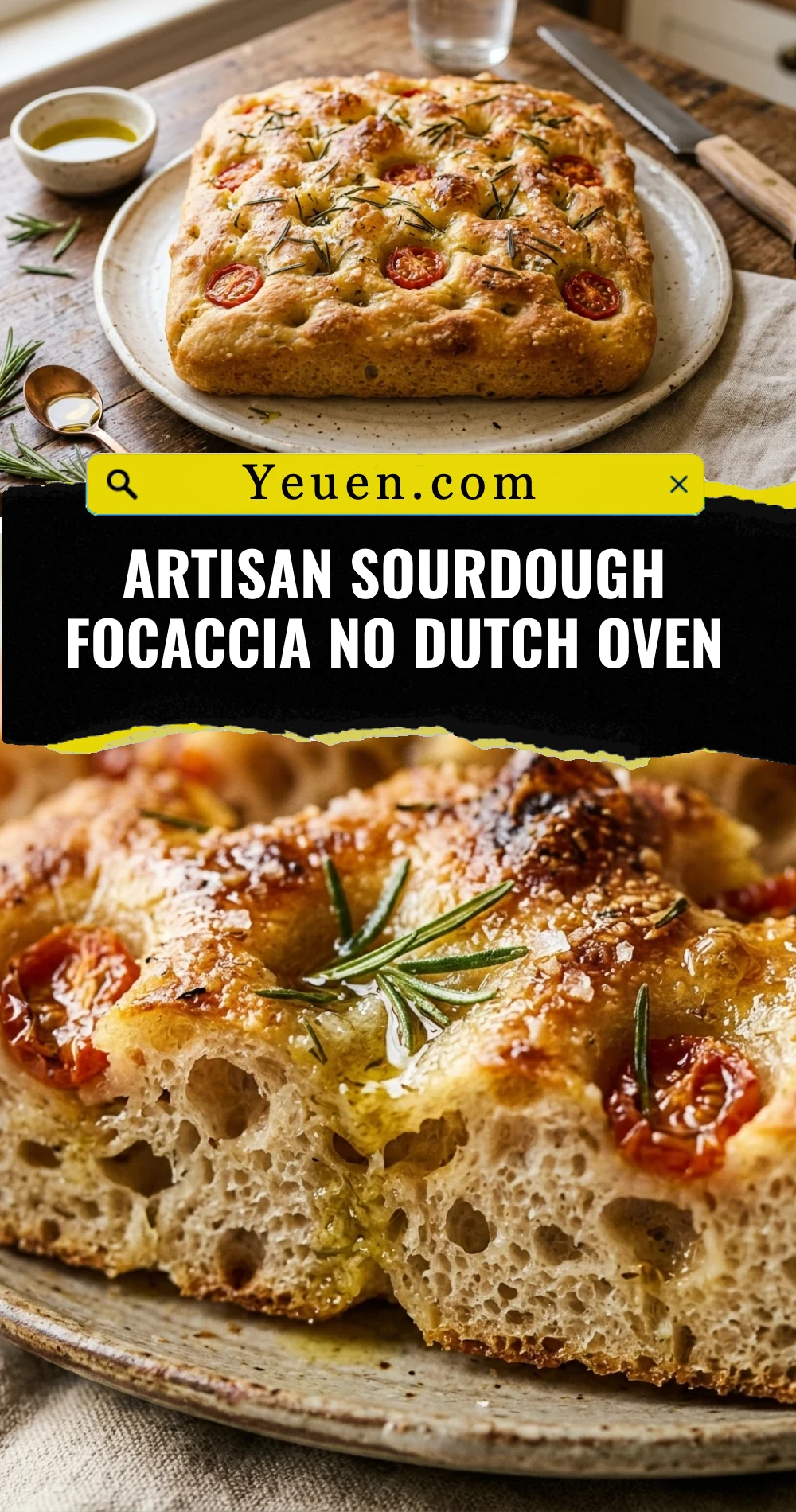
Artisan Sourdough Focaccia No Dutch Oven
There is nothing quite like the smell of fresh bread wafting through your home, and this Artisan Sourdough Focaccia is the ultimate crowd-pleaser. While many sourdough recipes require a heavy Dutch oven to create steam, this recipe proves you can achieve a pillowy, golden, and bubbly crust using a simple baking pan. With its signature dimples filled with pools of olive oil and crunchy sea salt, this focaccia is incredibly forgiving and perfect for beginners. Whether you are a seasoned bread baker or just starting your sourdough journey, this no-fuss method delivers bakery-quality results every single time.
Recipe Information
- Prep Time: 18 hours (includes fermentation)
- Cook Time: 25 minutes
- Total Time: 18 hours 25 minutes
- Servings: 8 servings
- Difficulty: Medium
Nutrition values
- Calories: 215 kcal
- Protein: 6g
- Carbs: 39g
Why Make This Artisan Sourdough Focaccia No Dutch Oven
This recipe is a game-changer for anyone who wants high-quality sourdough without the stress of “the perfect score” or expensive equipment. By using a standard metal or glass baking pan, you maximize the surface area for that iconic crispy bottom and airy interior. The long fermentation process breaks down gluten and phytic acid, making it easier to digest while developing a complex, tangy flavor profile. Plus, it is incredibly versatile—you can top it with anything from fresh herbs to seasonal vegetables, making it the perfect side dish for pasta, soups, or even the base for a gourmet sandwich.
Ingredients
- 100g active sourdough starter (bubbly and fed)
- 375g warm water
- 500g bread flour (all-purpose also works)
- 10g fine sea salt
- 20g extra virgin olive oil (for the dough)
- 3-4 tablespoons extra virgin olive oil (for the pan and drizzling)
- Flaky sea salt for topping
- Fresh rosemary sprigs
Directions
Step 1: Preparation
In a large mixing bowl, whisk together your active sourdough starter and warm water until the starter is mostly dissolved. Add the bread flour and sea salt. Mix by hand or with a sturdy spoon until a shaggy dough forms and no dry flour remains. Cover the bowl with a damp cloth and let it rest for 30 minutes. After the rest, perform four sets of “stretch and folds” every 30 minutes. To do this, grab one side of the dough, pull it upward, and fold it over the center. Rotate the bowl and repeat until the dough feels tight. Cover and let the dough rise at room temperature for 4 to 6 hours, or until it has increased in volume by about 50% and shows visible bubbles. Transfer the covered bowl to the refrigerator for an overnight cold proof (12-15 hours) to develop flavor.
Step 2: Cooking
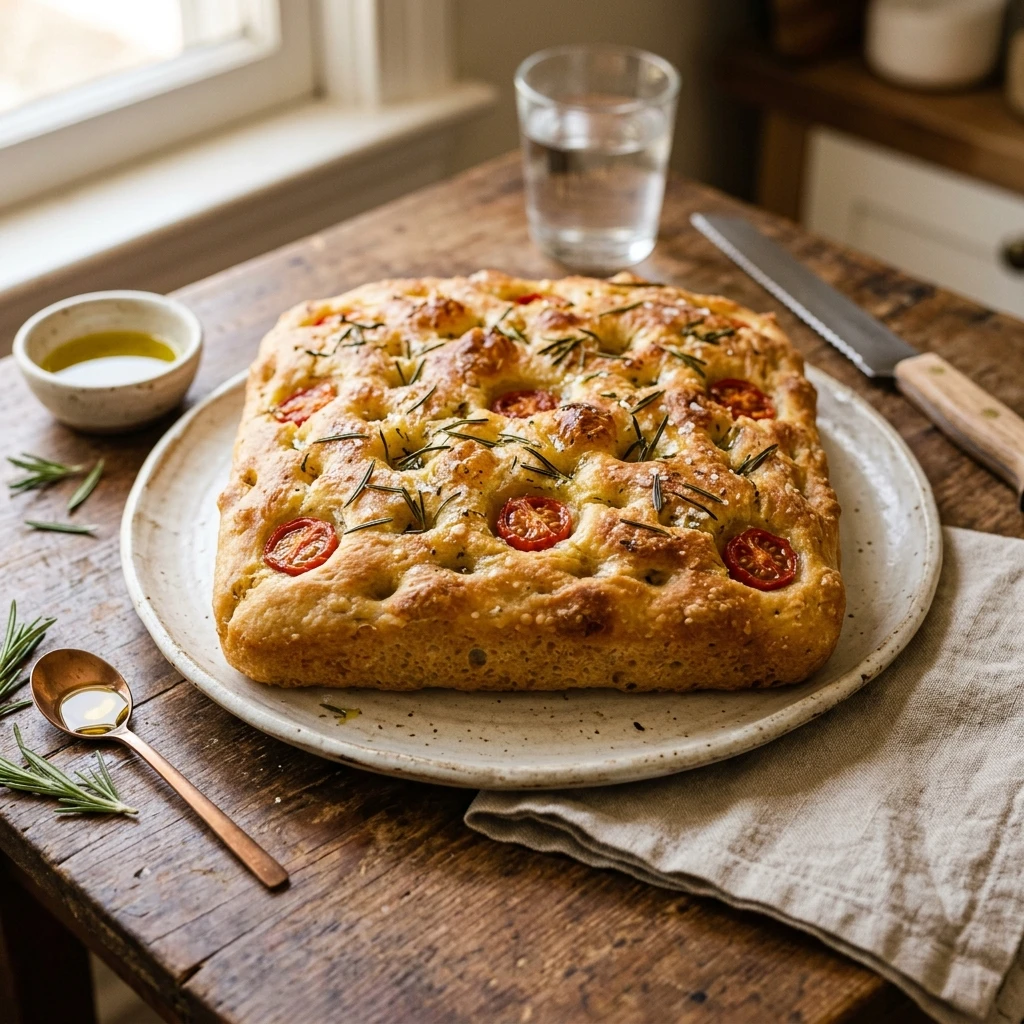
The next day, generously coat a 9×13 inch metal baking pan with 2 tablespoons of olive oil. Gently tip the cold dough into the pan. Do not force it to the corners yet; let it rest for 2 to 4 hours at room temperature until it naturally spreads and looks very jiggly. Preheat your oven to 425°F (220°C). Drizzle the top of the dough with another tablespoon of olive oil. Use your fingertips to press straight down into the dough to create deep dimples, reaching all the way to the bottom of the pan. Sprinkle with flaky salt and fresh rosemary. Place the pan on the middle rack and bake for 20 to 25 minutes. The focaccia is done when the top is deep golden brown and the edges are crispy.
Step 3: Plating
Remove the pan from the oven and let the focaccia sit for 5 minutes. Carefully slide a spatula under the bread to ensure it hasn’t stuck, then transfer it to a wire cooling rack. This step is crucial to prevent the bottom from becoming soggy. Once the bread has cooled slightly but is still warm, slice it into squares or rectangular strips. Serve it alongside a bowl of balsamic vinegar and olive oil for dipping, or use it to build a delicious Mediterranean sandwich.
Expert Tips for Perfect Artisan Sourdough Focaccia No Dutch Oven
- Use a Metal Pan: For the absolute crispiest bottom, a dark metal baking pan conducts heat better than glass or ceramic.
- Don’t Skimp on Oil: Focaccia is essentially fried in the pan. Use high-quality extra virgin olive oil for the best flavor and texture.
- Wait for Bubbles: If your dough doesn’t look like a bubbly marshmallow before you dimple it, let it proof longer. Temperature affects sourdough timing significantly.
- The Finger Test: When dimpling, make sure your fingers are well-oiled so they don’t stick to the dough and tear the beautiful air bubbles.
Delicious Variations
- Garlic and Parmesan: Press thin slices of fresh garlic into the dimples and sprinkle grated parmesan cheese over the top before baking.
- Cherry Tomato and Basil: Halve cherry tomatoes and press them into the dough. Add fresh basil leaves immediately after the bread comes out of the oven.
- Caramelized Onion: Spread a layer of balsamic caramelized onions over the dough just before baking for a sweet and savory twist.
- Everything Bagel: Swap the rosemary and sea salt for a generous dusting of everything bagel seasoning.
Frequently Asked Questions
Can I use sourdough discard for this recipe?
While an active starter provides the best rise, you can use discard if you add a half-teaspoon of commercial yeast to help the dough lift. However, for a true artisan texture, active starter is recommended.
What if my dough is sticking to the pan?
This usually happens if there isn’t enough oil or if the pan isn’t non-stick. To fix this, ensure you grease the corners well and use a metal spatula to gently pry the edges while the bread is still hot.
How do I store leftover focaccia?
Store leftovers in an airtight container at room temperature for up to two days. For longer storage, freeze slices in a freezer bag. To reheat, pop them in a toaster oven to restore the crunch.
Why is my focaccia flat?
Flat focaccia usually results from under-proofing. If your kitchen is cold, the dough may need several extra hours to puff up in the pan before you dimple it.
Can I make this in one day?
Yes! Skip the overnight fridge rest and let the dough finish its bulk rise and pan proof at room temperature. The flavor will be milder, but the texture will still be delicious.
Conclusion
Making Artisan Sourdough Focaccia without a Dutch oven is one of the most rewarding kitchen projects you can take on. This recipe strips away the complexity of traditional sourdough baking while keeping all the flavor and artisanal charm. The result is a stunning, golden loaf that feels like a celebration of simple ingredients. Once you master the art of the dimple and the long ferment, you will never want to go back to store-bought bread again. Grab your olive oil and get started—your kitchen is about to smell incredible!