
Follow Me On Pinterest!
Sourdough Focaccia Recipe For Beginners Jiggly
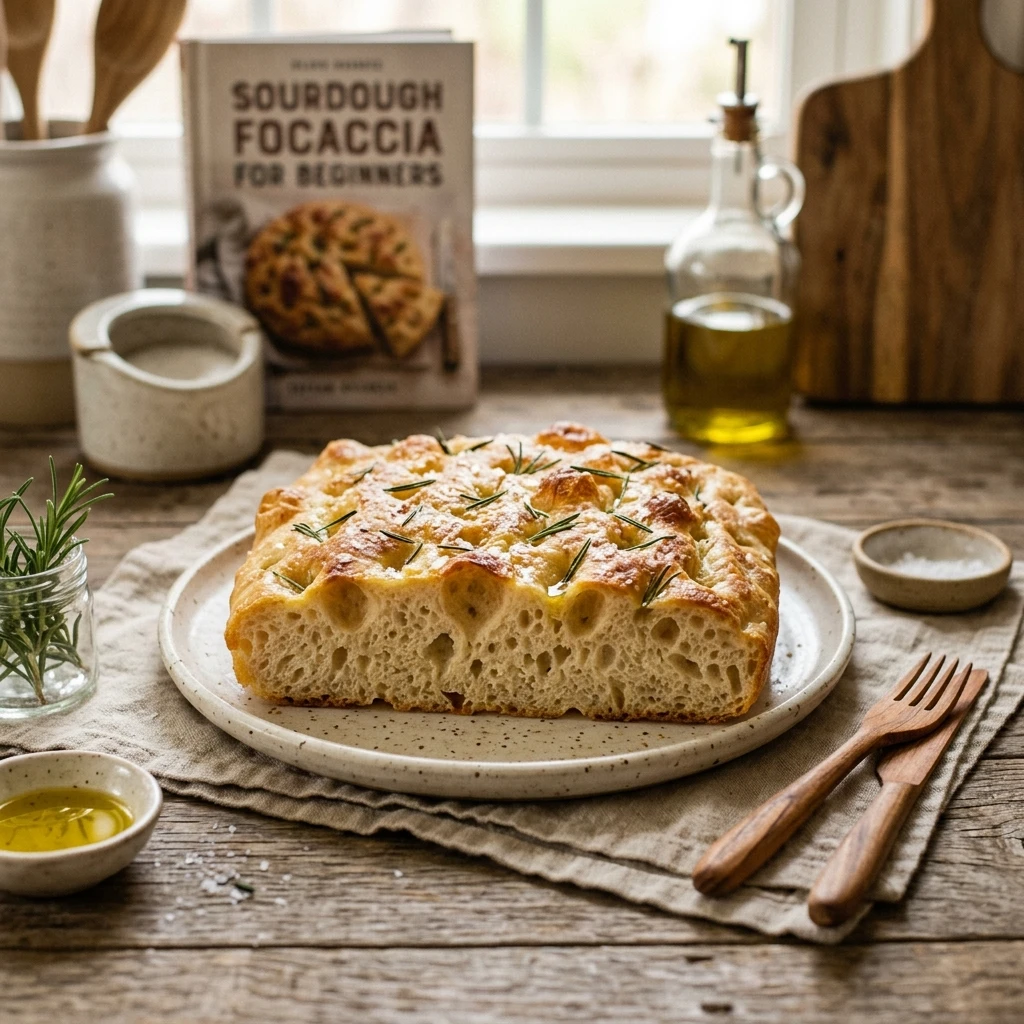
Imagine a bread so airy and light that it literally wobbles when you shake the pan. This sourdough focaccia is the ultimate beginner-friendly project for anyone dipping their toes into the world of wild yeast. You do not need expert shaping skills or fancy equipment to achieve those iconic, deep dimples and a golden, olive-oil-soaked crust. This recipe focuses on a high-hydration dough that does all the hard work while you sleep. By the time you get to the dimpling stage, you will feel like a professional baker watching those giant fermentation bubbles rise to the surface. It is salty, chewy, and incredibly satisfying to make.
Recipe Information
- Prep Time: 45 minutes (active time over 2 days)
- Cook Time: 25 minutes
- Total Time: 18 hours 10 minutes
- Servings: 10 servings
- Difficulty: Easy
Nutrition values
- Calories: 215 kcal
- Protein: 6g
- Carbs: 38g
Why Make This Sourdough Focaccia Recipe For Beginners Jiggly
This recipe is a game-changer because it removes the stress of traditional sourdough baking. There is no complex scoring or worrying about a “perfect” crumb structure. The high water content creates a “jiggly” dough that translates into a moist, honeycomb-like interior. It is the perfect way to use your active starter without the intimidation of a round boule. Plus, the long fermentation process breaks down gluten and phytic acid, making it much easier on your digestion than standard store-bought bread. It is versatile, impressive to look at, and tastes better than anything you can buy at a bakery.
Ingredients
- 100g active sourdough starter (bubbly and fed)
- 375g warm water (about 80°F)
- 10g honey or maple syrup
- 500g bread flour (high protein is best)
- 10g fine sea salt
- 50g extra virgin olive oil (divided)
- Flaky sea salt for topping
- Fresh rosemary or desired herbs
Directions
Step 1: Mixing the Dough
In a large mixing bowl, whisk together the active sourdough starter, warm water, and honey until the starter mostly dissolves. Add the bread flour and sea salt. Use a sturdy spatula or your hands to mix until a shaggy dough forms and no dry flour remains. Cover the bowl with a damp cloth or plastic wrap and let it rest for 30 minutes to allow the flour to hydrate.
Step 2: Stretch and Folds
After the rest, perform a series of “stretch and folds.” Reach under one side of the dough, pull it upward, and fold it over the center. Rotate the bowl and repeat this 4 times. Wait 30 minutes and repeat the process two more times (for a total of three sets). You will notice the dough becoming smoother and more elastic with each set. This builds the strength needed to hold those big bubbles.
Step 3: Bulk Fermentation and Cold Proof
Drizzle about 10g of olive oil over the dough and turn it to coat. Cover the bowl tightly. Let the dough sit at room temperature for 2 to 4 hours until it has grown by about 50% and looks bubbly. Place the bowl in the refrigerator for 12 to 24 hours. This cold ferment develops the flavor and makes the dough easier to handle.
Step 4: Pan Proofing
Generously grease a 9×13 inch baking pan with 20g of olive oil. Gently tip the cold dough into the pan. Do not force it to the corners yet. Cover the pan and let the dough rise at room temperature for 2 to 4 hours. The dough is ready when it has filled the pan naturally and looks very jiggly when you gently shake the tray.
Step 5: Dimpling and Baking
Preheat your oven to 425°F (220°C). Drizzle the remaining olive oil over the top of the dough. Grease your fingers and press them straight down into the dough to create deep dimples, reaching all the way to the bottom of the pan. Sprinkle with flaky sea salt and herbs. Bake for 20 to 25 minutes until the top is deeply golden brown. Transfer to a wire rack immediately so the bottom stays crispy.
Expert Tips for Perfect Sourdough Focaccia Recipe For Beginners Jiggly
To get the most bubbles, ensure your starter is at its peak of activity before mixing. If your kitchen is cold, use slightly warmer water to keep the fermentation moving. Do not skimp on the olive oil; it is what “fries” the bottom of the crust and gives it that signature crunch. If the dough resists stretching to the corners of the pan during the final proof, let it rest for 15 minutes and try again. Finally, wait at least 20 minutes before slicing to let the interior structure set properly.
Delicious Variations
- Garlic and Herb: Press sliced garlic cloves and fresh thyme into the dimples before baking.
- Tomato and Pesto: Dot the top with halved cherry tomatoes and dollops of basil pesto.
- Caramelized Onion: Sauté onions until dark brown and spread them over the dough before dimpling.
- Cheesy Jalapeño: Top with thin jalapeño rounds and a heavy sprinkle of sharp cheddar cheese.
- Everything Bagel: Use everything bagel seasoning instead of plain sea salt for a savory crunch.
Frequently Asked Questions
Can I use sourdough discard instead of an active starter?
For the best “jiggly” results and biggest bubbles, an active, bubbly starter is highly recommended. Discard will result in a much flatter, denser bread because it lacks the leavening power needed for this high-hydration dough.
Why did my focaccia stick to the pan?
Focaccia requires a lot of oil. If it stuck, you likely didn’t use enough olive oil or your pan is not non-stick. Using a metal pan with plenty of oil or lining the bottom with parchment paper can prevent this.
How do I know when the final proof is finished?
The dough should look very puffy and be covered in small and large bubbles. When you gently shake the pan, the entire mass of dough should wobble like jelly. This is the “jiggly” stage you are looking for.
Can I make this in one day?
You can skip the overnight fridge rest, but you will lose out on flavor development. If you do it in one day, let the dough bulk ferment at room temperature until doubled before moving it to the pan.
How should I store leftover sourdough focaccia?
Store it in an airtight container at room temperature for up to 2 days. To revive it, toast it in a 350°F oven for 5 minutes to bring back the crispy exterior. It also freezes beautifully for up to 3 months.
Conclusion
Mastering this sourdough focaccia recipe for beginners is a rewarding journey that ends in the most delicious, jiggly bread imaginable. It proves that you do not need years of experience to bake incredible artisan bread at home. With a little patience and plenty of olive oil, you will produce a loaf that features a crispy crust and a cloud-like center. Share it with friends, serve it with soup, or enjoy it all on its own. Once you see those bubbles pop under your fingertips, you will be hooked on sourdough baking forever.