Follow Me On Pinterest!
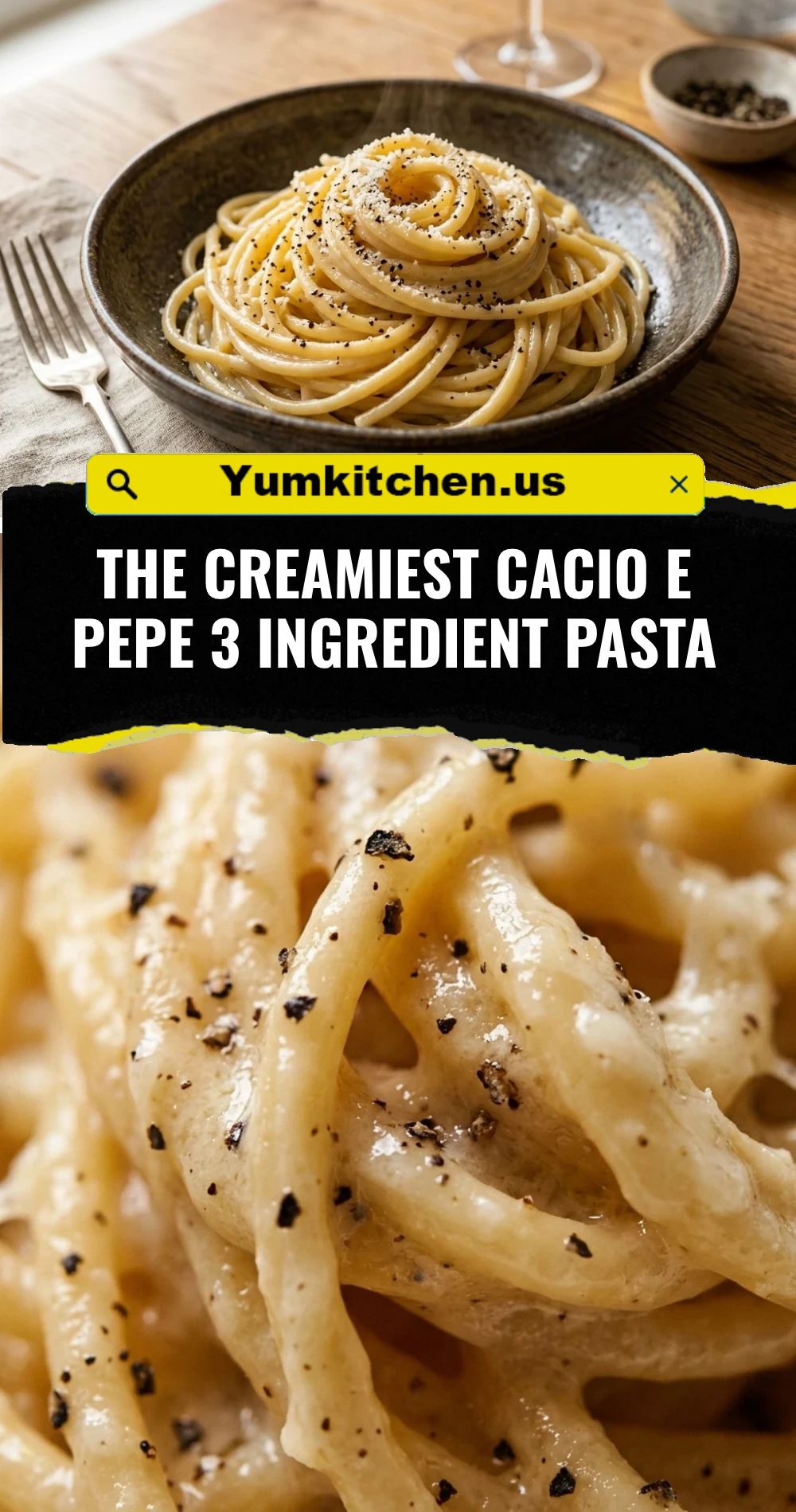
The Creamiest Cacio e Pepe 3 Ingredient Pasta
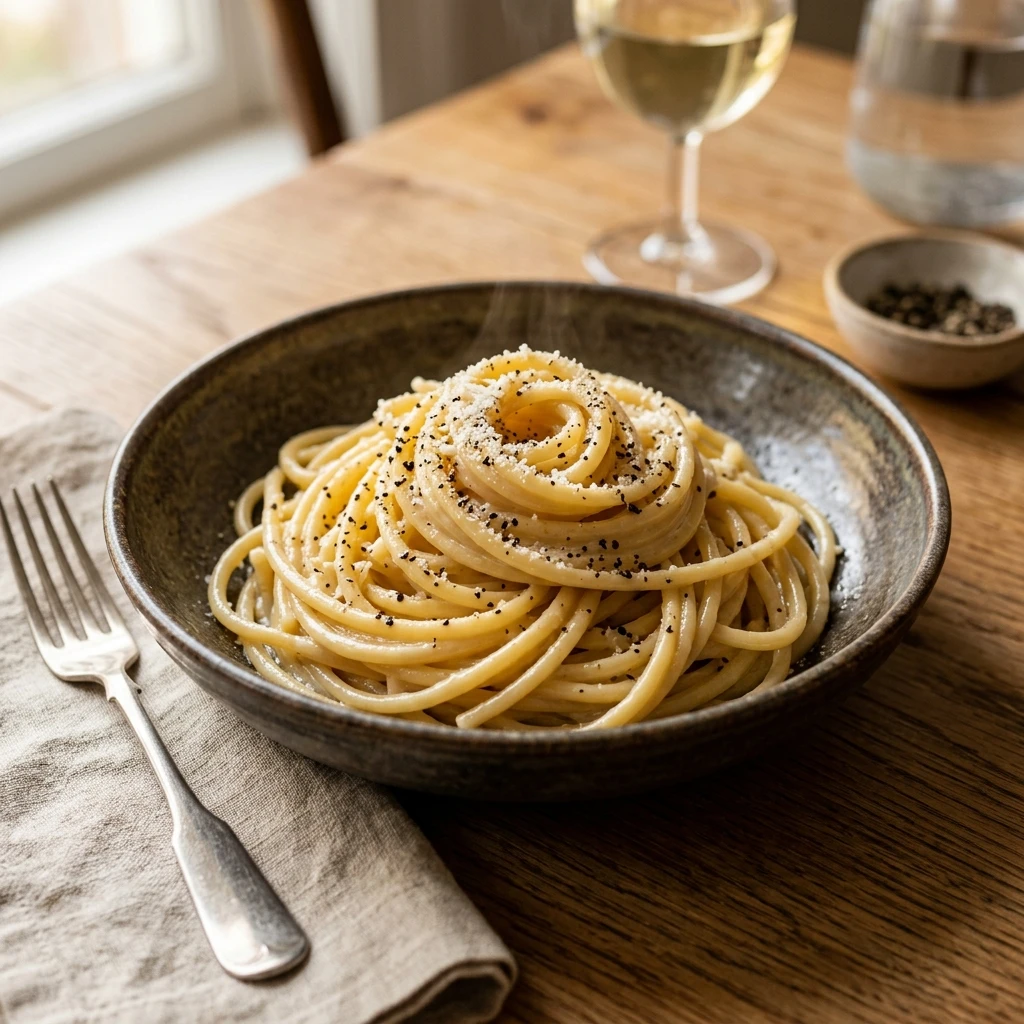
Few dishes prove that less is truly more like a classic plate of Cacio e Pepe. Born in the heart of Rome, this “cheese and pepper” pasta relies on technique rather than a long list of ingredients to achieve its legendary status. Imagine a silky, glossy sauce that clings to every strand of al dente spaghetti, delivering a sharp, salty punch of Pecorino Romano balanced by the floral heat of freshly cracked black pepper. You do not need cream or butter to make this the creamiest meal of your life; you just need the magic of starchy pasta water and a little bit of patience. Let’s dive into how you can master this Italian masterpiece in under fifteen minutes.
Recipe Information
- Prep Time: 5 minutes
- Cook Time: 10 minutes
- Total Time: 15 minutes
- Servings: 2 servings
- Difficulty: Easy
Nutrition values
- Calories: 540 kcal
- Protein: 21g
- Carbs: 65g
Why Make This The Creamiest Cacio e Pepe 3 Ingredient Pasta
This recipe is the ultimate solution for busy weeknights when your pantry looks bare but your cravings are high. Because it uses only three primary ingredients—pasta, Pecorino Romano, and black pepper—the quality of each element shines through. It is an impressive dish to serve guests, appearing much more complex than it actually is. By mastering the emulsion technique, you unlock a restaurant-quality texture without the heaviness of store-bought sauces. It is fast, affordable, and incredibly satisfying.
Ingredients
- 7 oz (200g) high-quality Spaghetti, Bucatini, or Tonnarelli
- 1.5 cups (approx. 120g) Pecorino Romano cheese, very finely grated
- 1 tablespoon whole black peppercorns
- Salt (for the pasta water)
- Reserved pasta cooking water
Directions
Step 1: Toast and Grind the Pepper
Place the whole peppercorns in a dry skillet over medium heat. Toast them for 2 to 3 minutes until they become fragrant and slightly smoky. Remove them from the heat and crush them coarsely using a mortar and pestle or the bottom of a heavy saucepan. This step wakes up the essential oils in the pepper, providing a depth of flavor that pre-ground pepper simply cannot match.
Step 2: Boil the Pasta
Bring a large pot of water to a boil. Add a pinch of salt, but use less than you normally would, as the Pecorino Romano is naturally very salty. Add the pasta and cook it for about 2 minutes less than the package instructions for “al dente.” You want the pasta to be quite firm because it will finish cooking in the skillet with the sauce.
Step 3: Create the Cheese Paste and Emulsify
While the pasta cooks, place the finely grated Pecorino Romano in a small bowl. Add a small ladleful of the hot, starchy pasta water to the cheese and whisk vigorously with a fork until it forms a thick, smooth paste. In the skillet used for the pepper, add another ladle of pasta water and bring to a simmer. Transfer the undercooked pasta directly into the skillet. Stir constantly, then remove from heat. Add the cheese paste and toss vigorously. The starch in the water and the residual heat will melt the cheese into a creamy, glossy sauce that coats every strand perfectly.
Expert Tips for Perfect The Creamiest Cacio e Pepe 3 Ingredient Pasta
The secret to avoiding clumped cheese is the temperature of the water. Never add cheese to boiling water; let the skillet cool for a few seconds before tossing. Always grate your cheese by hand using the finest side of your grater. Pre-shredded cheeses contain anti-clumping agents that will prevent the sauce from becoming smooth. Finally, use a smaller amount of water to boil your pasta than usual. This concentrates the starch, which acts as the “glue” that holds your creamy sauce together.
Delicious Variations
While the classic version is hard to beat, you can easily customize this dish. Add a teaspoon of fresh lemon zest at the end for a bright, citrusy lift that cuts through the saltiness. If you prefer a nuttier flavor, swap half of the Pecorino Romano for Parmigiano Reggiano. For those who enjoy a bit of texture, top the finished pasta with toasted sourdough breadcrumbs. You can also infuse the pepper-toasting step with a smashed clove of garlic, removing it before adding the pasta, for a subtle aromatic undertone.
Frequently Asked Questions
Why did my cheese turn into a clump instead of a sauce?
This usually happens if the water is too hot or the cheese is too coarse. Ensure you create a paste first and add it to the pan off the heat to gently melt it with the residual warmth.
Can I use pre-ground black pepper?
You can, but the flavor will be significantly duller. Freshly toasted and crushed peppercorns provide the signature floral heat that defines this dish.
What is the best pasta shape to use?
Spaghetti is the traditional choice, but Bucatini is excellent because the hollow center traps the sauce. Tonnarelli is the most authentic Roman choice if you can find it.
Do I need to add salt to the pasta water?
Yes, but use sparingly. Pecorino Romano is one of the saltiest cheeses available, so it provides most of the seasoning for the final dish.
How do I reheat leftovers?
Cacio e Pepe is best served immediately. However, if you must reheat it, do so in a pan over low heat with a splash of water to loosen the sauce. Avoid the microwave, as it will cause the cheese to separate and become oily.
Conclusion
Mastering The Creamiest Cacio e Pepe is a rite of passage for any home cook. It teaches you the importance of heat management and the power of simple, high-quality ingredients. Once you see that glossy sauce come together in your skillet, you will never reach for a jarred Alfredo again. Serve this immediately with an extra dusting of cheese and a cold glass of crisp white wine for the perfect Roman dining experience at home.